Anderson had just told host Ginger Hultin that she doesn't much care what parents call picky eating, as long as they don't say it in front of the child; Hultin asked her to explain that. Her answer is that the label creates a second problem sitting on top of the eating itself. It is an argument about identity rather than nutrition, aimed at a word most parents use casually at the table.
There is not an official definition of picky eating in the research literature among professionals. So my definition of picky eating is anytime a kid is not eating in some capacity and you as a parent are like, they're picky. That's really all that matters to me. Do you have a kid who is not eating what you want them to be able to eat? Now, if we get into how picky a child is, is it problematic? Is it extreme picky eating? Is it a way? Restrictive food intake disorder, something like that. Then we're talking about something different. And I have a screener for that, the pediatric screener for ARFID and Extreme Picky Eating. That is an official tool that can be actually used to connect with your doctor and things like that. But if we're just talking about picky eating, we're talking your kid is not eating something that's on the table. And it's happening more often than you'd like. That's picky. It's fine. I really don't have any worries about what you call it, as long as you're not saying it in front of your child.
Ooh, tell me more about that.
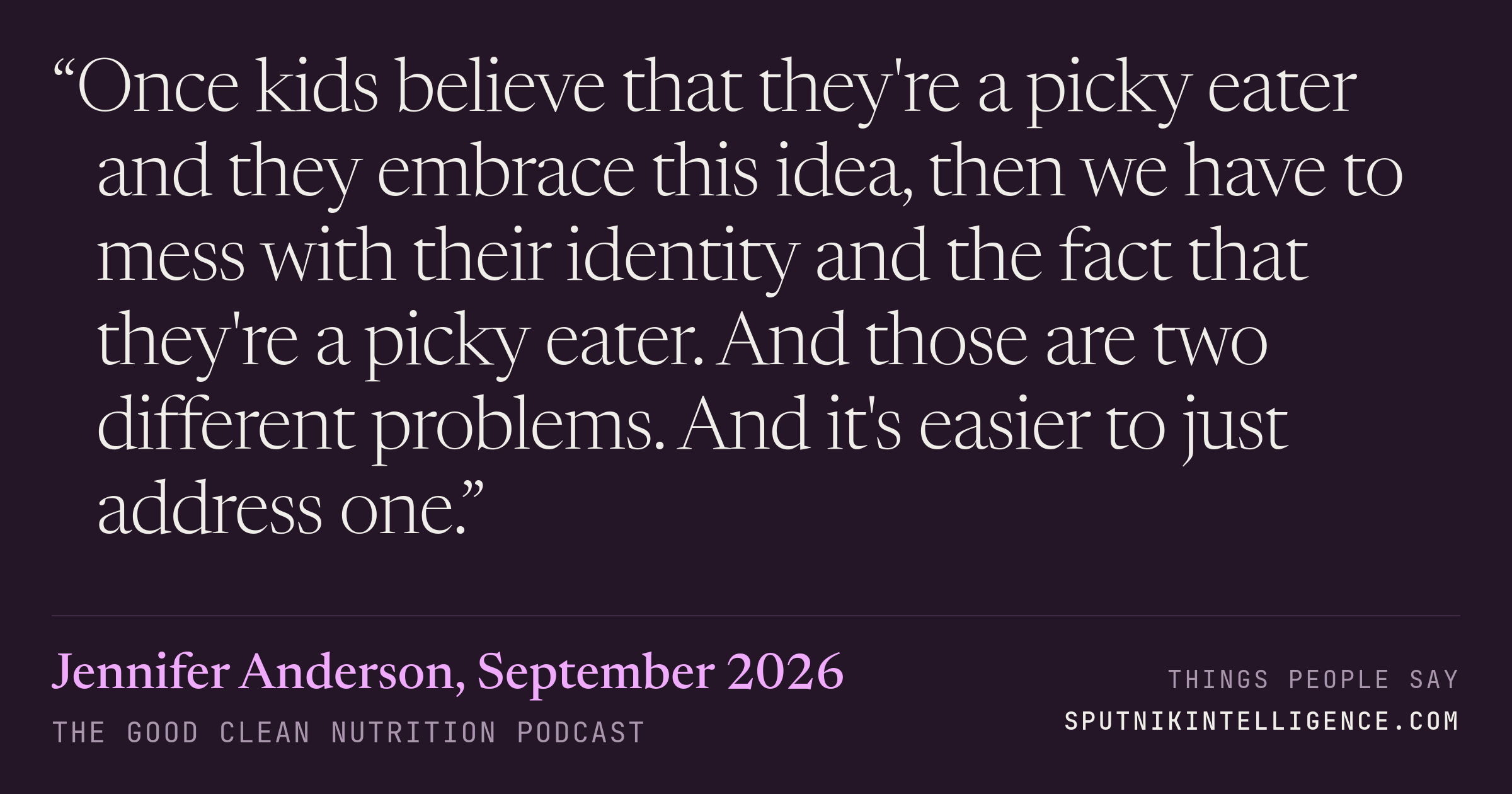
Once kids believe that they're a picky eater and they embrace this idea, then we have to mess with their identity and the fact that they're a picky eater. And those are two different problems. And it's easier to just address one.
So let's say that you are struggling. I'm interested in what some of the common challenges are, how you might message that to a child, if at all, and what some of your baseline strategies are.
So if your child says, I don't eat peas, you could say, okay, you're still learning to like them. Give me the peas. I'm going to eat them in front of you. I'm going to show you they're okay. I'm maybe even going to enjoy them. I love these peas. Thank you for sharing yours with me. Things like that, where you are not giving them an out. You're not saying, oh, yeah, you just don't like peas. You're saying you haven't learned to like peas yet. You're sending a child a message. You will learn to like peas one day. And maybe they will, maybe they won't. I have seen adults learn to like things. So people are like, oh, well, there's things that I don't like, but hey, there's more to life yet. 10 years from now, they could be my favorite foods. I have no idea. But if I write it off and pretend it's never going to happen, then I'm never going to try. I'm never going to learn to like them. I'm never going to have the exposure. So we really have to take a different mentality of like, hey, we can learn to like just about anything. We can learn to like so many more things than we think. We have to give ourselves the exposure. We have to do that for ourselves. We have to do that for our kids. And we really cannot hold on to this mentality that we're picky. And the more that we can give kids the idea of like, oh, I'm a person who learns to like things, even if it takes them five years, it doesn't matter because they are, they're learning, they're getting those experiences.
I meet a lot of adults that have that identity. I have a patient about my age who has this negative affinity with Brussels sprouts because she had them boiled as a young person and she was open-minded enough to try them roasted. And she was like, this is the most incredible food I've ever had. And now she's a Brussels sprout convert. But I said, that's really brave of you to try them again, especially if you had this negative feedback from them before.