The host asks how insurers pulling out of fire zones will change what gets built. Shula, who works on green building, says he likes it when insurers price the risk because that is what changes decisions, and worries about homeowners who can no longer get cover.
Oh, yeah. Malibu High School is a project our vertical group team worked on to make as sustainable and green a building as possible. And this ties multiple parts of our conversation together today because that is in the Palisades fire zone where part of the LA wildfires were a year and a half ago. The school did not burn down during the fire, but it had been pre-planned to be built before the fires happened. But it was designed and built to be a safe space for in a disaster situation that would be able to stay up and running. It was designed with fire-safe materials around the exterior, fire-safe landscaping strategy to mitigate those risks of where it's located in that fire-prone zone, Malibu, right on the coast there. And a very successful project. It's beautiful. It addresses the environmental concerns and it is also a net zero building. The owner of that building is the Santa Monica Malibu School District. And so a huge shout out to them that they put up the additional cost. It meant there might have been some additional first cost to do this building that would then be a safer, better outcome for their community for many years, many years ahead. And it's been a great project. I got to talk about it on National Public Radio recently. It's getting quite a bit of media attention and is a wonderful example of what hopefully all future buildings will look like in the years to come.
Well, that's great to create that template and kudos to you and your team to do so. And making those investments pays off in the long run and in so many different ways. Next question is about insurance pulling out a fire zone and how is that going to reshape what gets built? And it sounds like what you did with the Malibu school really helped so that maybe they can get insurance, whereas some other buildings that are not so well designed are going to be riskier.
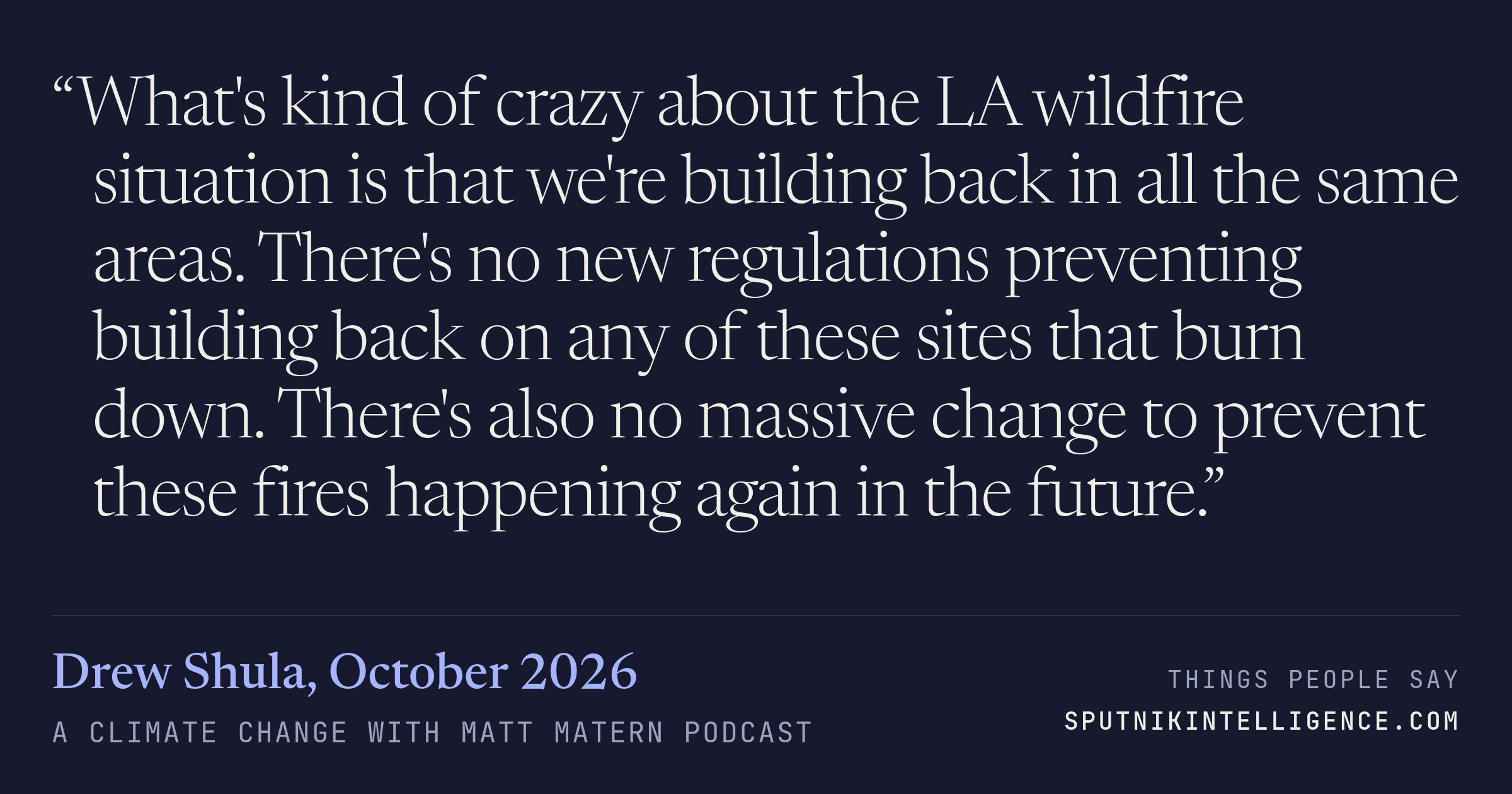
Yeah, absolutely. What's kind of crazy about the LA wildfire situation is that we're building back in all the same areas. There's no new regulations preventing building back on any of these sites that burn down. There's also no massive change to prevent these fires happening again in the future. There's nothing new that couldn't cause the same disaster to happen again. Of course, the insurance companies know this and are looking at this. And insurance, I think, is super interesting to look at related to science and market factors, business influences on how we address climate issues. And that's where I sit and want to see that happening. I love when we're able to actually price the risk and then it forces people to change in that in the context of money, right? It changes decision making. So yeah, we do see insurance companies pricing the risk of wildfire areas or other natural disaster areas, which are exacerbated by climate. And then we're able to, it becomes part of the conversation around how we address these issues. But yeah, I do see really big challenges for in the future for how we prevent the exact same disaster from happening again. And next time, maybe there aren't, maybe all these homeowners don't have insurance that are impacted, which is really scary because they're unable to get home insurance. That's happening to a lot of people in Southern California who live in the hills and in these areas where the wildfires spread. If you live right up against that hillside, you might not be able to get insurance. Your property value might then plummet when you go to sell your home down the road, or you could potentially lose it in a fire in the future. So that relationship between buildings and insurance is a very critical intersection.
Yeah, I tend to think that it should be waking up more people because it's happening not only in California, but in Florida and other places, probably along the coast and the Gulf of Mexico, as well as on the Atlantic coast where they get hit with a fair number of hurricanes as well. Though it doesn't seem like it's caused as much of a policy change as you might think when people are paying thousands or maybe even tens of thousands of dollars more because Of these insurance premiums going through the roof because of all the disasters that we've had in recent years.
Yeah, yeah, I agree. We've seen in New York City, I think it was Hurricane Sandy where they had a lot of flooding that happened. And then they did, I think they were working to build up the seawall around Manhattan to prevent some of that flooding in a similar situation in the future. In Miami, down in Florida, like you said, there's constant flooding issues. It's common to have days where the areas of the city flood with the sea level rise. LA, we've got the wildfire. So they all exist. And then, of course, globally, same thing. Every country around the world has various climate-related impacts that are just going to continue to get worse and worse. And I think this is the conversation of the future. The risk has got to be priced in. Insurance companies have to price that in or they'll go out of business. So they'll become bankrupt if they fail at modeling that out correctly. So it's over time, it will change where people live. It'll force people to move and find more affordable housing in a less risky environment. We might not be seeing it quite yet, people adapting in that way, like what you're saying, Matt, but I think we will see that more and more in the years ahead.
So you've worked with NASA, Google, LAX, Apple. What do the most ambitious clients ask the rest don't ask? And relatedly, are any of these institutions walking back from commitments that they might have made three, four, five years ago to become net zero? Are they still marching along the path to get there?