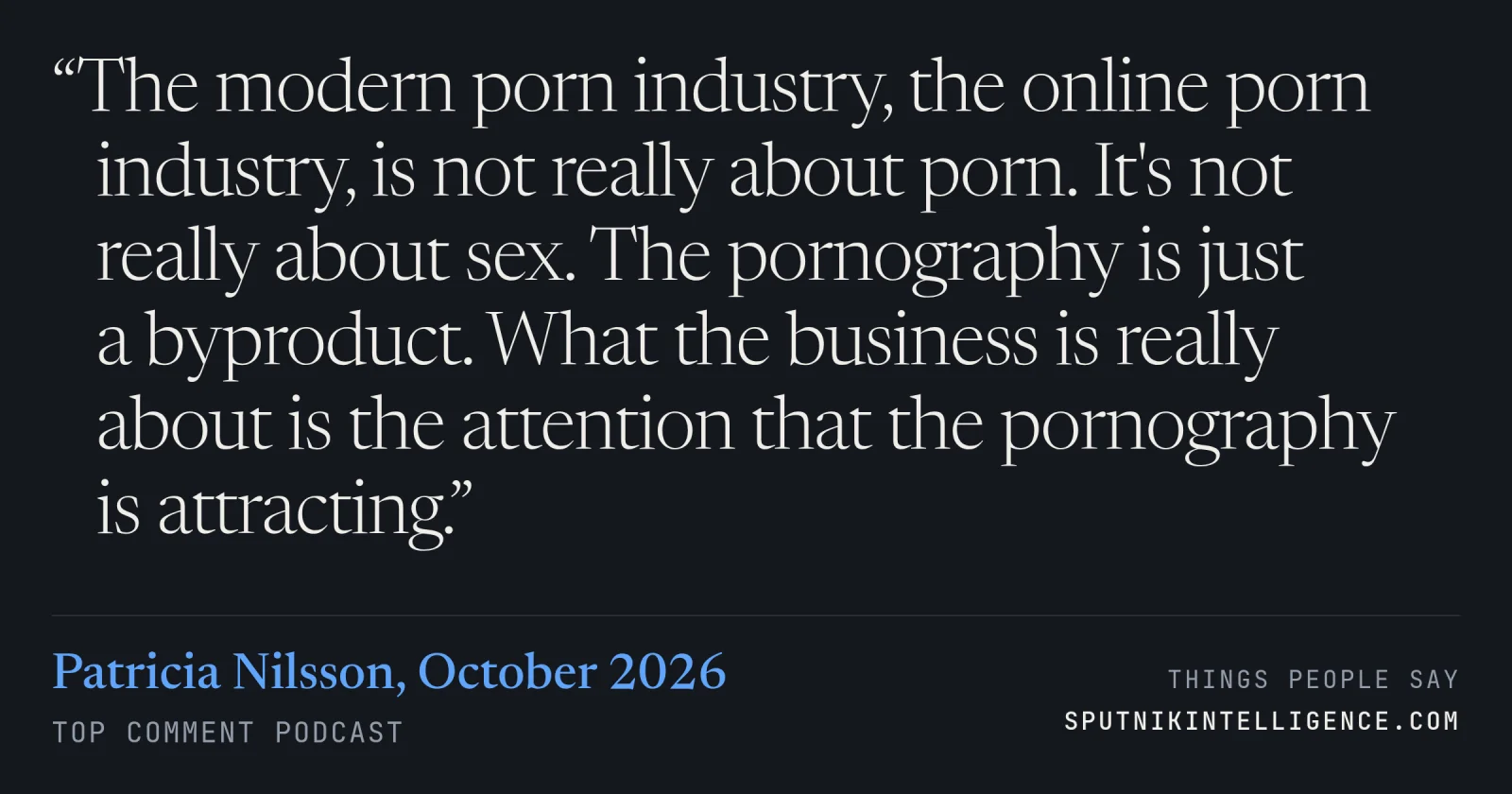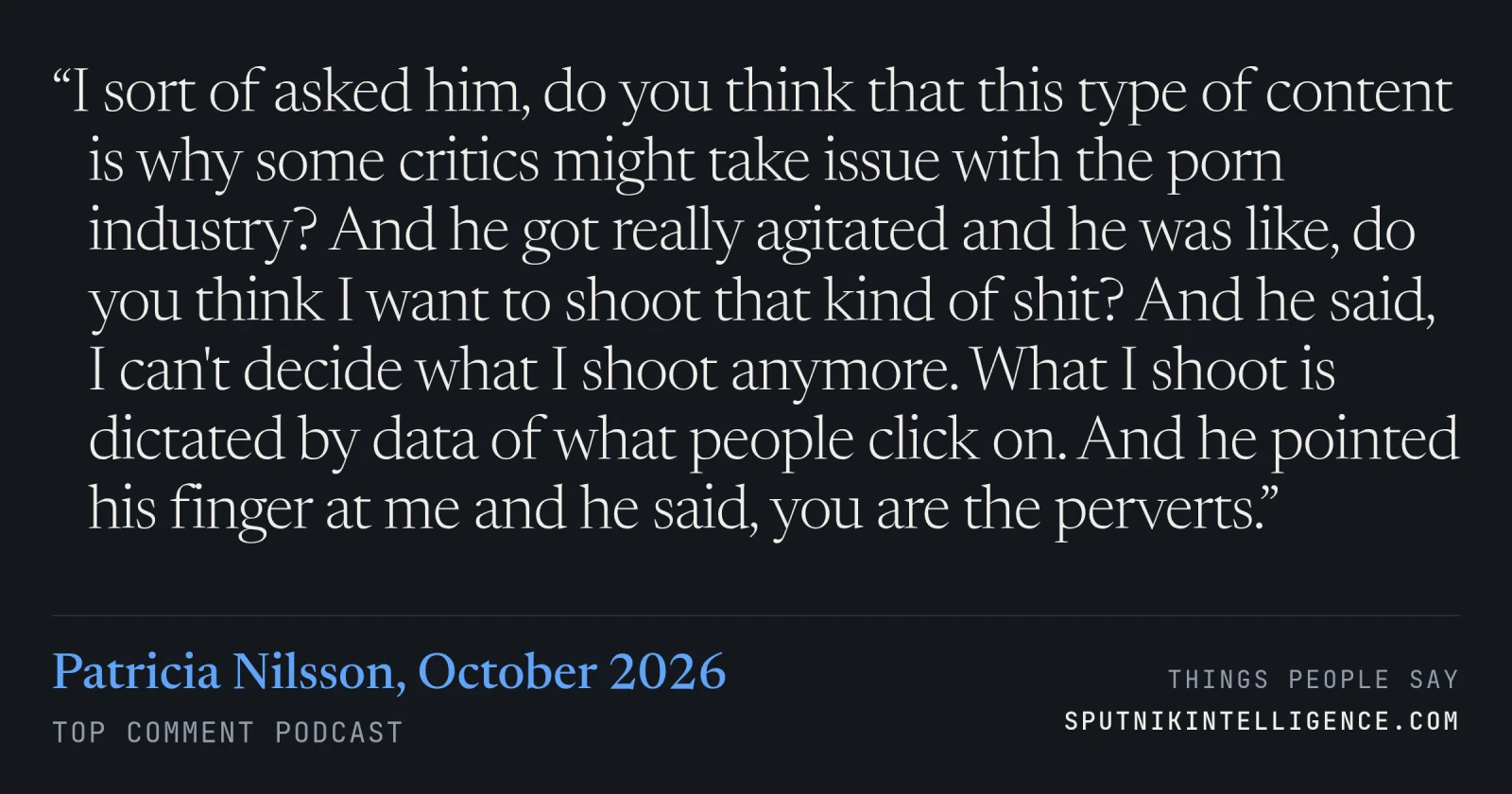
Nilsson retelling the anecdote that opens her book: a conversation with a porn director in Prague. The director is the one speaking in the quoted lines. Her takeaway is that algorithms serve impulses people aren't proud of, and that what we do online is not always what we want to want.
Sinister.
…about the way that that content is hosted and pushed and recommended and curated. That's definitely true of the social media platforms with their algorithms. Do you think that's fair to apply that same sort of thesis to the porn industry and to the pornographic content online and on social media?
Well, yeah, if I understood you correctly, I mean, I think we need to focus less on the content and sort of is this content good? Is this content bad? And we need to think more about the way it's reaching us, why it's reaching us, the way it's reaching us. And democratically, can we talk about turning these algorithms off or adjusting them so that they're not as addictive and they're not making us feel so icky and shameful all the time? I just sort of have one final thought as well on anonymity and sort of how this sense of anonymity is so key to how we behave online. And there is often a sort of desire to be like, the reason we're consuming all these horrible things, it's the tech company's fault, like they're creating this content. But in reality, it's more complex. It's a relationship. You know, we're being pushed this type of content, this type of content is being created because we can't stop looking at it. We can't stop clicking on it. And, you know, imagine your search history being sort of open to the world. I mean, I think for most people, that would be feel more intimate and maybe horrible than our diaries being published. You know, the way in which our…
That's super interesting. Yeah,
thank you so much for chatting to us, Patricia. And we are very much enjoying reading your book, which gets into kind of everything we've just discussed there and much more. Thank
you for having me. Bye.