On a show about AI and apocalyptic thinking, the host had argued that a 'mini apocalypse' is the only kind most of us can comprehend. Simon, who wrote a cultural history of the apocalypse, explains that the word's Greek root means unveiling, not ending.
…why people are thinking in those terms. It's not just a metaphor. It's not a rhetorical trope. It's not a way to get a particular political agenda across. It's an expression of what it feels like when the world that you thought you had and understood and your sense of safety is just destroyed.
…Maybe that's why so much of the best apocalyptic art is so personal. It's a record of somebody's world coming to an end. Ed Simon, who wrote a cultural history of the apocalypse called The Dove and the Dragon, argues the word was never actually meant to represent a single event in the first place.
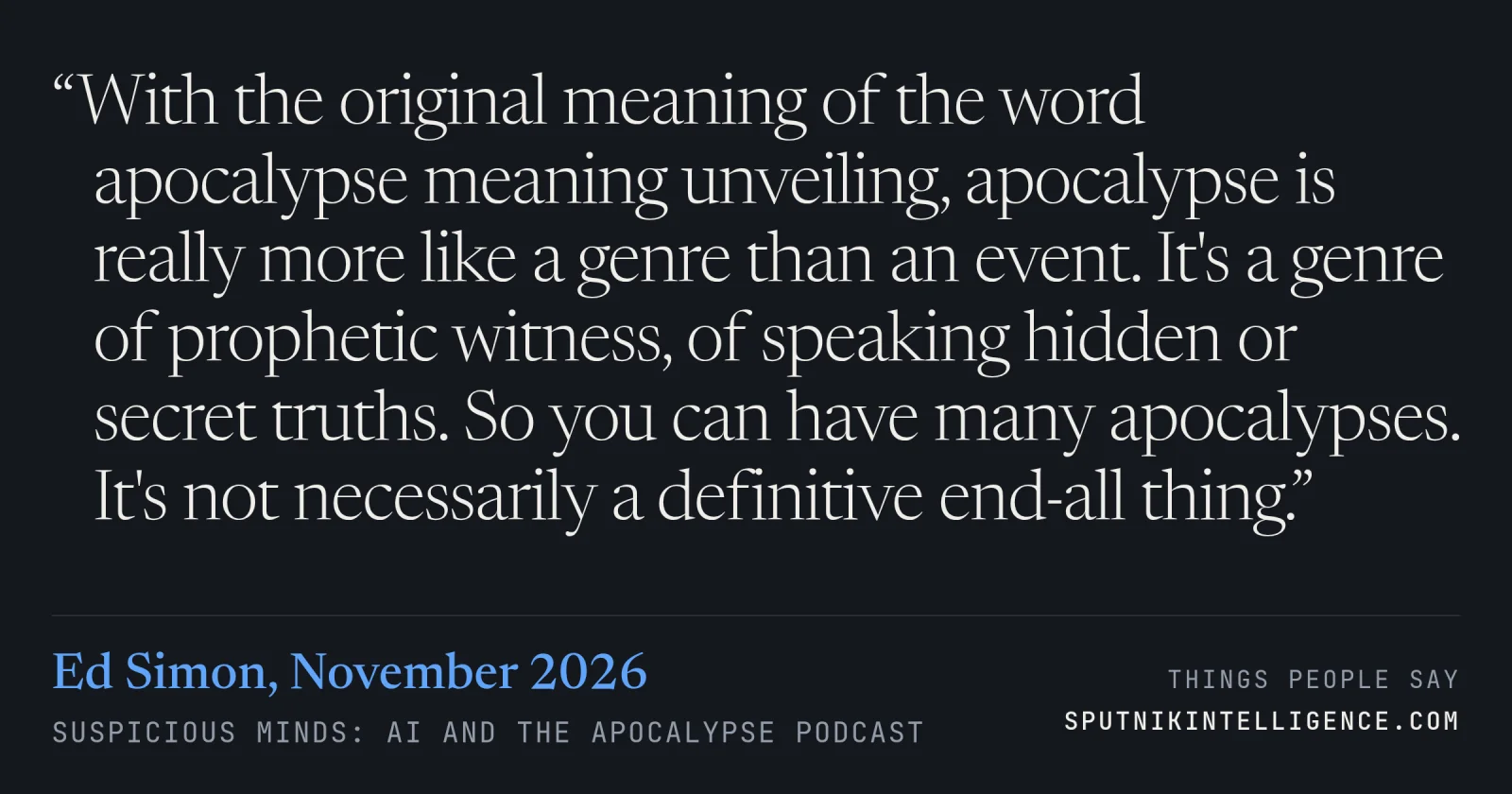
With the original meaning of the word apocalypse meaning unveiling, apocalypse is really like a genre more than it is an event. It's a genre of prophetic witness and of speaking kind of hidden or secret truths. So in that way, you can have many apocalypses. You know, it's not like a definitive end-all thing necessarily.
With this in mind, let's look at apocalyptic art not as a way to deal with future anxiety or reckon with past trauma, but as a genre unto itself that serves some essential human need. After this break, we will be back with more from Ed Simon as well as Dr. Amy Levy on why this genre reflects a deep…
It's related to that self-awareness. We can reflect on our own existence and we reflect on our own instincts and drives. We want to live. We want to forge. We want to learn. We want to discover. And we have to be alive to do all of that. We don't want that to end. You know, that gives so much…
Amy suggests that it's the fear of our own destructive power that creates the obsession with external engines of the apocalypse. This could be anything from a stampede of wild boars to homicidal robots. In our current conversation, this, of course, manifests as a fear of creating something that is…