Kenedy on why his large restaurant at Cambridge Circus failed. The plan needed only a tiny share of the people passing through each day. What nobody figured, he says, is that the one thing people at that intersection don't want to do is stop.
And I wish we'd started small, because I think if we had, we'd still be here. But it was such a kind of behemoth of a building and a business that trying to make changes there felt like trying to steer the Titanic. And we were hemorrhaging money left, right, and centre. The rent was half a million pounds a year almost. And it was so big, it took a lot of staff to work it, even in the quiet times. The other reason it didn't work is I've discovered something about maths. But we looked at the site, and I can't remember how many people passed through Cambridge Circus every day. And we figured that we needed to capture a very small percentage of those people in order for the business to work. What I didn't figure, none of us figured, is the people who are going through Cambridge Circus, the one thing they do not want to do is stop.
No.
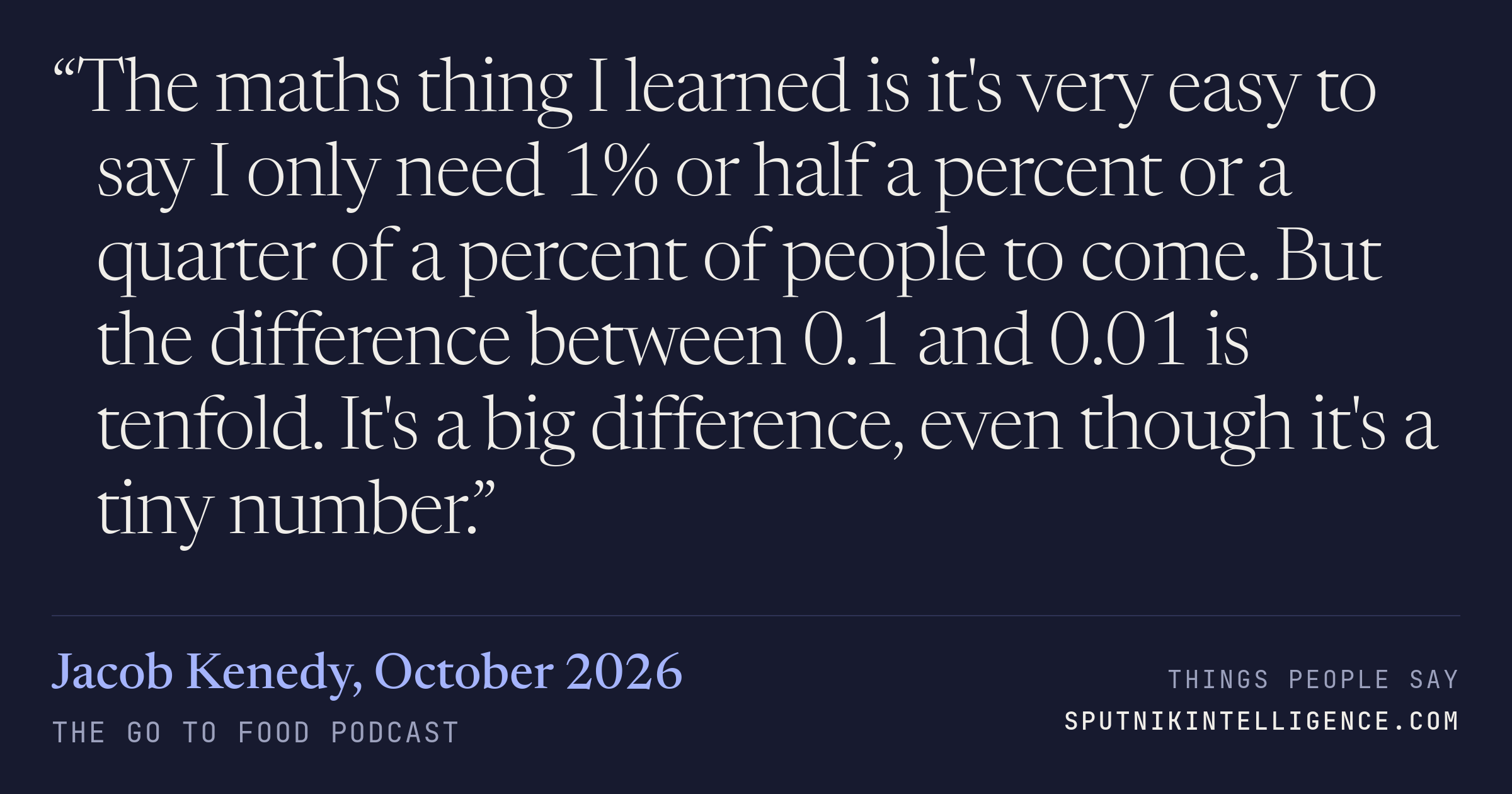
They want to get out of that hideous intersection as fast as possible. And the maths thing I learned is it's very easy to say I only need 1% or half a percent or a quarter of a percent of people to come. But the difference between 0.1 and 0.01 is tenfold. It's a big difference, even though it's a tiny number. And so when you're dealing with small fractions of things, to be careful.
Yeah, tough.
So that was heart-wrenching when it closed. You feel like it's a failure, but it feels like a per like not like the business has failed. You've failed.
Yeah. Is it harder to stay relevant nowadays? I mean, every brush to touch, Jeff, we talk.