Rana Gujral

Things Rana Says on Podcasts

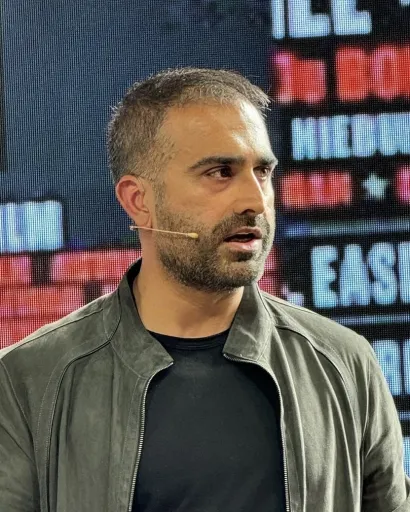
He is a cognitive AI leader and the CEO of Behavioral Signals, an enterprise software company building emotion AI for speech recognition. He writes and speaks about what happens as AI moves from a productivity tool into the cognitive infrastructure businesses use to make decisions, and argues leaders need to distinguish employees who are genuinely deciding from those simply approving AI output. He is the author of The AI Instinct: The Future of AI and Human Decision-Making. He has appeared on the Using AI at Work podcast to discuss automation bias and protecting human judgment in AI-assisted organizations, and speaks and writes more broadly on AI governance and human-AI collaboration.

Where to Find Them

Rana Gujral has been a guest on Founder's Story (3 times) , Using AI at Work: AI in the Workplace & Generative AI for Business Leaders , The Buzz and A Beginner's Guide to AI .

Recently: “How to Use AI Without Losing Human Judgment: AI Decision-Making and the Future of work | Rana Gujral” on Using AI at Work: AI in the Workplace & Generative AI for Business Leaders (September 2026); “The Next Evolution Isn't Artificial Intelligence. It's Hybrid Intelligence - Says Rana Gujral” on A Beginner's Guide to AI (July 2026); “Everyone Is Asking The Wrong Question About AI | Ep. 422 with Rana Gujral CEO of Behavioral Signals” on Founder's Story (July 2026); “Into the AI Future, A Founder's Story with Rana Gujral | S2: E8” on Founder's Story (December 2023); “Listen: Tech determines customer emotions, intentions by tone of voice” on The Buzz (June 2022); “Leading AI expert and How AI is Changing the World | Ep. 42 with Rana Gujral” on Founder's Story (December 2020).

What They Said

“Most human in the loop designs I see are theater. There's a checkbox. Someone clicks approve, but the interface has already framed the answer.” — Rana Gujral, Using AI at Work: AI in the Workplace & Generative AI for Business Leaders

Gujral opens the episode with this, before host Chris Daigle has asked him anything. His argument is that the approval step most companies bolt onto an AI workflow is decorative, because the interface has already narrowed what there is to approve. He follows it with a test: look at what your team produces, not at what they say they decided.

Using AI at Work: AI in the Workplace & Generative AI for Business Leaders · 2026-09-07 Permalink → Listen →
Using AI at Work: AI in the Workplace & Generative AI for Business Leaders Around 01:02 into the episode
Speaker 1

Hey, before we start, quick question. How many people are on your estimating team? Your scheduling team, your quality team. Now, what's the one task that each of them would say eats up most of their week? There's something. Now, let me ask you, what does that team cost you? Those are the questions that our AI asks you in a session that we call the $50,000 opportunity. You book 15 minutes with Danny on my team. She runs this tool live with you on the call. And you leave with a ranked list of AI projects and what each one is worth. It's free. Just go to chiefaiofficer.com forward slash 50k 50k. Now, let's get into the episode.

Rana Gujral

Most human in the loop designs I see are theater. There's a checkbox. Someone clicks approve, but the interface has already framed the answer.

Chris Daigle

Am I still deciding or am I just approving?

Rana Gujral

If you want to audit whether your team is still deciding or just approving, don't ask them. They'll tell you they're deciding. Look at what they produce. If the doc reads like restatement of what the system suggested, they approved. If it reads like the system said, A, I checked B and C, and here's why A still wins, they decide it.

Chris Daigle

How does somebody distinguish like, when should I really get this serious about it and track my decision making?

Speaker names from our own diarization · position estimated from where the line sits in the episode