Asked whether coding is the clearest case of a skill once thought safe, the economist tells the story of a school coding mandate and says the lesson is that trying to "future-proof" skills is a mistake.
Yeah.
Or just the first? Or what do you think about specifically coding right now as a profession and as a skill that people maybe want to acquire?
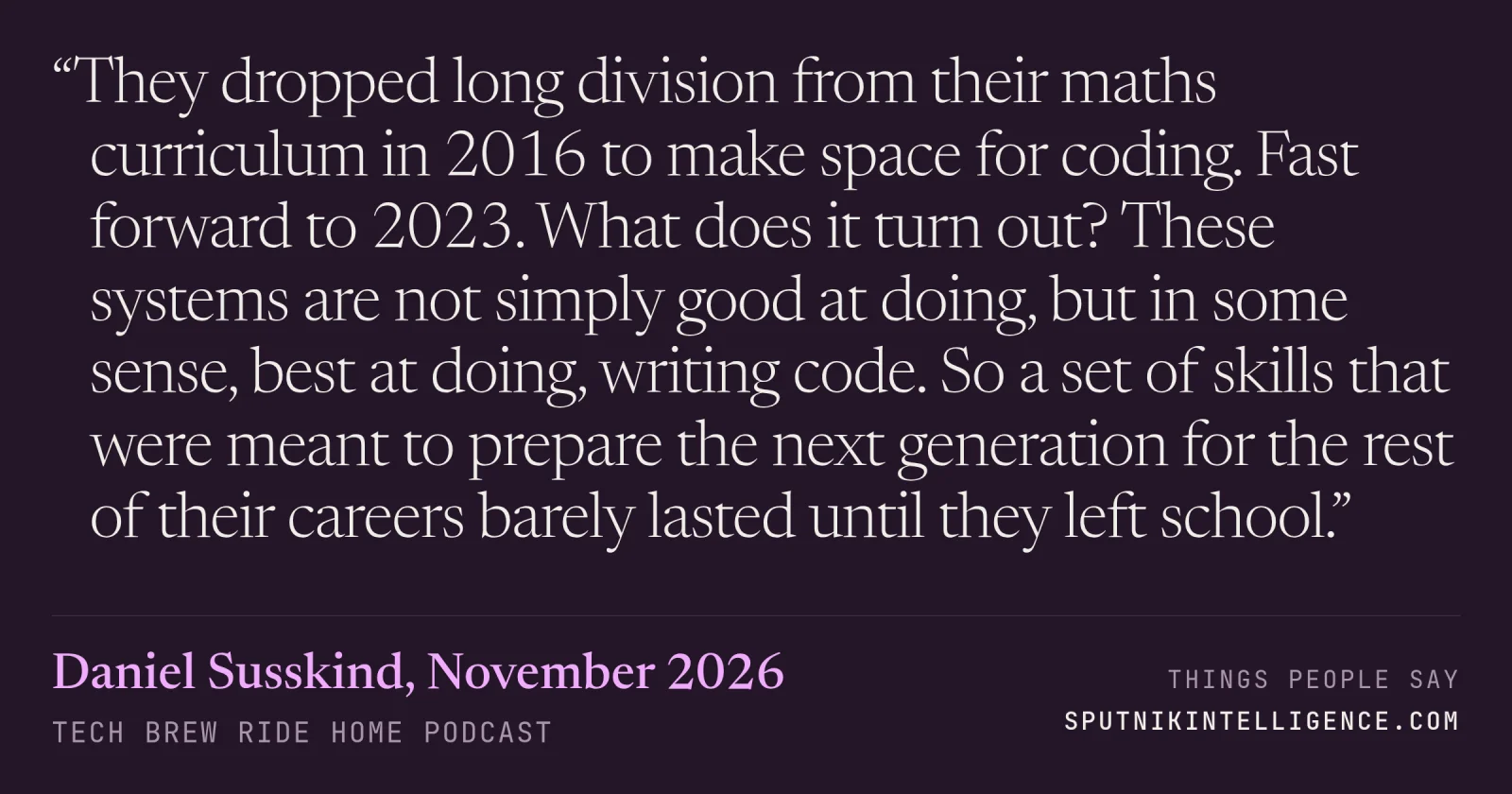
…And this was thought back then to be bold, imaginative, creative, and future-proof. Future-proof. Right. This was how we were going to future-proof the next generation. And we weren't alone. Almost every other country around the world followed suit with some kind of flavor of teaching young people to code. I think Finland, for instance, which people interested in education always talk about, they dropped Long Division from their maths curriculum in 2016 to make space for coding. Fast forward to 2023. What does it turn out? These systems are not simply good at doing, but in some sense, best at doing, writing code. So a set of skills that were meant to prepare the next generation for the rest of their careers barely lasted until they left school. And I say this wasn't a case of bad luck. This was because the politicians and policymakers had fallen for this idea of future-proofing. Exactly as you say, that if only we think deeply and cleverly enough about the future, we'll be able to figure out exactly what jobs are going to have to be done and then say these are the advanced skills that are most valuable today. And I just don't think we…
I want to stay on kids specifically for a second before we move a little deeper. But you mentioned long division.
Yes.
Make the case to me for still learning long division, still memorizing things in 2026 if you're educating your children.