TF

Timothy Fong

Things Timothy Says on Podcasts

Where to Find Them

Timothy Fong has been a guest on Chasing Life and This Is Uncomfortable .

Recently: “Your Phone Is Now a Casino. What's It Doing to Your Brain?” on Chasing Life (November 2026); “What happens when you can bet on anything?” on This Is Uncomfortable (March 2026).

What They Said

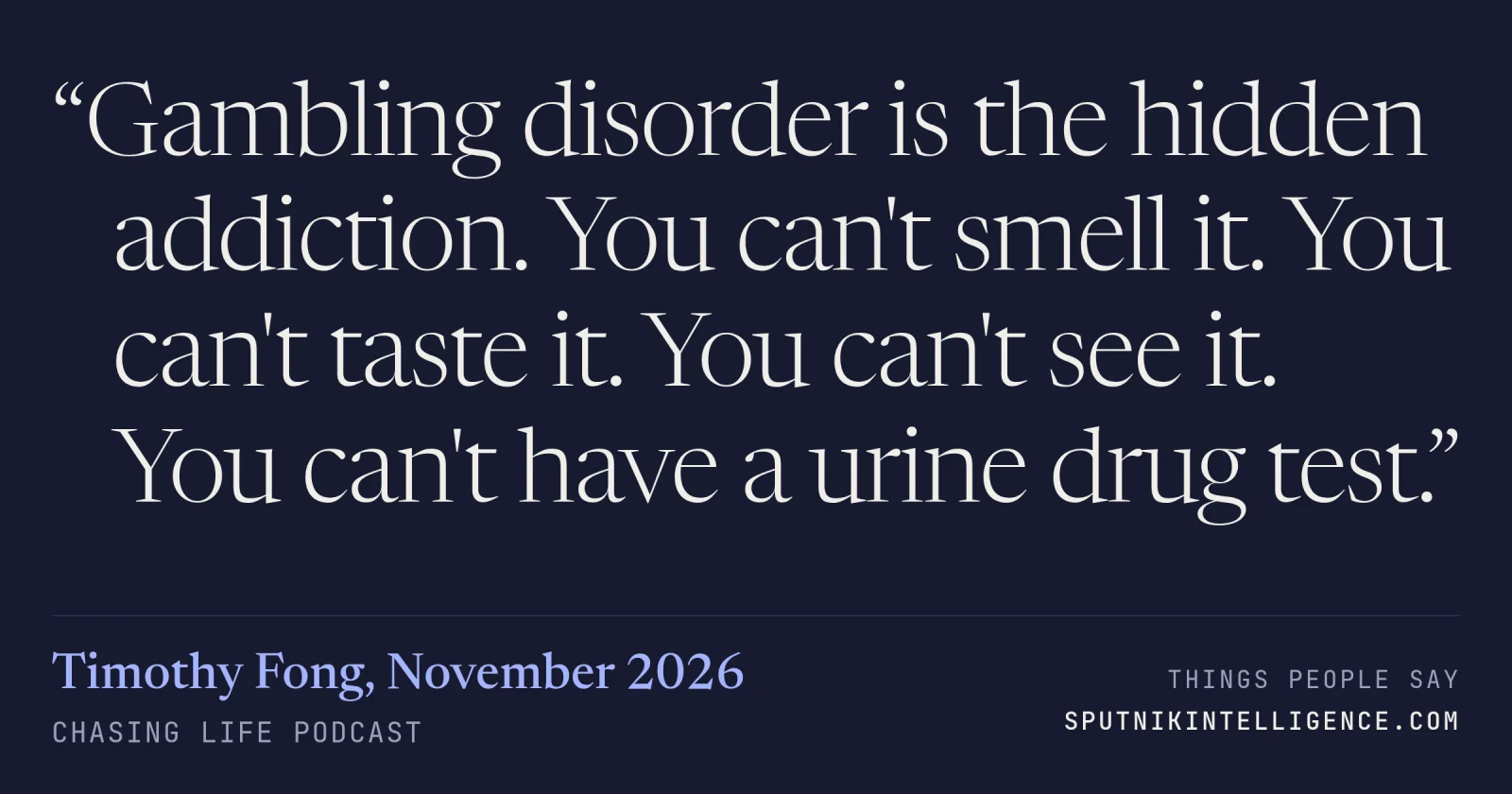
“Gambling disorder is the hidden addiction. You can't smell it. You can't taste it. You can't see it. You can't have a urine drug test.” — Timothy Fong, Chasing Life

Sanjay Gupta admitted medicine teaches little about gambling addiction. Timothy Fong explains why it so often goes unnoticed, before describing a young patient who lost $250,000 in two years on betting apps.

Chasing Life · 2026-11-05 Permalink → Listen →
Chasing Life Around 11:05 into the episode
Timothy Fong

…Because now they're not athletes. They're not heroes. They're not people to cheer on. They're what? They're numbers. They're commodities. They're just material objects for my personal gain. And I think that's functionally a huge loss of what we see in American culture as it comes to gambling.

Speaker 4

Doc, walk us through maybe someone who went from just having fun to needing help. What did their family or friends notice first about maybe their behavior or how they were acting when it came to watching sports?

Timothy Fong

And phenomenal question. And again, Dr. Gupta, I heard you say, well, I don't know too much about this because we don't teach about this in medical school or residency. Why? Because gambling, addiction, gambling disorder is the hidden addiction. You can't smell it. You can't taste it. You can't see it. You can't have a urine drug test. So if I had 100 men and women with gambling disorder coming to the clinic, I'm going to get 100 different stories. The bottom line is this: the continued ongoing gambling creates some sort of harm to their lives and they continue to gamble. So it's going to be common things like depression, financial strain, lying, not sleeping, physical stress, psychological stress. Suicidal thoughts, a whole…

Sanjay Gupta

Who are we talking about here, Professor? Who's the most likely demographic to be affected by this?

Timothy Fong

Literally any single human on earth. If you breathe, if you eat, and you get into it, if you do anything in the world of financial risk, you can develop addiction. However, we know that there are some very clear risk factors. Of course, anyone with a past active substance use disorder, anyone with…

Sanjay Gupta

You know, I just, I just got to say again, just for the podcast, this is a topic that I just did not know that much about. And, you know, I have three daughters. They are 21, 19, and 17. So maybe that's part of it in terms of why it didn't hit my radar as hard. But this growth and what has happened…
Speaker names come from our own diarization. The position is estimated from where the line sits in the episode.
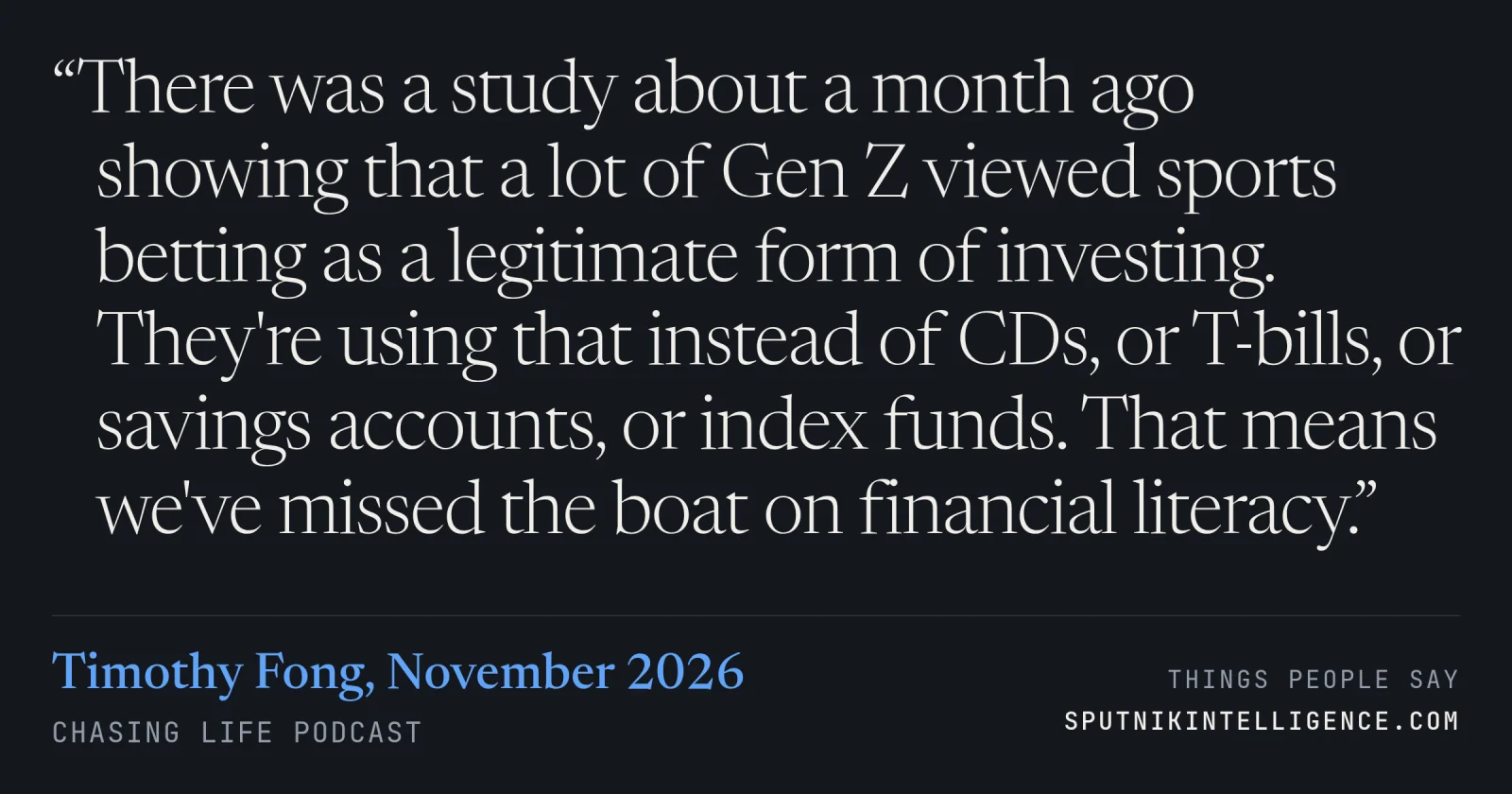
“There was a study about a month ago showing that a lot of Gen Z viewed sports betting as a legitimate form of investing. They're using that instead of CDs, or T-bills, or savings accounts, or index funds. That means we've missed the boat on financial literacy.” — Timothy Fong, Chasing Life

Timothy Fong, who co-directs UCLA's Gambling Studies Program, was describing how young people think about betting and prediction-market apps. He argues these apps are replacing conventional saving and investing for many of them.

Chasing Life · 2026-11-05 Permalink → Listen →
Chasing Life Around 14:47 into the episode
Timothy Fong

…that's a little bit of a gray area when you start to say, hey, bring on the family now brought to you by our sports betting company. So again, this is an adult product. It's meant for adults. And yet we popularize and we talk about it like it's meant for everyone from as soon as they were born. So

Sanjay Gupta

there's no regulation in terms of, I mean, you said 12 to 30. Year olds is men are who you're most concerned about. But anybody, I mean, even younger than that are using this.

Timothy Fong

Oh, absolutely. I saw a 14-year-old a couple of months ago who downloaded a prediction market, told an app, told his mom, Hey, I want to do this. Mom thought it was a video game. He started accessing it through her bank account: bang, bang, bang, bang, bang, bang, bang, bang, bang, bang, on the phone, and trading on things like the NBA draft, you know, not even the game. You fast forward six months later, that young man had spent $40,000. So imagine that damaged what it did to him. He's got a lifetime scar. The mother, like, oh my gosh, how could I have done that allowed that? Who's responsible? Who's she going to sue? Gambling is supposed to be entertainment. It's supposed to be fun. It's supposed to bring you closer with your friends and family. It's supposed to give you another boost of dopamine temporarily. It's not supposed to be a job. It's not supposed to be a solution to your emotional problems. And it's not supposed to be a way to get it. I'll give you a quick example. There was a study about a month ago to show that a lot of the Gen…

Speaker 1

LinkedIn is pretty amazing at helping you grow your small business. We cannot make your email response time faster. We can help you sell, market, and hire in one place. We cannot help you find space for your three desk drinks. Why do you have three? And while we can't help you find the perfect…

Sanjay Gupta

We call it sports gambling. Do people who engage in this think of it as gambling?

Timothy Fong

It's interesting. Some sports bettors say, well, I don't gamble. I bet on sports or I trade. So it's just semantics. I put it all under this umbrella of risky financial activities, whether it's investing, trading, gambling, betting, wagering, playing the lottery, whatever you want to call it. If…

Speaker names come from our own diarization. The position is estimated from where the line sits in the episode.

Collections They Appear In