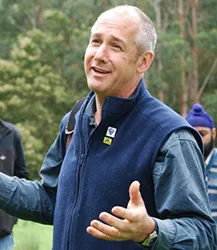
Reid has spent his career pruning some seventy species on his own Australian farm, and the line lands at the end of a long, practical explanation of why he prunes at all. His argument is that pruning lets you thin aggressively while the trees are small, so you never have to find a buyer for the low-grade wood that dominates industrial forestry — the problem he says the industry keeps trying to solve from the wrong end. The host had just raised the monoculture Douglas fir and pine plantations of the US as the same case.
…other species, particularly from Pennsylvania. And because no one really grows eucalypts for solid timber, and now that they've closed the native forests in at least two of the big states in Australia, no more harvesting of the public native forest, that market is now an opportunity for us as well.
…are familiar with pruning fruit trees. And you heard about pruning fruit trees that can seem complicated. And I always tell people that pruning timber trees is way easier than pruning fruit trees. So it shouldn't be intimidating. Could you walk us through the process of pruning a timber tree?
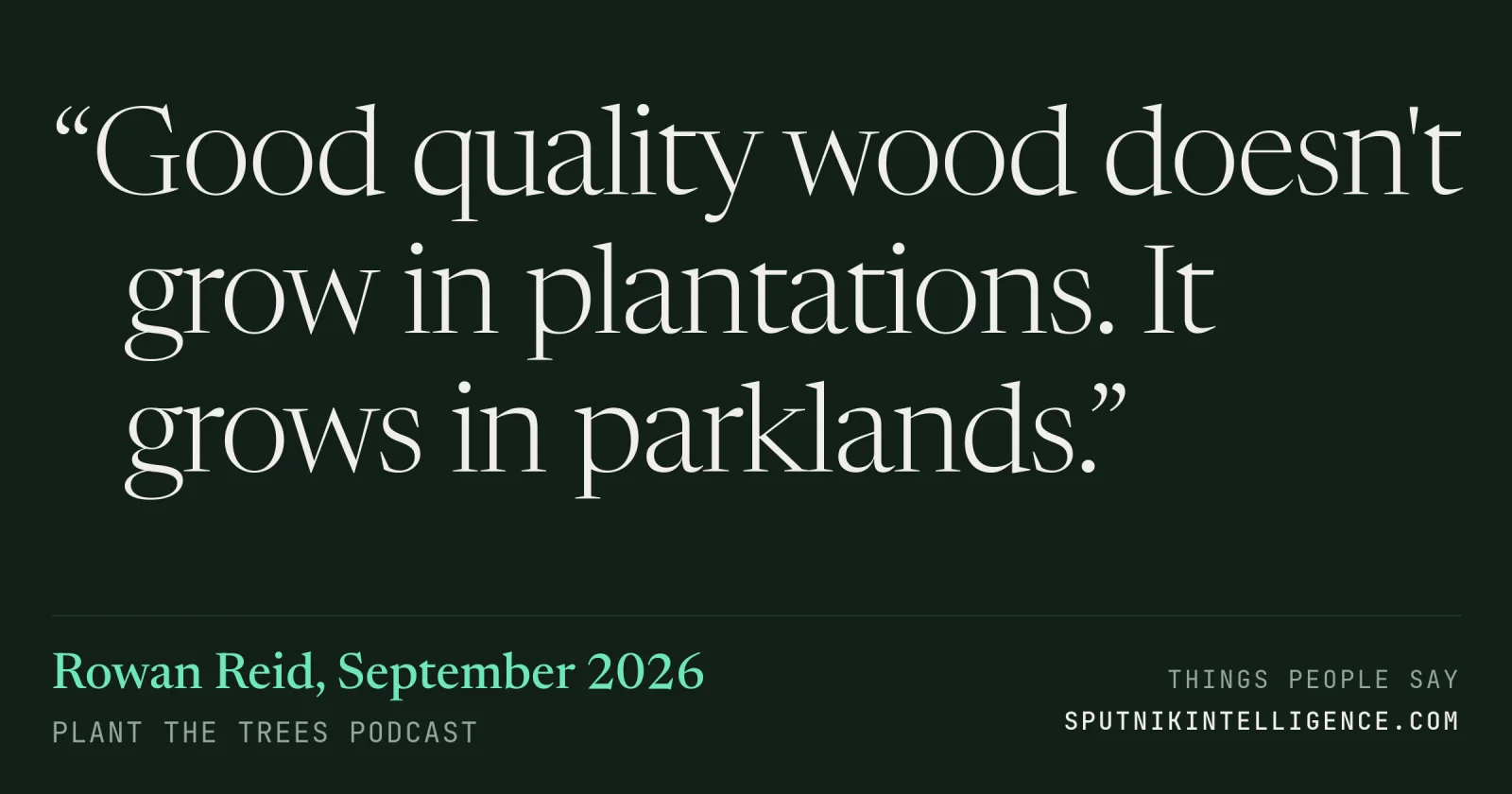
…can graze underneath because there's a bit more light and pasture, particularly in the early part of the year. Suddenly pruning opens up a totally different forest type and an opportunity. And you don't need that big consolidated square block of trees because you don't care about the edge trees. Everything's on an edge. It's an open parkland. And my view is I've started using this term a lot. Good quality wood doesn't grow in plantations. It grows in parklands. And I can see people who've managed parklands and they're growing really high quality timber.
Yeah, you might as well prune everything while it's easy to prune while it's small. Well, it's
easy.
And thin it out. Because if you're going to do that non-commercial thinning, whether it's pine or other species, or there's a term in the U.S. called chip and saw, where part of it goes to saw logs and most of it goes to chip. And if you look at the returns, just the economics on those two…