Makos, author of a book on the 1943 low-level bombing raid on the Ploiești oil refineries, was asked about writing history for the public rather than for academia. He argues that the 30,000-foot view of war leaves readers cold, and that the stories of individual aircrews are what make people care.
…review. And I think that we have to say enough is enough at a certain point. We've digested Black Thursday enough. We've digested the Schweinfurt rate. We've digested these things. Now it's time to talk about the people who inspire us, the human story, because the other stuff's already been done.
…can inspire us to rise to the occasion as well. You know, so given that context, it's really important that we make history more broadly accessible. I mean, I remember that David McCullough explained that we need to write for the people, not just academia. What are your thoughts on that challenge?
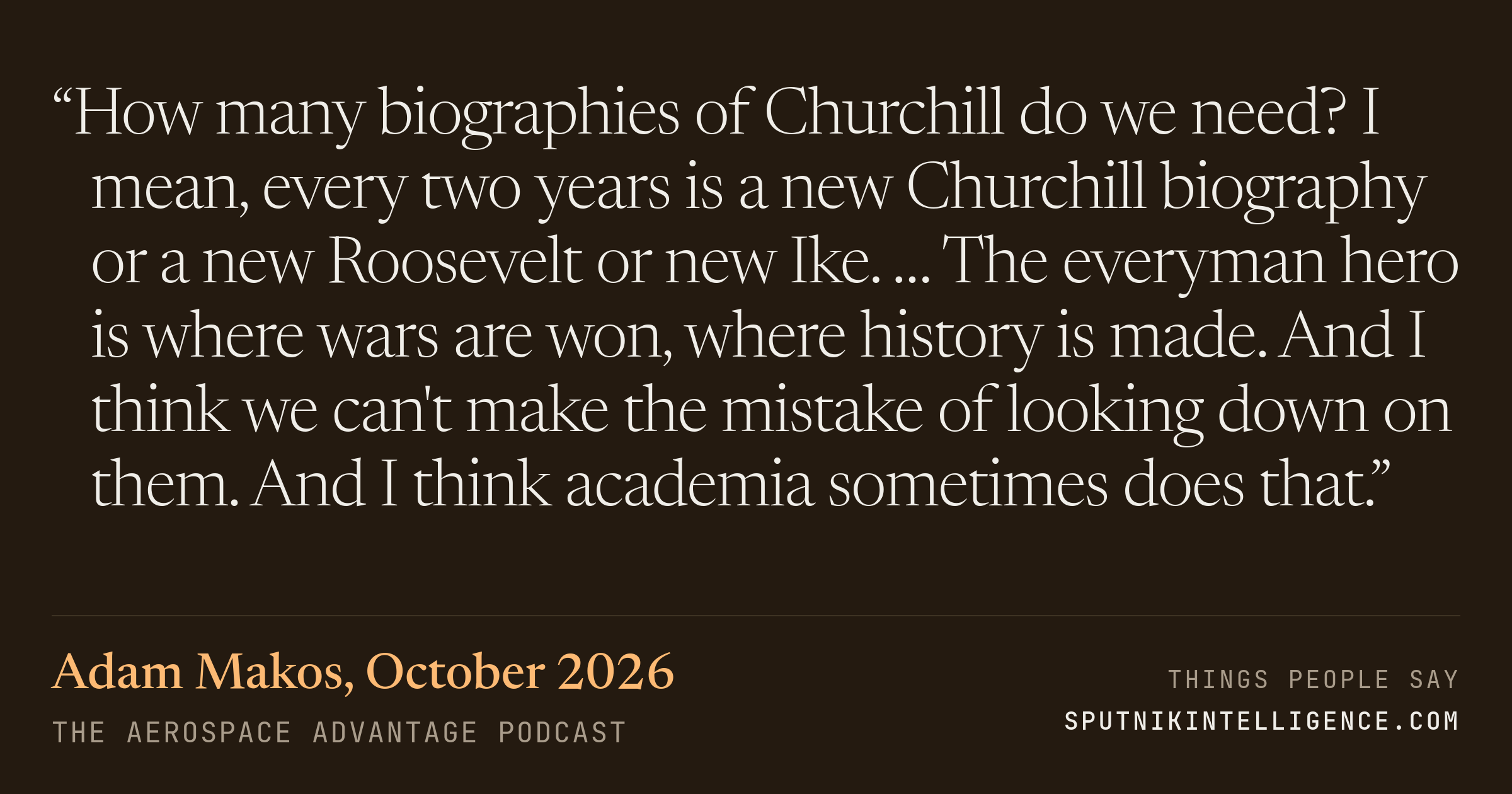
I agree 100%, Heather. And I think we've had not to pile on to this, but how many biographies of Churchill do we need? I mean, every two years is a new Churchill biography or a new Roosevelt or new Ike. And I understand the immense weight on their shoulders. But I also think we need to look at the everyman hero. That's where history is made. It's Ernie Polson and Bob O'Reilly holding onto the yokes of that bomber, knowing they can't turn left. They can't turn right. There's power lines in front of them. They have to go over the power lines. The bomber next to them is about to make a turn to on the rendezvous point to go back to Libya, and they can't turn with it. And that plane's about to fly into them. And then they're going to try to crash land this plane and they've got a hung up thousand pound bomb in the bomb bay. The everyman hero is where wars are won, where history is made. And I think we can't make the mistake of looking down on them. And I think academia sometimes does that. Well,
I think we can't make the mistake of forgetting them. I mean, like you mentioned, we talk about the Ikes, we talk about the Churchills, we talk about the Aces, and we do need to have those visible heroes to inspire us about how can we achieve excellence. But as you said, wars are won by the…
And one thing that really concerns me, I mean, it's the passing of the World War II generation that brought historic awareness and appreciation to the kitchen table across America. And when those individuals passed, it just, I have this gut feeling that America's historical awareness just fell off…
It's a very scary moment, I think, because those were people, as you mentioned, you would see them at the air shows. And there was something comforting about that generation that you felt like they had already been through hell and they could guide you through anything. Charles McGee of the…