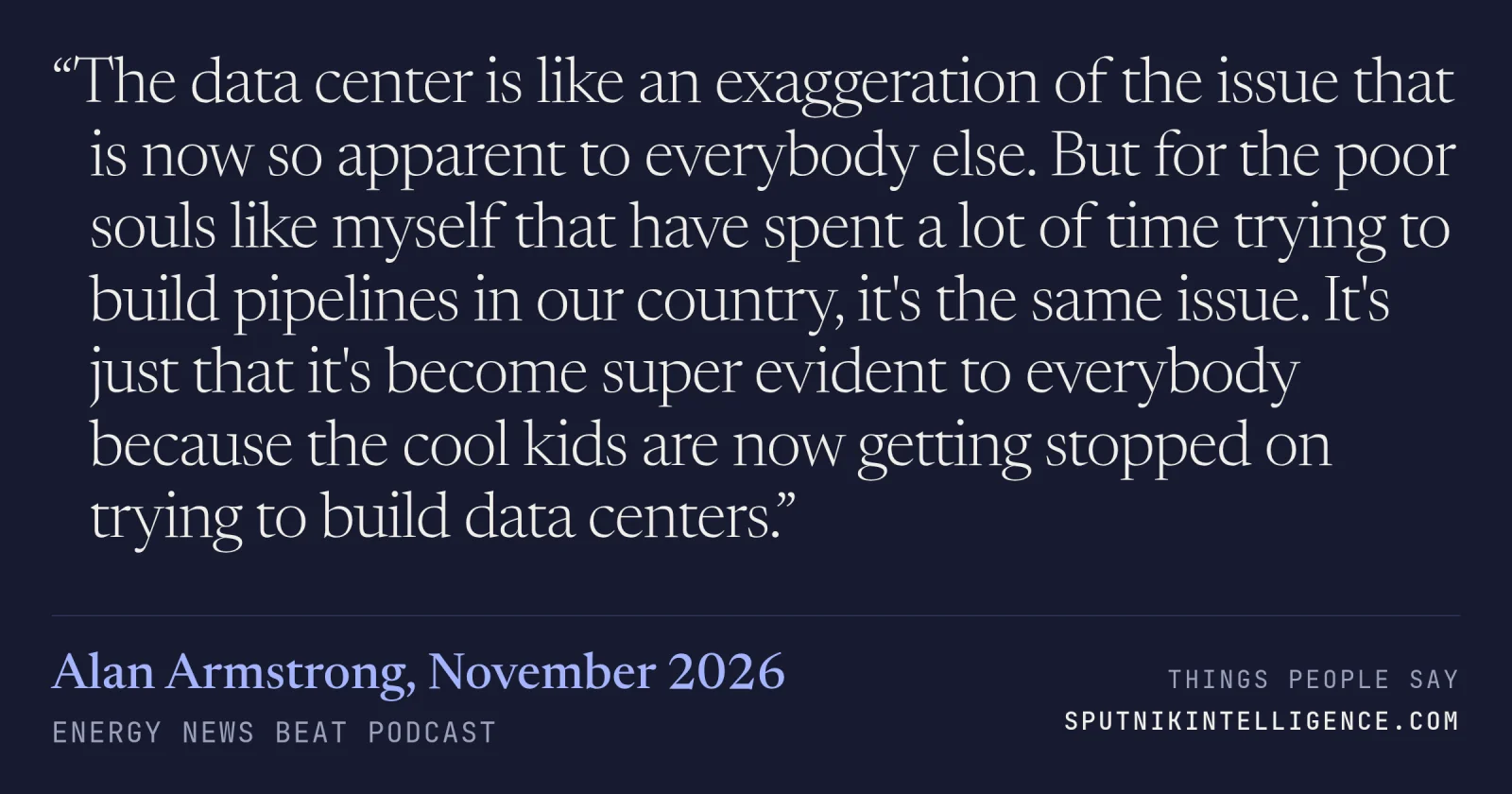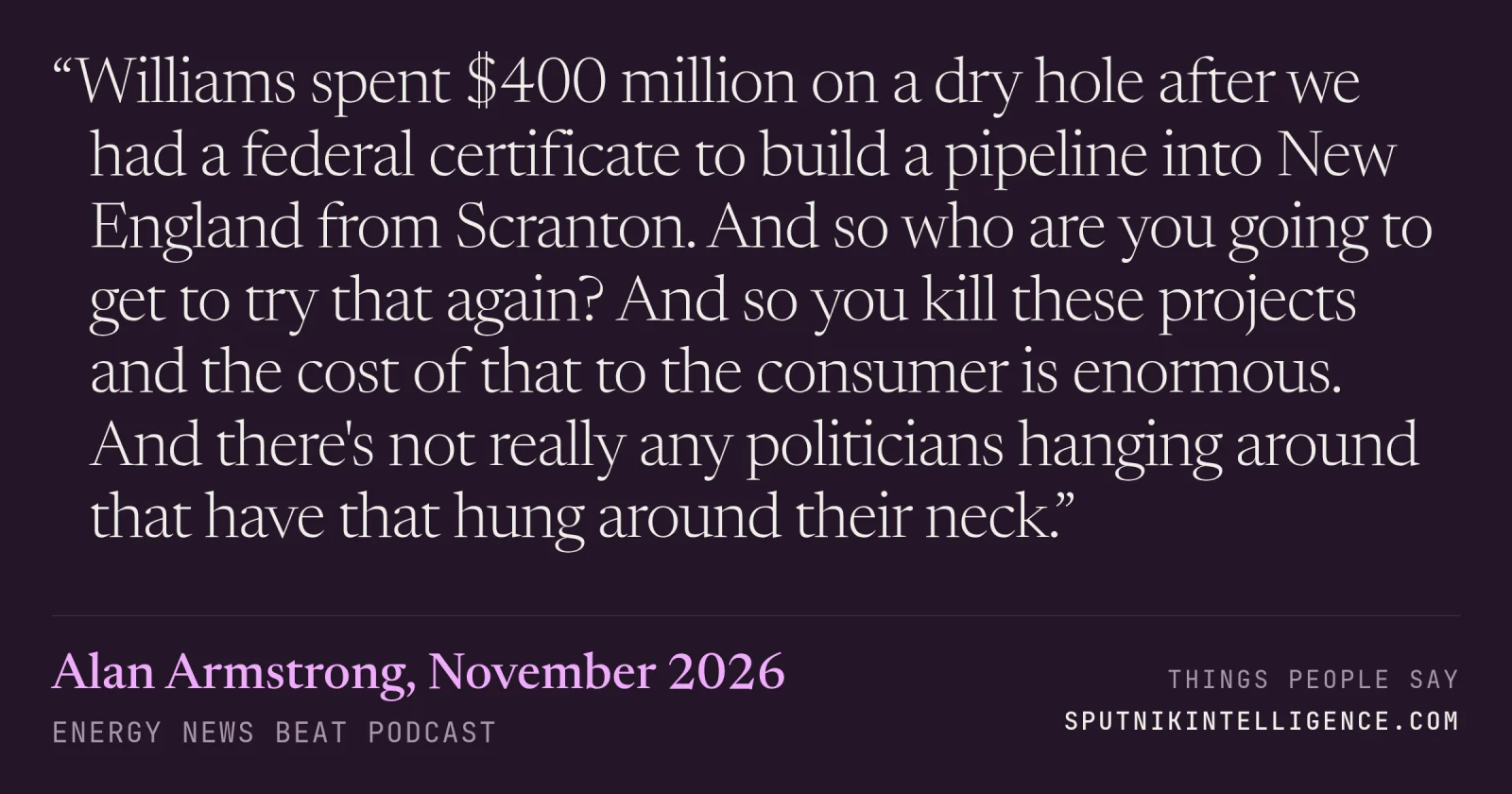
Armstrong, who previously ran the pipeline company Williams, argues that blocked pipelines into New England raise fuel and utility costs for consumers, with no political price paid by the officials who blocked them.
…120-mile pipeline to solve a problem that would take care of dramatically lower emissions. New England has the highest emissions of any of the lower 48 on a population-adjusted basis because they have to burn fuel oil for power generation on a regular basis and they burn fuel oil for heating fuel.
…take a look, propane is actually the best last mile. But boy, think about how much in green and you nailed it, Senator. We could get rid of a lot of emissions if we changed from heating oil, which is bad. It's almost as bad as bunker fuel for ships. Change it over to LNG or excuse me, natural gas.
Yeah. I constantly tell my colleagues on the other side of the aisle, I really sometimes question whether you're really after lower emissions or you're just trying to kill fossil fuels. Because if you truly were interested in lowering emissions and you really believe that it's an urgent issue, as you constantly profess, you would be the ones forcing a pipeline to get built into these areas. Because if you think about emissions from a present value standpoint, regardless of what's going to happen 20 years from now, if you could take those emissions out of the market very quickly and you would take the emissions out directly from the power generation without even having to get all the way down to the fuel oil market at this point. But once you've built it for the power generation, then you've got the excess capacity available to serve the winter loads as well. And so it's kind of been a chicken of the egg up there, frankly, not so much a market problem as it's been a regulatory problem because who in the world wants to go invest? Williams spent $400 million on a dry hole after we had a federal certificate to build a pipeline into New…
You know, RT, you have talked about the permitting in Texas. In fact, I relied on You and for one of my articles that I wrote in California is about six months to two years to get a permit. Colorado is about six months and it's four days in Texas. Is that right, RT?
Yes, that is correct. Here in Texas, and of course, other places like Oklahoma and Louisiana, we understand that oil and gas is the lifeblood of our economies and the world economy. And the faster we can get permitting done, the faster we can actually start working, right? I mean, that is what this…
Where do you see the permitting reform really kicking in? Do you see us at a 90% getting this thing through? Because we're kind of like running up against a brick wall.