Dina Temple-Raston

Things Dina Says on Podcasts

Host and managing editor of the Click Here podcast and senior correspondent at Recorded Future News, covering cybersecurity, technology and national security. Previously on NPR's investigations team, and created the Audible podcast What Were You Thinking. Hosts Click Here for Recorded Future News. Appears on Radiolab and The Lawfare Podcast.

Where to Find Them

Dina Temple-Raston hosts Click Here . They have also been a guest on Radiolab (3 times) and The Lawfare Podcast .

Recently: “Facial recognition can find missing people. It can find you, too.” on Click Here (November 2026); “Open-source voting machine aims to restore trust in U.S. elections” on Click Here (November 2026); “AI chatbots can make election fakes. Can they spot them?” on Click Here (October 2026); “Russia’s election trick: hijacking what you already believe” on Click Here (October 2026); “The Social Security whistleblower who stopped DOGE from deleting 2.7 million lives” on Click Here (October 2026); “If deepfakes are getting better, can we trust our lying eyes?” on Click Here (October 2026).

What They Said

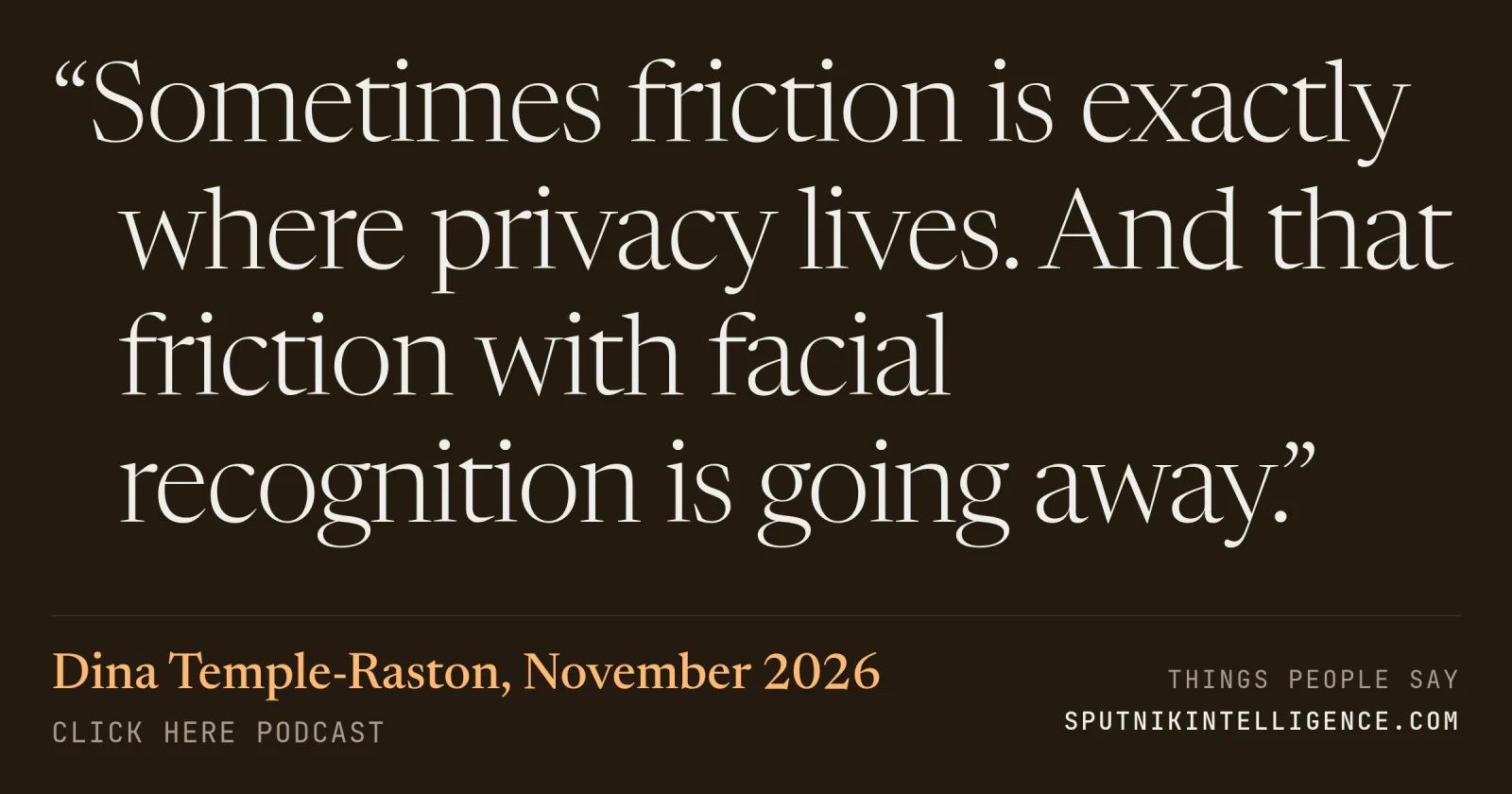
“Sometimes friction is exactly where privacy lives. And that friction with facial recognition is going away.” — Dina Temple-Raston, Click Here

Temple-Raston describes walking through an airport decades ago, when strangers saw your face but couldn't name you. She calls this 'practical anonymity' and says facial recognition removes the effort that protected it.

Click Here · 2026-11-06 Permalink → Listen →
Click Here Around 03:13 into the episode
Speaker 1

…privacy. Your face is necessarily public, but until fairly recently, that didn't mean it was actually identifiable by anybody who happened to see it. We used to have this kind of practical anonymity. You could be visible without necessarily being known, but facial recognition is eroding that.

Speaker 2

Well, I want to stick with that phrase practical anonymity because you're not saying people used to be invisible. It's just that they were harder to identify. I mean, just pull on that thread a bit for us.

Speaker 1

Well, so think about walking through an airport 30 years ago. Hundreds of people would see your face. You weren't in private in the literal sense, but unless someone recognized you, you were pretty much anonymous, just another face in the crowd. And that tiny little bit of friction actually really mattered because identification took time, it took effort, and often required another human being who already knew who you were going, hey, Dina. You know, technology has removed a lot of that friction. And we tend to talk about friction as this bad thing, that technology is always promising to eliminate it, but. Sometimes friction is exactly where privacy lives. And that friction with facial recognition is going away.

Speaker 2

But there's an obvious tension here. The same friction that protects my anonymity can make it much harder to find, say, a missing child. What's the case for widespread facial recognition technology?

Speaker 1

Well, that's the strongest case for facial recognition technology is that someone is missing. Someone has been identified, unidentified for years. A family is waiting. And suddenly there's this technology that can search across enormous numbers of faces and maybe produce a lead. And in those…

Speaker 2

Dina 404 Media reporting found that Immigration and Customs Enforcement plans to give potentially more than a thousand local law enforcement agencies a facial recognition app. It would query a database of hundreds of millions of images to verify someone's immigration status. And that information…
Speaker names come from our own diarization. The position is estimated from where the line sits in the episode.
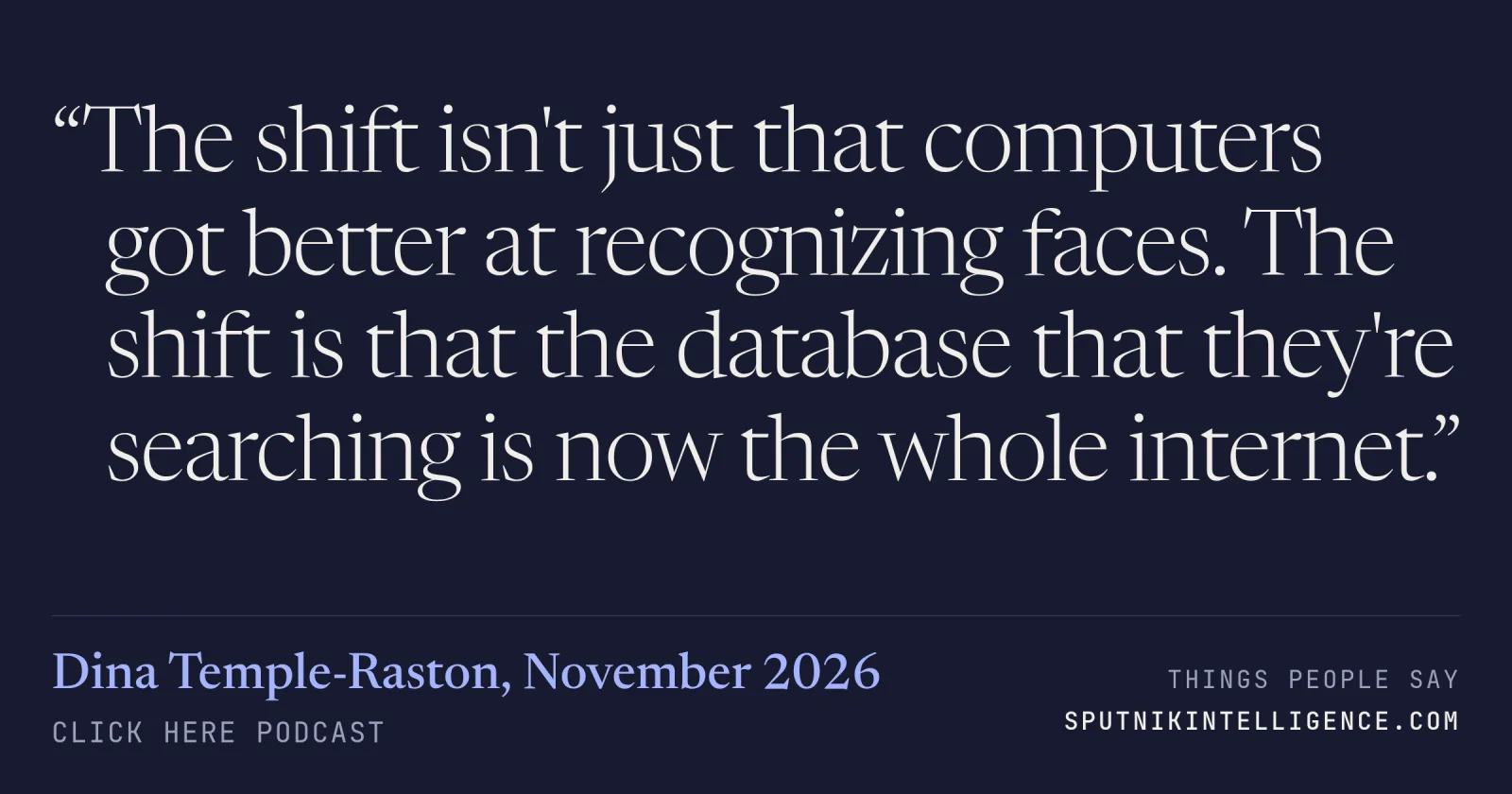
“The shift isn't just that computers got better at recognizing faces. The shift is that the database that they're searching is now the whole internet.” — Dina Temple-Raston, Click Here

Asked what has changed about facial recognition, which police have used for years, Temple-Raston says it used to be limited to mugshot or passport databases; now systems search photos scraped from social media, news sites and school websites.

Click Here · 2026-11-06 Permalink → Listen →
Click Here Around 01:17 into the episode
Speaker 3

Thank you so much.

Speaker 2

Dina, facial recognition itself isn't new. I mean, police have been using it for years. So what's actually changed and why does it remain controversial?

Speaker 1

Well, what's really changed is the scale and the haystack. For a long time, facial recognition was mostly limited by the database you could search. So police might compare a face against mugshots. Border Patrol could compare you against maybe a passport photo. And the technology could only find you if you were already in the system it was searching. What's really changed is that some systems are now casting a much wider net. Your picture has been scraped, for example, from the public internet, social media, news sites, company pages, school websites. Basically, all those photographs we blithely uploaded years ago now can be searchable. And that shift isn't just that computers got better at recognizing faces. The shift is that the database that they're searching is now the whole internet.

Speaker 2

Well, that's a really meaningful distinction because if we're talking about a mugshot database that contains people who have been arrested, the internet is all of us. So how much does that expand the reach of who's searchable?

Speaker 1

Well, it's a huge expansion because it includes anybody who has left even the tiniest visual digital trail online. And that fundamentally changes the whole idea of who is searchable. A six-year-old isn't going to be in a mugshot database. A missing person may never have been arrested. Someone whose…

Speaker 2

But we have been through different versions of this before. Google made the web searchable. Social media made our relationships searchable. Why is the face different?

Speaker names come from our own diarization. The position is estimated from where the line sits in the episode.

Collections They Appear In