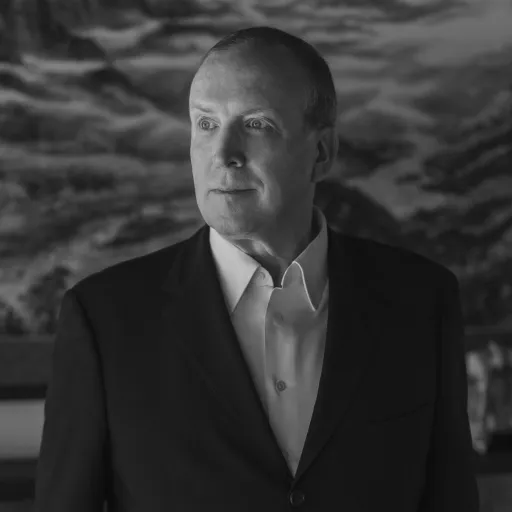
 Thomas PM Barnett
New York Times-bestselling author of "The Pentagon's New Map" and 2023 book "America's New Map." Geostrategist with U.S. national security background.
“There is a difference between preparing for catastrophe and luxuriating in its inevitability. Preparation assigns you work. Inevitability provides you excuses.”
Thomas P.M. Barnett’s Global Throughlines · Geopolitics & World Affairs · November 2026
Context
Reading his own essay aloud, Barnett argues that doomsday framing, including in AI, lets people feel anxious about the future instead of responsible for it. This line separates real preparation from fatalism.
Transcript
Our kids are going to hate us.
…get all our money and houses when we die. That's the other thing. I don't think we should die. I think we should. Also, last thing. Even though it's cold and we can't hear any of the bands and we're standing in mud and feces, I think we should say this concert was like incredible and life-changing.
…survive? Why compromise over arrangements about to become irrelevant? The church lady, how convenient. I'm not saying that young people are immune because their doom scrolling and doom spending indicate otherwise. I'm saying that temptation is particularly fierce for people nearing the handoff. It permits them to experience anxiety about the future as a substitute for responsibility toward it. There is a difference between preparing for catastrophe and luxuriating in its inevitability. Preparation assigns you work. Inevitability provides you excuses. Now bring in the tech bros. Their version is ferociously entrepreneurial. For the exhausted citizen, existential fear says, why bother? For the ambitious founder, it says, you cannot afford the interference. The public is invited to contemplate its helplessness. The company is invited to expand its authority. We alone understand the machinery. We alone appreciate the danger. We alone possess the…
More from Thomas P.M. Barnett’s Global Throughlines