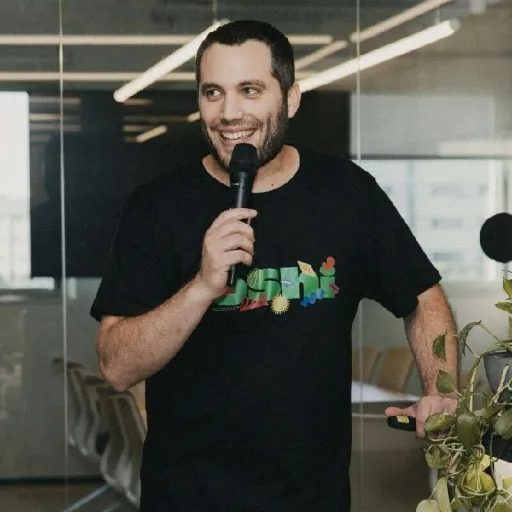
 Ofek Ron
On Protein Production Technology Podcast
“The most hunted animal in the world is fish. When you eat a fish, you sometimes eat the whole fish; if you eat sardines, you eat many fish. And I looked at the market: 70 to 80 percent of the people that are eating fish are not eating fish burgers. They're eating it in the natural form, whether it's a fillet or they're buying the full fish and cutting it at home. No one is tackling that problem, the 70 to 80 percent market potential.”
Protein Production Technology Podcast · Alternative Proteins · November 2026
Context
Asked why he chose seafood over other alternative proteins. He gives two reasons: the number of animals involved, and a market gap, since most fish analogues were sticks and burgers rather than whole cuts.
Transcript
…rely on others that they're not founders in the company and they can start something and they can live and they can stay. And you're, and you're not, you're not, it's not a foundational knowledge of the company. So, definitely, expertise is also a super important thing, and you need both of them.
Now, you knew you wanted to work in alternative proteins, but you certainly didn't choose the easiest category, fish. Everyone seemed to be chasing burgers a few years ago. So, what made you look at seafood and think that was where you could make the biggest difference?
Yeah, so I looked, I looked from two perspectives. First of all, as an animal right activist, I wanted to know that I'm doing something which is meaningful. So, for example, cows, you know, burgers that are coming instead of cows. Cow, for every cow, you have so many eaters, right? It's a huge animal. But the most hunted or animal in the world is fish, right? Because it's so small, when you eat a fish, you sometimes eat the whole fish. Okay, if you eat sardines, you eat many fish. So, from an animal right perspective, I was the most passionate about fish from the beginning because I said the impact, okay, of letting someone eating plant-based fish instead of eating fish is saving more lives, okay, in my perspective. So, that's one. And, second, I wanted to do something that no one else achieved, right? Because if I'm trying to do another piece of burger, even if I'll do it better than beyond or impossible, I thought they raised tons of money, they're already crushing it. All good, let them do their thing, right? And I want to come in in a place that I feel others are not playing or not playing well enough, and that I can, you know, be a player that can be the best in the world. In that, and I looked and I looked at…
And was there a moment when you thought, okay, this might this might actually work?
Yeah, there, there were a few moments, okay? The first moments, of course, is once you put this idea into some very sophisticated investor and they put a check. You say, okay, you know, they were putting the check at impossible. They were putting the check at Oakley. They also chose us. Maybe we're…
And of course, that wasn't an overnight thing. I think you said in our discussions before that that took four years to arrive. So, how do you keep convincing yourself and presumably also your team and your investment community to keep going for a number of years before you get to that moment? You…
More from Protein Production Technology Podcast