 Yotam Ottolenghi
Food everything: I write, cook and run restaurants.
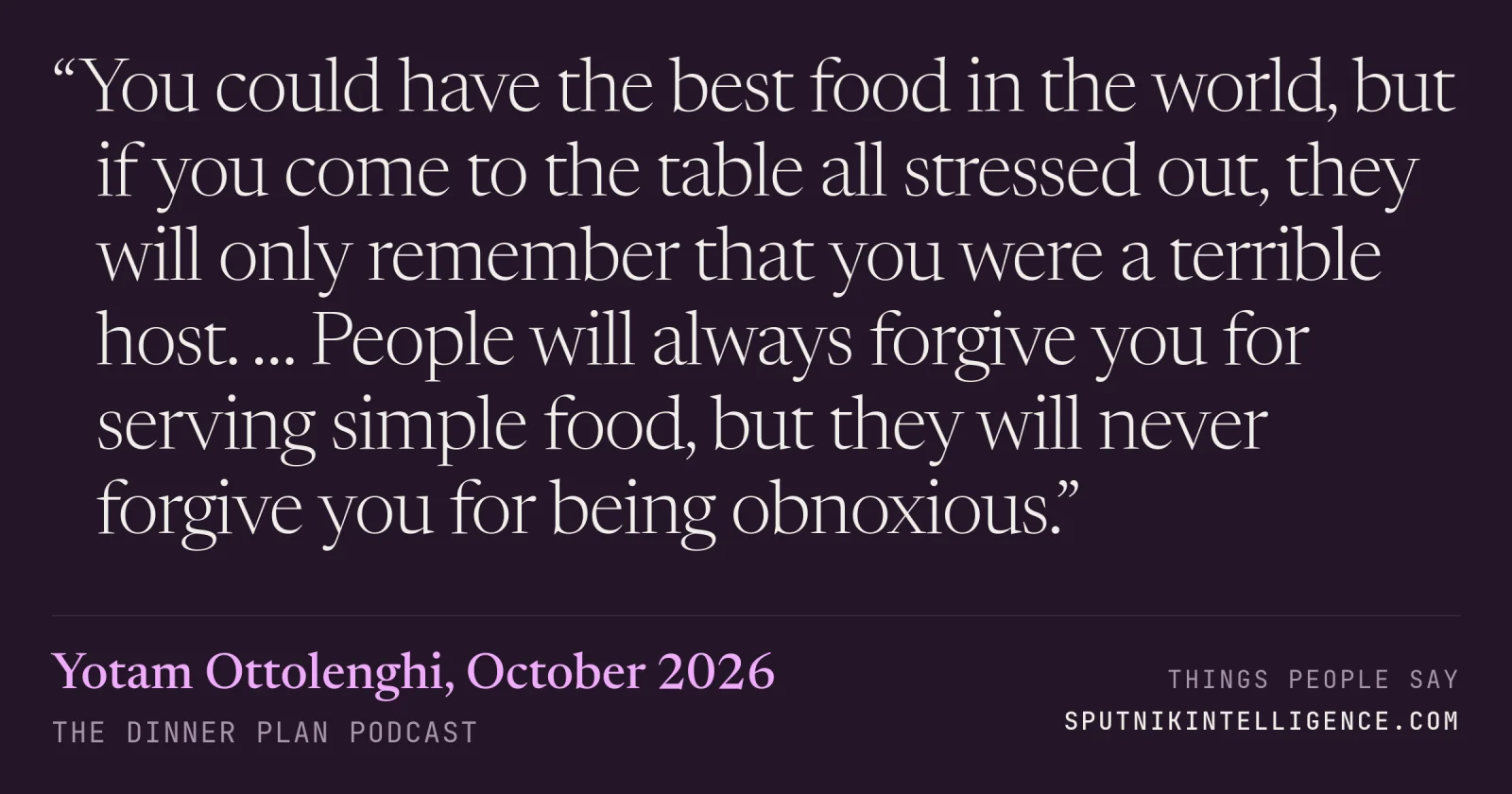
“You could have the best food in the world, but if you come to the table all stressed out, they will only remember that you were a terrible host. … People will always forgive you for serving simple food, but they will never forgive you for being obnoxious.”
The Dinner Plan · Food & Beverage · October 2026
Context
The host has just said that dinner guests don't score you on how much work you did. Ottolenghi agrees and says the score comes from how engaged you were with them. It's his argument for cooking simpler food when people come over.
Transcript
…But it's not fancy if once you've done it, you can do it with your blindfolded next time because the only bit that is a little bit hard is cutting the butternut because butternuts are quite hardy. But once you've done that, cut it into wedges, all the rest is done in the oven or a mixing bowl.
And when people come over for a dinner party, they're not giving you a score based on how much work you did.
They so don't. You know where the score comes? The score comes as to how much of how engaged you were with them. That's where you get a score. You could have the best food in the world, but if you come to the table all stressed out, they will only remember that you were a terrible host. Not even a terrible host. You just didn't give them attention. You didn't look them in the eye. You didn't have an easy going chat. So I think, yeah, absolutely. People will always forgive you for serving simple food, but they will never forgive you for being obnoxious, right?
I'm curious if you had, as you were putting this book together, were there rules like how much time things could take or how long the prep or the number of ingredients? What defines simple?
Yeah, it's a really good question. So in the previous book, we had very, in the first simple, we had very clear parameters and they're very easily coded in the book. So we had categories like under 30 minutes, under 10 ingredients, the make ahead, pantry cooking. So we broke it down into all the…
Is there a flavor combination or an ingredient combination in this book that just particularly delights you?
More from The Dinner Plan