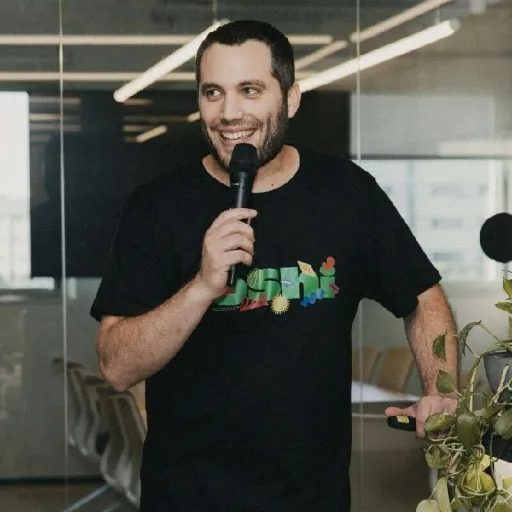
 Ofek Ron
On Protein Production Technology Podcast
“We've been 30 people in Oshi, now we're 15. When we were 30, we were in maybe 10 to 20 restaurants. Now we're in hundreds of stores and restaurants across the U.S. Sometimes getting more people slows things down rather than the opposite. Before you hire, give the team a chance to adjust. I was hoping that if it was 100% without a person, it would be 90%. But what happened is they did 120% when you took someone out. They don't need more people. They need more efficiency, less conference calls, and more empowerment to get things done without needing your permission.”
Protein Production Technology Podcast · Alternative Proteins · November 2026
Context
Asked what lessons he would pass on from building the company. He says the team halved while the business grew, and argues that headcount often slows a startup down.
Transcript
…use really good and unique ingredients. But most of the cost comes from the shift cost, which is the people cost. So that's the way we reduce it currently. And the next stage would be, of course, to complete the scaling up so we can also get the same results in California and less shipping costs.
…I'm sure it can work for you. Now, you've been pretty open about the fact that the machinery wasn't the only area where you learned as you went. You've said some of the hardest lessons haven't been about the product, but the people. So what has building OSHI taught you about hiring the right team?
A few things. First of all, so as I said, knowledge is one thing, practical experience is another thing. Bet on the practical experience. It's a lot more important. The second thing is less is more. We've been 30 people in OSHI, now we're 15. When we've been 30, People, we've been in, I don't know, 10 to 20 restaurants. Now we're in hundreds of stores and restaurants across the U.S. Half of the team. If you ask the people, and most of them were here, also when we've been 30, we're good in retention of people. You have people that have been with us for years in the company, and we're just five and a half years old. You ask them which company moved faster, did more, they will say this company. So sometimes getting more people slowing things down rather than the opposite. And I learned that don't hire when someone is out automatically. Before you hire, give the team to adjust, give them to do the same workloads as a tinier team. See how it works. And I was hoping that, you know, if it was 100% without a person, it would be 90%. I say, okay, maybe I'll take that 90% instead of paying another salary. But what happened is that they did 120% when you took someone out. So we found out that, you know, don't take like, you know, people, they always say the team leaders, we need more people, we need more people. No, they don't need more people. They need…
I'm with you on conference calls. I can't stand them. We probably have three or four a week and I just probably take about three or four hours of my wake-up in just calls. Now, has there been a point where you really wondered whether Oshi was going to make it?
Is there, can you repeat?
Has there been any points where you wondered whether Oshi was going to make it as a company?
More from Protein Production Technology Podcast