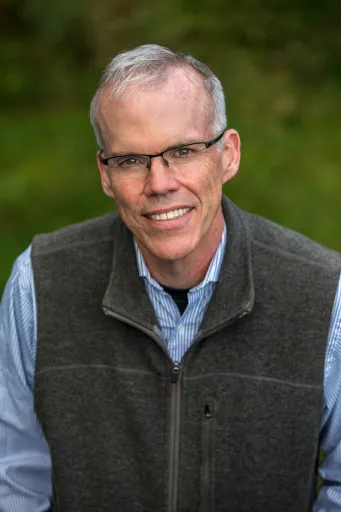
 Bill McKibben
Author, educator, and environmental activist; a founder of 350.org and Third Act.
“Millions upon millions of individual Pakistanis have just gone and bought solar panels and then gone on YouTube and figured out how to hook them together. And they've built the equivalent of something like half the country's national electric grid in the course of eight months. It's hard for Americans to understand this because we're the one place that isn't doing it.”
99% Invisible · Product & Design · November 2026
Context
Bill McKibben gives an example of a country adopting solar because grid power is unreliable and expensive, not because of climate worries. Cheap panels spread from the bottom up once the economics work.
Transcript
…it gets harder to find them. At the moment, if you want to get oil, you have to get good at going miles under the surface of the ocean because all the Beverly Hillbillies stuff is long since used up, you know. But the sun shines thousands of times more energy at us than we could ever hope to use.
While America hasn't embraced solar, others definitely have.
You go look at a country like Pakistan, which has suffered terribly from climate change, but the thing that's driving them at this point to put up solar panels is that their electricity supply is unreliable and expensive. So because they have a border with China, millions upon millions of individual Pakistanis have just gone and bought solar panels and then gone on YouTube and figured out how to hook them together. And they've built the equivalent of something like half the country's national electric grid in the course of eight months. It's hard for Americans to understand this because we're the one place that isn't doing it. In the year 2000, the solar water heater behind me, which is being dedicated today, will still be here, supplying cheap, efficient energy.
On the White House Solar in 1979, Carter had outlined the possible futures for his 32 solar panels.
A generation from now, this solar heater can either be a curiosity,
the kind kept by a Chinese collector, a museum piece, something the Smithsonian puts behind glass,
More from 99% Invisible