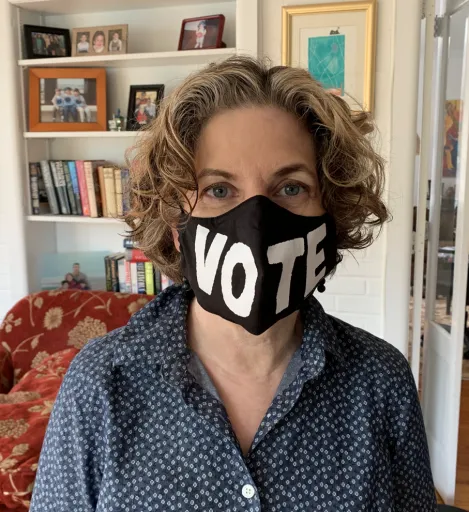
 Allison Fine
Advocate for women and freedom
“In no other business area, Paul, is anybody asking you, do you need a chair to do your work?”
The Aboard Podcast · AI Builders · October 2026
Context
Fine was explaining the "overhead rate" that funders use to judge nonprofits: how much money goes to the mission versus the infrastructure behind it. She argues it keeps nonprofits from investing in technology and stuck in transactional fundraising, noting that only about 19% of donors give a second time.
Transcript
…Why should I trust you this time? Right. The second part is really about a scarcity mentality within nonprofits that is aggravated by funders, right? Who are looking at this magical mystical overhead rates, which is nonsense. No for-profit company has to explain their overhead rates to anybody.
Can you break that down a little bit? I think that'll be new for people.
Nonprofits are asked how much money goes directly to your mission and how much money goes to support your organization, the infrastructure you need. Maybe it's rent and equipment and, you know, your chair. In no other business area, Paul, is anybody asking you, do you need a chair to do your work? But in nonprofits, where governments and foundations are trying to pull apart their businesses, right? And finally, it comes to the boards. And nonprofit boards are often chock full of people who don't necessarily understand the work that the nonprofit is doing. And they begin every meeting looking at the financial statements and they want to see cash in the door. And regardless of how much it…
It's an environment of, I mean, let me be the donor for a second. I want to make sure my money's going in the right place. Why'd you get new printers? Did you really need a new printer? Right. Like, it's a dynamic that's tough. And we always sympathize, by the way, and I sounded maybe a little more…
At our last agency before AI, a Do-Good org would come to us and they would say, we really want a platform and we want to do case management for our foster kids, or it could be we want to be smarter about fundraising and so on. And we would come back and we'd be like, look, we can do some to help…
Yeah. Yeah. And let me also just add, Paul and Rich, my heart breaks for these groups, right? They are working so hard. They have no investment capital. They have no margin, right? And very little support. So this work is incredibly hard. And until you've sat in those executive director's shoes or…
More from The Aboard Podcast