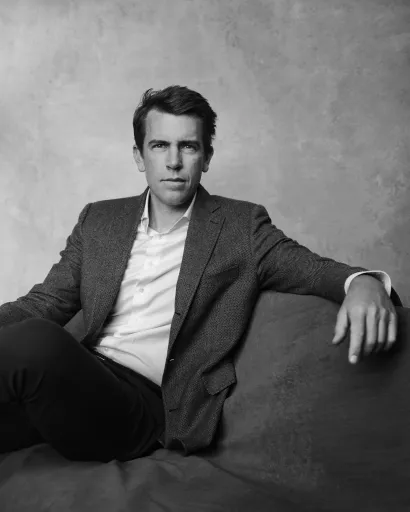
 David McCloskey
Sunday Times bestselling spy novelist and former CIA analyst who wrote for the President's Daily Brief and served on field rotations across the Middle East.
“Bond in that book is a sort of a bruised, melancholy civil servant, I think it's fair to say, who drinks way too much. He smokes like 70 cigarettes a day, spends a lot of interior monologue in that novel worrying about his own cruelty… He is, I think, under the surface, afraid that the job is turning him into something he doesn't want to be.”
The Rest Is Classified · Geopolitics & World Affairs · November 2026
Context
The hosts were tracing how Bond changed from Ian Fleming's 1953 novel Casino Royale to the films. David describes the original book character, who is quite different from the swaggering screen version.
Transcript
Yeah, not only is the action not particularly accurate to the tradecraft, but maybe the most inaccurate part you're pointing out is a well-fed Britain in the 1950s.
Yeah, that's the fantasy. That's the dream. That's the fantasy. But David, you spend your time, you know, as a novelist writing spy fiction, thinking up characters. What do you make of Bond? And particularly maybe the way he's developed over the years.
Let's just start with the bond of the books a little bit and then kind of talk about how he transitions on screen. Because I think we do want to keep this focused on the bond of the silver screen. So Bond introduced Casino Royale 1953. Great book. I would highly recommend it to anybody. But Bond in that book is a sort of a bruised, melancholy civil servant, I think it's fair to say, who drinks way too much. He smokes like 70 cigarettes a day, spends a lot of interior monologue in that novel worrying about his own cruelty, his capacity for cruel. Fleming actually describes his face as cruel and his taste is expensive, but there's an interior life to Bond in the novels that he's kind of, he's afraid of being bored. And he is, I think, under the surface, afraid that the job is turning him into something he doesn't want to be.
And it is slightly different to the Bond we've come to know and love. I mean, he's not that witty, doesn't have the kind of one-liners. He's a bit humorless, a little bit snobbish, I think, you know, obsessed with brands and the correct procedure, how you do your shirts, how you play golf properly.…
Yeah, it does. I mean, you know, again, we could do a whole episode on the Bond of the novels, but the films, let's focus there. The first film, Dr. No, 1962, it's made by Albert R. Broccoli and Harry Saltman. They keep the consumption of the Bond novels, and I think, at least to start, throw out…
the civil servant bit.
More from The Rest Is Classified