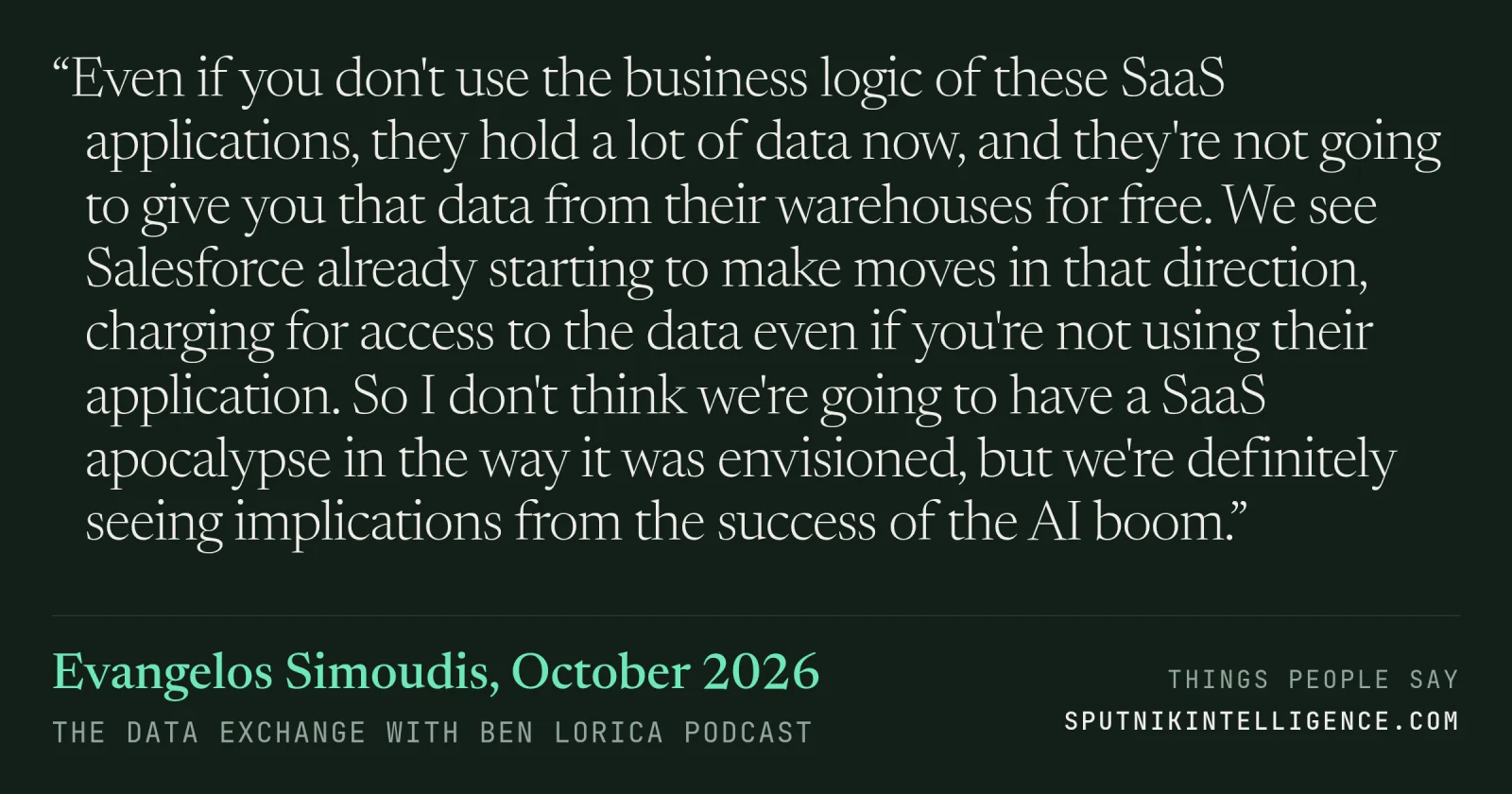
“Even if you don't use the business logic of these SaaS applications, they hold a lot of data now, and they're not going to give you that data from their warehouses for free. We see Salesforce already starting to make moves in that direction, charging for access to the data even if you're not using their application. So I don't think we're going to have a SaaS apocalypse in the way it was envisioned, but we're definitely seeing implications from the success of the AI boom.”
The Data Exchange with Ben Lorica · AI Research & Frontier Labs · October 2026
Context
Debating whether the so-called SaaS apocalypse is real, the guest explains why software incumbents keep leverage even as AI replaces their application logic.
Transcript
…the bug that they can develop software very quickly and very painlessly, if Impressive. Can call that, whether they may be able to implement certain of these features on their own without having to pay these huge licenses. And that puts pressure on the SaaS provide SaaS application providers.
…SaaS. And the comment was, you know, you have all these people on LinkedIn saying, we're getting off your software because now I've discovered Impressive. Can do this and that. And then when you look up whether the person is still using the software, yes, in fact, they're using it quite heavily.
And look, the fact is, and I say this a lot to our portfolio companies, this application. whether it is on-premise like SaaS and the like, whether it is SaaS applications like Workday, like ServiceNow, like Salesforce, they hold a lot of data now. And so even if you don't use the business logic, if we can call it part of the application, they're not going to give you that data that they have now in their warehouses for free. And we see Salesforce already starting to make moves in that direction and charging for access to the data, even if you're not using their application. So that's why I'm saying that I don't think we're going to have a SAS pocket lypse in the way that it was envisioned, but we're definitely seeing certain implications from the success of the AI Boom.
All right. So things I don't like. So the bear case, right? So first of all, the commitments for compute, right? So 800 billion over the next 10 years. At least they don't use the word trillion, because one of my pet peeves in this era, Evangelist, is people throw off the word trillion right and…
Yeah. Yeah. Well, I mean, we're starting to use it in the US debt. So why not? Yeah, look, I agree with you. And I think what you need to consider here, what our listeners need to consider, is the fact that on the one hand, we have these commitments. On the other hand, we don't know what is…
one caveat based on my reading is that most of this can't be cancelled.
More from The Data Exchange with Ben Lorica