 Dave Rupert
Builds web components at Microsoft, after years running the Austin web shop Paravel and co-founding the startup Luro.
Dave Rupert
Builds web components at Microsoft, after years running the Austin web shop Paravel and co-founding the startup Luro.
“I don't need a comment that reminds me about a bug that happened once.”
Shop Talk Show · Hands-On Engineering Podcasts · September 2026
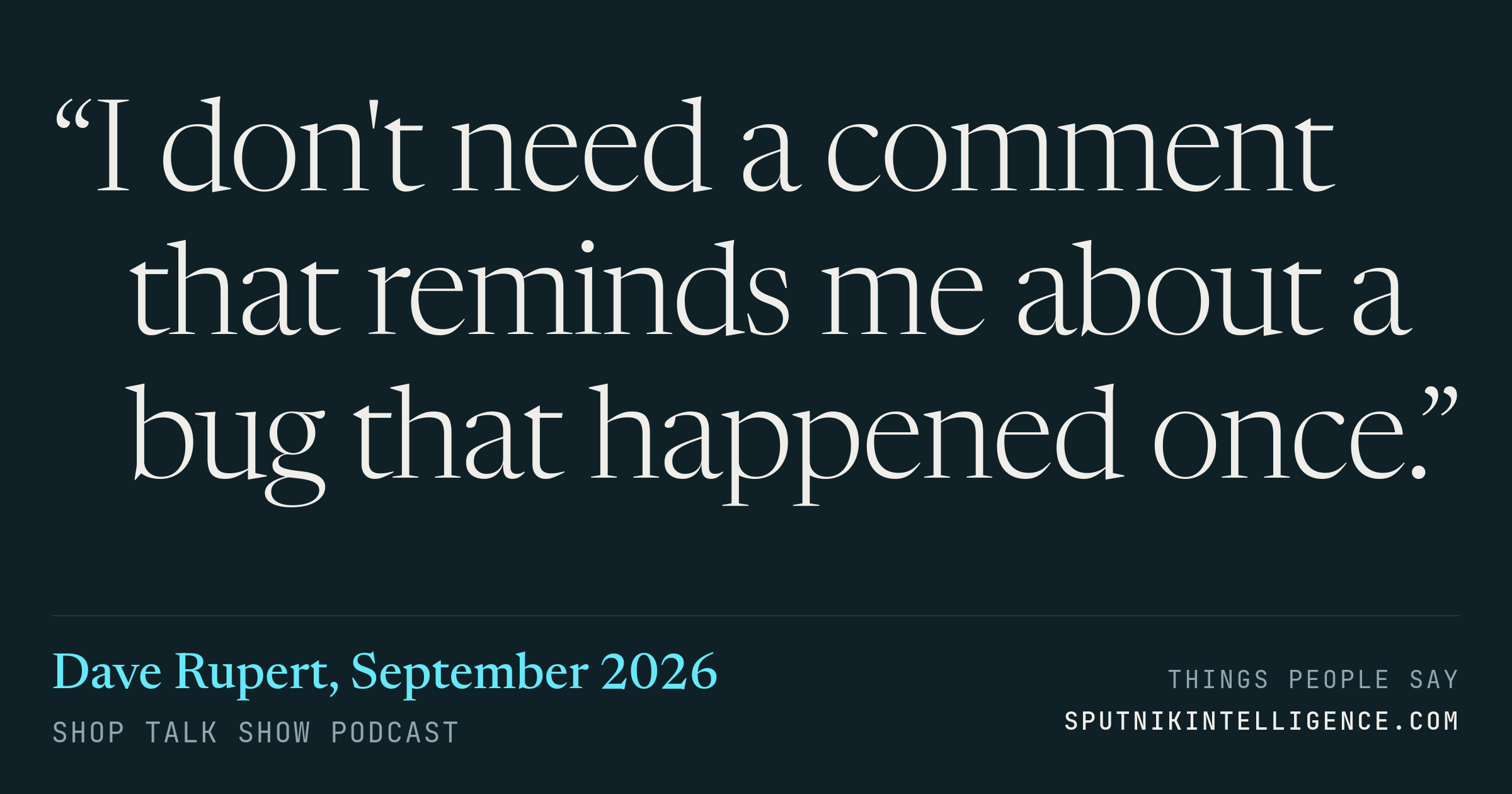
Rupert and Chris Coyier were trading ideas for agent skills that enforce their own taste, and Rupert wanted one that hates verbose AI comments. He is describing a specific failure mode: agents annotating code with the story of the commit — the bug they just found, why they changed the line. His objection is that the bug is transient and the comment outlives it in the codebase.
Transcript
can talk to each other now where they couldn't before. Kind of good. You have
like the classic, like, you're, you're the best document writer in the world. You know, you're the expert front end webmaster. Or you're Doug. You're a really grumpy pull request reviewer. You kind of like nitpick a bunch of dumb shit, don't you, Doug? But anyway, yeah, everyone, you know, try my Doug skill. It's, it's, I should really release that. I got like, what, a week or something until this comes up. Yeah. Try my Doug. I want like
a like a Charlie or something. And Charlie hates overly verbose AI comments. You know what? I worry about some code bases where they're just letting AI rip. Some of these agents, they leave the most. Giant robust comments in there, and they're comments that are like about the commit you're about to do. They're like, Oh, I changed this because you know, there was a little bug here, and then I fixed the bug. You're like, the bug doesn't matter. The bug is super transient in the lifetime of this app. I don't need a comment that reminds me about a bug that happened once. And now I worry people just commit that, they just roll it. And then the code races are full of garbage.
I can I give you a skill recommendation. I think I got this from Ben Huang, right? Uh, Ben Codeson. Uh, it's the uh, I have ADHD skill, and what it does is it's which I don't know how I feel about like telling a model about like my conditions or disabilities or whatever. Like, I don't feel great about that actually, but what I have found is like it's you know, it's skills, so it's like magical incantations. It's like, oh, I pray you'll like do it, you know. But I also like will say, Hey, write this, but uh, I have ADHD. So, and like, I let it figure out what that means, but it's basically like don't start with a preamble, don't be like, Well, oh, certainly, boss, you are so clever to think of that, you know. It's just basically like, okay, here's the command you need to run. So, it's like starts with like the stuff I need to do first and then like can give me context later. Uh, but like you can install the skill, you know, I don't think it works all the time, and and like it may save you tokens, you know, uh, later, but like, you know, it's just like it's like lead with the next action. It's the 10 rules: lead with the next action, number multi-step tests, end with one concrete next step, uh, suppress tangents. Like, that's whatever. Oh, that's like I'm gonna whatever, tie a bow to a tree and hope it works, you know, wards off any evil incantations. But um, suppress tangents, restate every turn. I don't know what that means, like, like, I guess like multi-turn talking, but um, and then specific time estimates, don't be like vague, like, oh, it'll take a bit, you know. Again, I think AI makes up times, it doesn't know how long it takes to do things. Uh, this is the skill,
or is this in the skill?
Make visible, make wins visible. Like, what, what is the benefit here? And then, matter of fact errors, like just say what's wrong. Uh, cap list, surviving items, no preambles, no recaps, no closers, just talk. Like, just nice, it's pretty good for that, which
More from Shop Talk Show