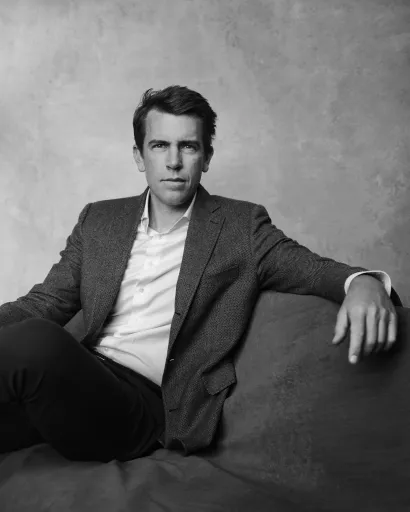
 David McCloskey
Sunday Times bestselling spy novelist and former CIA analyst who wrote for the President's Daily Brief and served on field rotations across the Middle East.
“Is he ever going to have credibility again as he lobbies to loosen, to sell more chips to China? He's completely had his legs kicked out from underneath him by these leaks. … Is there a political faction inside the White House or inside the government, China hawks, that don't want the Chinese to have access to this stuff and want to take Jensen down? And leaking this is a great way to do that.”
The Rest Is Classified · Geopolitics & World Affairs · November 2026
Context
The hosts were asking why a year-old intelligence finding reached the press only this week. McCloskey speculates the leak may be a deliberate move by China hawks, since the Nvidia CEO's authority on chip export policy is now badly damaged.
Transcript
He's admitted to the affair.
…to see him leaving very easily. He's so associated with the company, but it's going to be rocky. And there'll be congressional hearings, I'm sure, and things like that, where there's questions asked about, you know, what he knew, whether he suspected it, and what the administration knew about it.
Just to go back very briefly to the point on why now. I mean, I should say all of the sources for the Times piece of the FT are anonymous. And so you kind of have to read between the lines on what sort of sources they are. It seems obvious that at least some of them had either access to the surveillance intel itself on Huang or knowledge of it or had access to some of them definitely had read the memo that Marco Rubio put together, essentially warning Trump, like that maybe this is a bad idea to let this guy participate in the summit with Xi. It seems likely from an Intel security angle. I mean, the CIA, NSA, like most of the people there would view the Chinese as an enemy and would not share Jensen's kind of view that there's a commercial opportunity here that's not going to affect national security, I think. And so there'd be a lot of people in the intelligence community who would say, this is absolutely, it's almost criminal to allow this, to allow the Chinese to continue to have access to this guy, not bring it to his attention, not bring it to the public's attention, whatever it might be. And then also, but there's also the other piece of this is that, and this is just…
I think that's entirely possible. And I think, you know, it's a way of undermining him, challenging the policy, but also, I think, alerting people that this is something that goes on. Because, you know, I think it's quite possible, in fact, quite likely, given what we were saying about the scale of…
Gordon, do you think that Jensen's lobbying of Trump is being driven by the Chinese? The influence point. The influence point. I mean, because that's the biggest, that's the biggest, I think, question is: would you look at the timeline of Alice Huang's relationship with Jensen? It seems to start in…
Of course. And the answer is we don't know. It would be interesting to see the boring answer. But I'm going to say that I think, because you raised this point with the question, which is the commercial instinct to sell chips to China was aligned anyway with NVIDIA and the commercial drive. And I…
More from The Rest Is Classified