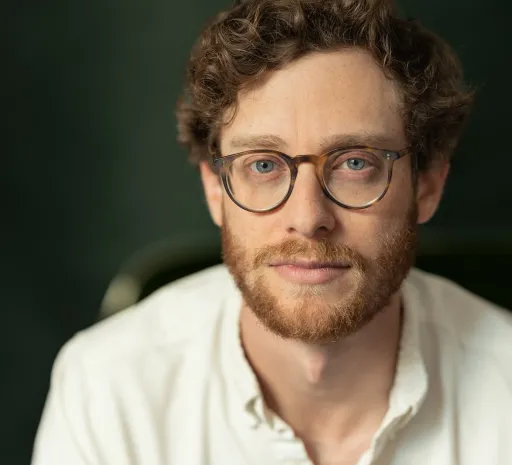
 Dan Shipper
Co-founder and CEO at Every.
Dan Shipper
Co-founder and CEO at Every.
“I think there is a real dirty secret right now that almost every writer is using it. Just most of them are not saying.”
Platformer · Tech Strategy & Big Tech · August 2026
Casey Newton asks what separates writers who get better with AI from those who lose themselves in it. Shipper, who runs Every and builds AI writing tools, answers by saying the quiet part first. He goes on to joke about wanting a writers' anonymous group where people could come and confess.
Transcript
a call didn't feel as personal to her, her mother as talking in person. Right. So I'm trying to think about what is where is it, where is the norm going to go? And that's why I think about cases like, well, if you have an editor who replaces a sentence and rewrites it and you're like, that's better. Is that still yours? And my feeling about it is generally, yes, it is still yours. And so when we think about AI, and I do think this changes a lot, there's a whole range of different circumstances you have to consider. And we do different things in different circumstances. When we think about external writing, different from internal, external writing that has your name on it and has it like is from your perspective. So that might be different, for example, than if we write, if we write like a long-form guide that is intended to be mostly informational rather than narrative driven, we often include the AI as a co-writer. And I'm much more fine with having chunks of it be AI written because I think a lot of it's going to be AI read. It's informational. The point is put it in your agent and help it, like help it help you at the time when you need it. And so I have the norm is much less sensitive to whether this is written by AI or not, as long as you stand behind it. For stuff that is from you or from like from a person and feels like it's yours, that's different. You know, if I see an X, not Y construction, even if you wrote that, I'm like, get rid of that. Like, you don't like, I want you to think about this, right? Like, what is, yeah, what is good writing at its core? And George Saunders says this, which I love, is it is just like applying your taste like on every word over and over and over again until it is the most pure expression of what you've thought over and over as it can be. And the only way you can do that is write a sentence, take a look at it, be like, do I like this or not? Change it, keep going, change it, keep going. And I think you can use AI to help you with that. I do that all the time, but it requires a lot of your time. Like writing, this is cliche to say, but it's about thinking. And I often don't know what I think until I write something. I'm writing this long-form piece about Open AI and how Codex happened because I think it's like one of the most interesting stories in business history. And I had an angle for it that I went in with, but then I did a ton of interviews with people. And I still had the same angle. And now I'm like 4,000 words into the piece. And I'm like, I'm starting to see some stuff that I hadn't seen before and see some stuff about myself and like how I think about this story that I hadn't seen before. And you don't get that unless you're really thinking about it and really going line by line and word by word and being like, when they said that in the room, what did that make me feel and why? And what does that say about them? You know, and 100%. You can use AI to help you with that. Like I'm sitting there with this morning with voice mode and I'm like doing a scene with me and I'm thinking about a conversation I had with Tebow, who's the head of Codex and head of ChatGPT. And then I'm thinking about he said this thing. What did he probably, what was he probably doing when he said that to me? And then I had voice mode go like, go look up a bunch of Tebow interviews and find a similar kind of physical dynamic. And then I just like watched that and I was like, what would Tolstoy, how Tuls do I write that? And what's like the inner response? Outer here, and that is crazy that I can do that. I would never have been able to spend the time ordinarily to do that unless I was like living on my Russian, you know, manner of whatever. And I didn't have any work to do, but I can do that. But I am also thinking about it. It's like I'm in the driver's seat. And I think that's an important distinction.
Yeah. Well, maybe to bring this into a landing here and building off of that, you guys are doing this thesis conference several weeks from now where you will be sort of trying to think through what does great work mean in a world where work gets increasingly automated. And leading up to this, you have a show, AI and I, where you have interviewed lots of creatives about their creative process. And I wonder, while this is a very fraught topic in the creative community, for those who are curious about using AI as part of their creative process, what has separated the writers who get better with AI from the ones who sort of lose themselves in it?
So here's the thing. I think there is a real dirty secret right now that almost every writer is using it. Just most of them are not saying. And I almost want to have a little writer's anonymous support group to just have people come and confess that they use AI because they're all you some more than others and some are truly still like with pen and paper but like George R. Martin still writes in DOS that's just a common thing writers have very particular preferences for how they do their thing yeah but he
hasn't finished a novel in like 20 years so I'm not sure we want to be holding him up as a productivity model
he's definitely not a definitely not a productivity model but um uh so i but i think that i mean the writers that do it well it's the same thing for using ai well in general it's this it's like putty it's like a you can do anything with it and your goal is to find something that you're excited about and then play around with it and take risks and just be like what if i did this how would it work and could it help me and whatever and to as much as you can a i think there's there's a people feel weird about well what if it doesn't work and what if i waste my time like just allow yourself if you can to get into it and and to and to take the risk um and uh allow it to change what it means to write for you a little bit and know that you can you can go back but uh there's a whole new world of things that are possible that might be scary but once you get into it it's like really awesome that it changes you it changes the work that you do and um i think it's for the better
all right well we will leave it there the company is every dan thanks for joining us