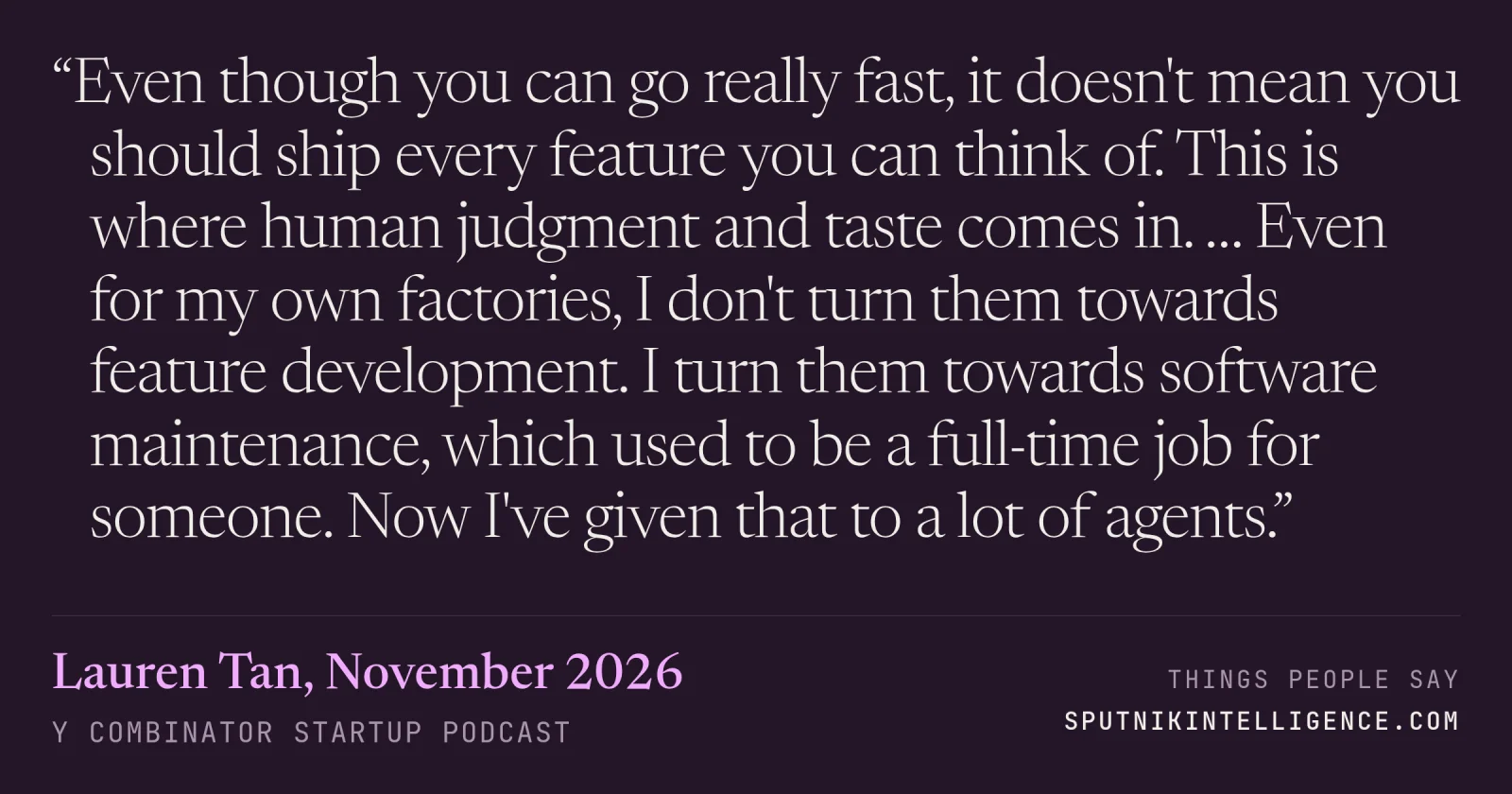
“Even though you can go really fast, it doesn't mean you should ship every feature you can think of. This is where human judgment and taste comes in. … Even for my own factories, I don't turn them towards feature development. I turn them towards software maintenance, which used to be a full-time job for someone. Now I've given that to a lot of agents.”
Y Combinator Startup Podcast · Startups & Venture · November 2026
Context
The discussion was about saying no to features and keeping product taste when anyone can build anything. She says she points her agent "factories" at bugs and performance rather than new features.
Transcript
would be made that way. I wish Apple, Apple, people who work at Apple, could you do this? Because, hey, I have a calendar team in particular. I have some problems with you.
…sitting with a change for longer than feels comfortable before we ship it. And the default is if something doesn't get internal product market fit, we don't ship it. Even if it gets Like mixed internal product market fit, we don't ship it. And so, as a team, we really try to keep a high bar. Yeah,
I think that's actually one of my favorite parts of working on the GraphPot team is that, you know, despite the great velocity that we have, we still have a lot of intention and care for the user experience. And, you know, even though you can go really fast, it doesn't mean that you should just ship every feature you can think of. And this is where human judgment and taste, I think, comes in. I don't think that's going to go out of style personally. I think as long as we're building software for humans, humans should really be thinking about the, you know, be an intentionally designed experience because we know each other the best, right? You know, if you're building software for agents, that's a different story. That, you know, you can certainly probably go as fast as possible. But I think, yeah, for humans, you do want to have put intentional care and thought into the stuff that you develop. So even for my own factories, I don't turn them towards like feature development. I turn them more towards the software maintenance side of things because I care a lot about performance. I care a lot about fixing bugs that our users encounter…
One thing that's very inspiring about your journey, Lauren, I don't know if many people know, is you grew up in Singapore and you studied a non-technical degree. You did a bachelor's in accounting and finance from Onash in Australia. Then somehow you ended up becoming one of the now best AI…
Yeah.
How did that happen? I think sometimes people think it's like it's very hard to get into tech, but you did it. And you also worked on the React compiler, which is one of the hardest things as well.
More from Y Combinator Startup Podcast