“There's sort of two paths to status gain by bragging about your sleep deprivation. One path is that your colleagues might see you as strong. Like you're so strong that not even sleep deprivation can hold you down… The other path is self-sacrifice… there's a gender wrinkle here where the strength path is most visible for men… And it's the opposite for women.”
Hidden Brain · Ideas & Essays · October 2026
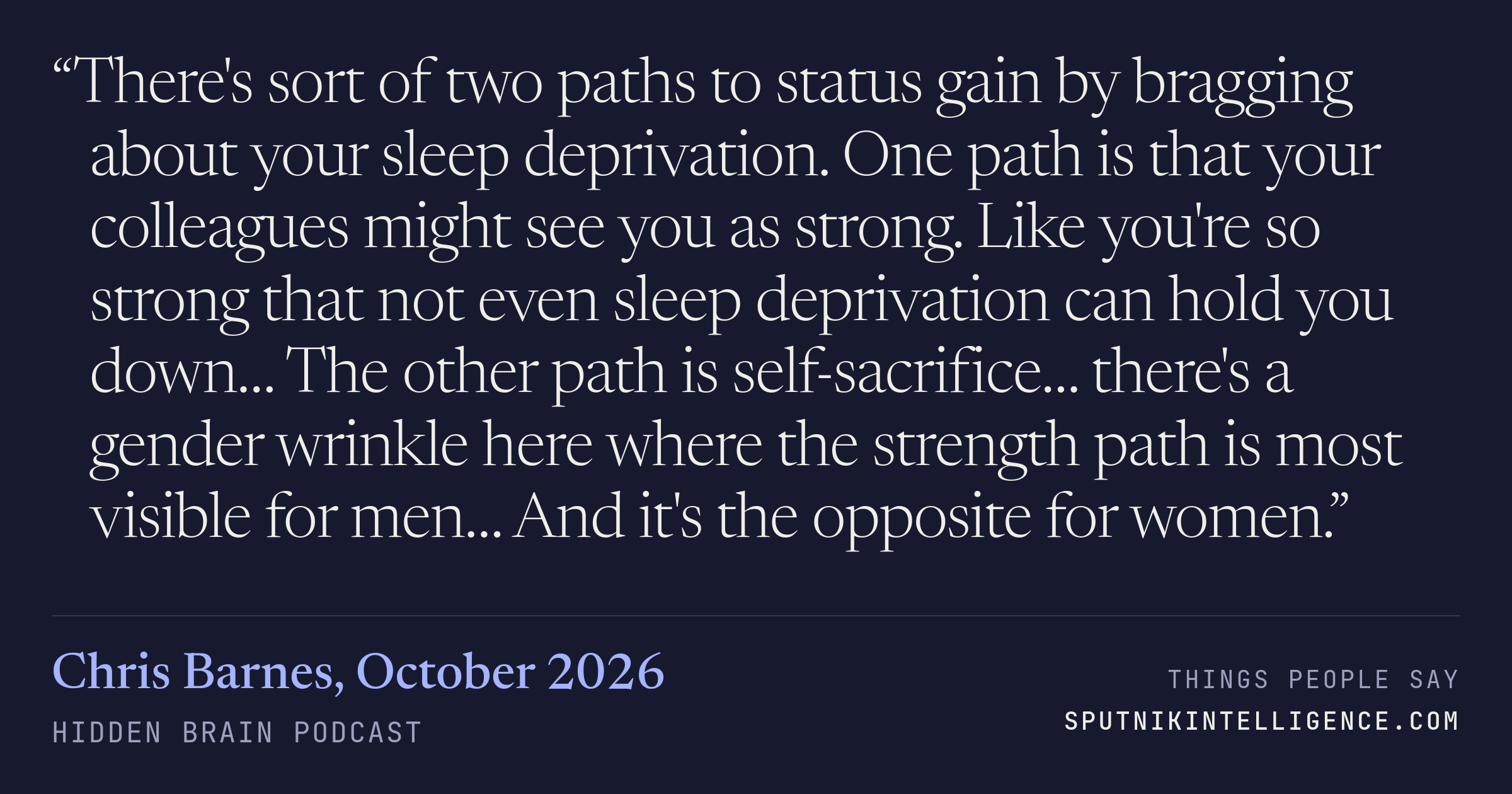
Chris Barnes describing his research on why people brag about how little they sleep, given the evidence that sleep deprivation hurts work. He said bragging can in fact raise perceived status, which he called "unfortunate and in the long run, ultimately self-defeating."
Transcript
…that say, whoa, whoa, whoa, whoa, I need eight. Well, I say to sleep a little faster. The reason I wake up at 4:30 in the morning is no one else is awake yet. So that gives me the opportunity to do that. Rich people don't sleep eight hours a day. That's a third of your life. It ain't a 24 your
entire day with little to no sleep. So my colleagues
…that bragging about your sleep deprivation can increase perceptions of your strength, which in turn increases perception of your status. The other path is self-sacrifice. So people might see you as sort of honorable. Like, wow, you're willing to sacrifice your sleep so that you can work more on behalf of our group. And that is a second way to gain status. What I find especially interesting is there's a gender wrinkle here where the strength path is most visible for men. So when men brag about their sleep deprivation, they tend to be seen as stronger and they gain status that way. They don't tend to be seen as more self-sacrificing by bragging about their sleep deprivation. And it's the opposite for women, where they tend to be seen as self-sacrificing and gain status that way, but they're not perceived as stronger for bragging about their sleep deprivation. So…
A reminder: have you experienced serious adverse consequences of sleep deprivation? If you have a personal story you'd be willing to share with a hidden brain audience or a question or comment about this episode, please find a very quiet room and record a voice memo on your phone. Two or three…
So the science is very clear that the change to daylight saving time in the spring in particular is quite disruptive, where we see an increase in heart attacks and car crashes, other harmful effects like that. The fall change is perhaps less disruptive, where we gain that hour. That doesn't appear…
Are there other policy recommendations that you have, Chris, for improving sleep quality at a societal level, not just at the level of individuals?
More from Hidden Brain