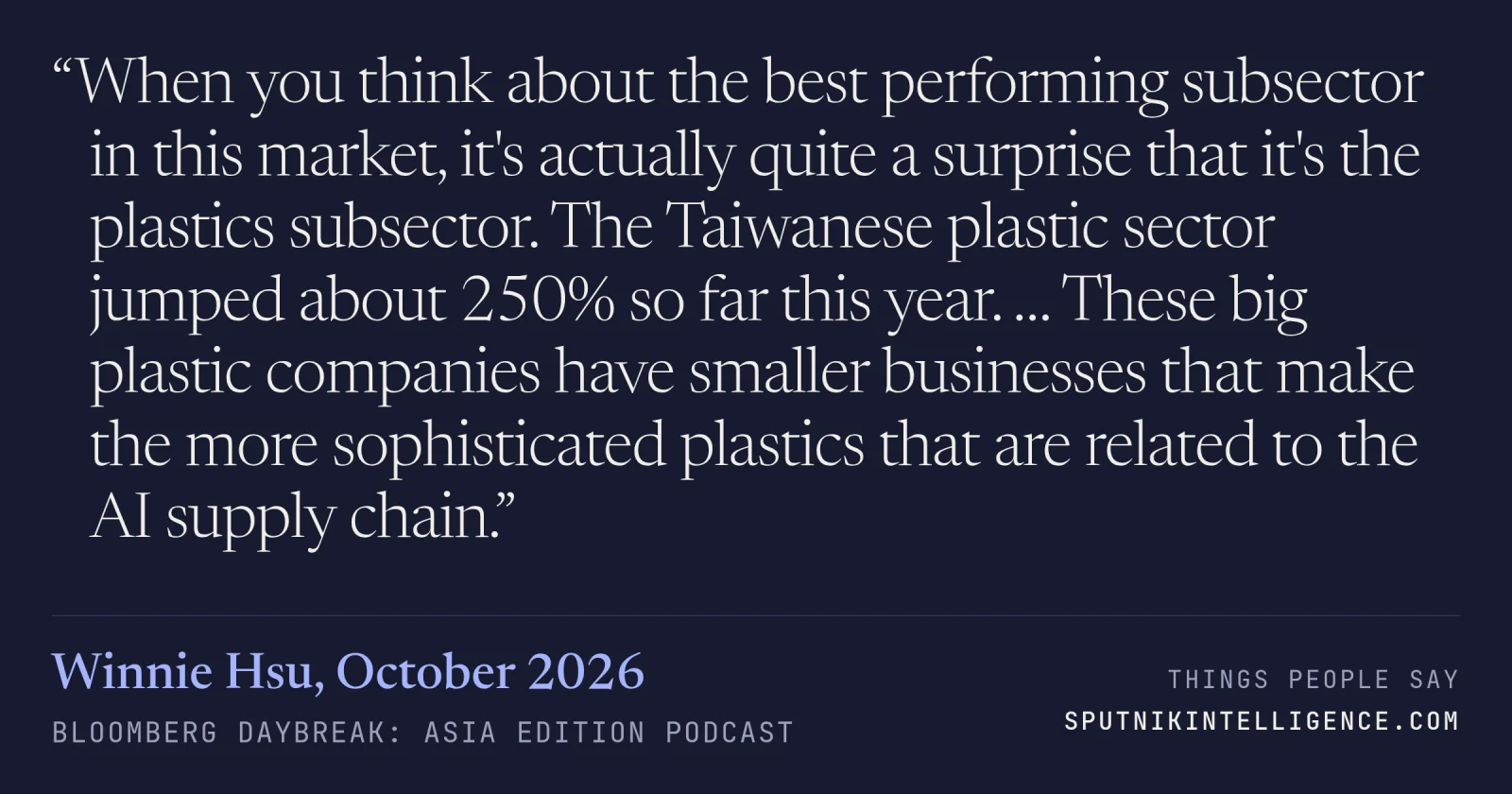
“One way that firms have been handling these higher raw material costs and input costs, higher healthcare premium costs, is by not hiring as much as they would. We saw this in earning calls. And the interesting irony is that we are seeing spectacular earning growth… And so, how is it that firms are not hiring? Well, it's because exactly that they're also all reporting very strong input cost growth, and firms are handling that via operational efficiency, increasing operational efficiency, which is a code word for not hiring in our analysis.”
Bloomberg Daybreak: Asia Edition · October 2026
Context
Asked whether persistent inflation explains sluggish US hiring ahead of the jobs report, the economist explains how strong corporate earnings and weak hiring coexist.
Transcript
…year, population growth has slowed, we are estimating that the jobs increase that's consistent with population growth is roughly at 50,000. So 26,000 seen in that light is not extremely bad. But nonetheless, it is just a touch lower than what you would want. To keep the unemployment rate steady.
…say, the labor market has been stuck at these relatively low growth numbers while at the same time, we continue to see inflation well above the Fed's 2% target. Is that part of the reason why hiring has been so sluggish, just that price pressures have been as elevated as they've been all this time?
…with. So, one way that firms have been handling these higher raw material costs and input costs, higher healthcare premium costs, is by not hiring as much as they would. We saw this in earning calls. And the interesting irony is that we are seeing spectacular earning growth, right? In the last quarter, so far this quarter, in the earnings season, the firms are still reporting very strong beats. And so, how is it that firms are not hiring? Well, it's because exactly that they're also all reporting very strong input cost growth, and firms are handling that via operational efficiency, increasing operational efficiency, which is a code word for not hiring in our analysis. So, I think this low hiring, low-firing environment is not necessarily a stable environment. Either going forward, inflation eases, then firms will even have more spectacular earnings and they will hire more because profits have increased. But that is conditional on the assumption that this inflation that we're seeing is purely supply driven. And however, if what happens in the future is that…
So, how does all this factor into what the Fed could be thinking as it gets closer to its December decision? There's been so much focus, of course, on getting inflation back down to target. How does this sort of tepid labor market factor into what the Fed could be thinking going forward?
What would move the dial on them going ahead with the hikes is if unemployment rates stay steady at 4.2% as it is right now? However, if unemployment rate goes to 4.3, 4.4%, which is what the models would predict, then I think that the risks of the current market odds of a hike in December is…
Okay, Anna, thank you for this. Good to have you on with us. That's Anna Wong, chief U.S. economist for Bloomberg Economics. Let's take a look now at some stocks making news in the week ahead. I'm Nathan Hager, joined by Bloomberg Earnings Reporter Chloe Melly, because we got more earnings right…
More from Bloomberg Daybreak: Asia Edition