 Dwarkesh Patel
Hosts the Dwarkesh Podcast, a long-form interview show on AI progress, timelines, and the people building frontier models, along with economists and historians.
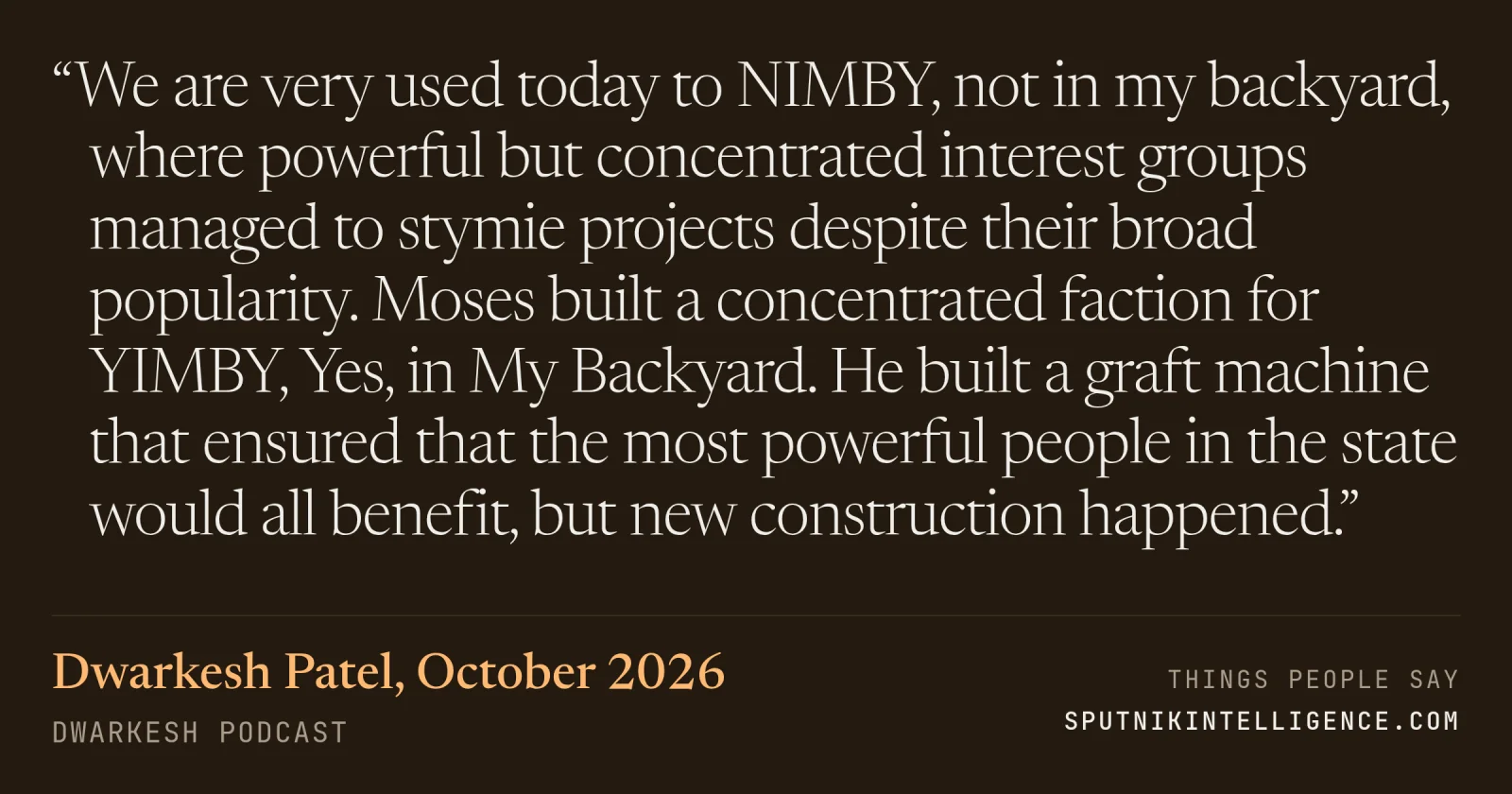
“We are very used today to NIMBY, not in my backyard, where powerful but concentrated interest groups managed to stymie projects despite their broad popularity. Moses built a concentrated faction for YIMBY, Yes, in My Backyard. He built a graft machine that ensured that the most powerful people in the state would all benefit, but new construction happened.”
Dwarkesh Podcast · AI Research & Frontier Labs · October 2026
Context
From Dwarkesh Patel's video essay on Robert Caro's books, published the day before his Caro interview. He argues that Moses kept power by making sure banks, unions, lawyers and party bosses all profited from every project he built.
Transcript
…joke was real fear. If a mayor accepted that resignation, not only would he be forfeiting the completion of whatever projects Moses was working on, along with the money that was apportioned for those projects, he'd also be picking a public fight with the most respected official in all of New York.
Maybe that's the most important thing, just sheer stubbornness.
…that if Moses resigned, the next morning, all the front pages would tell the same story about how a man above politics was driven out by a craven politician because he refused to compromise the city's interests. And the power that Moses derived from his popularity with the masses was nothing compared to the power that he derived from his connections with New York's powerful private interests. We are very used today to NIMBY, not in my backyard, where powerful but concentrated interest groups managed to stymie projects despite their broad popularity. Moses built a concentrated faction for YIMBY, Yes, in My Backyard. He built a graft machine that ensured that the most powerful people in the state would all benefit, but new construction happened. The banks got to buy his bonds at a steep discount without competitive bidding. The unions got more jobs. Politically connected lawyers got legal fees. And party bosses got paid to broker insurance policies to bridges that had no plausible risk of falling down. Moses could then rely on these beneficiaries to call up anyone who stood in the way of one of his projects, whether that was a borough…
More from Dwarkesh Podcast