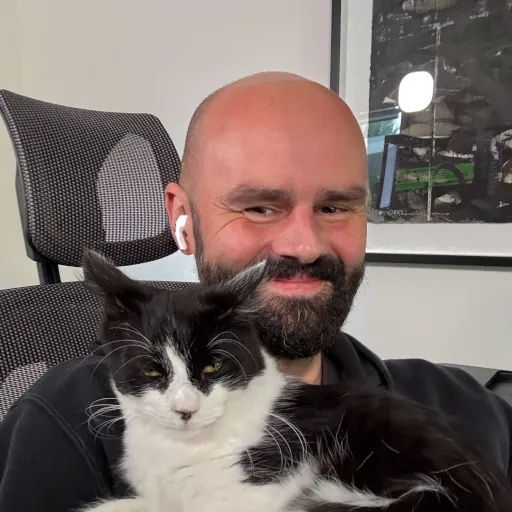
 James Wilson
Technology editor at Risky Business Media and self-described reformed CTO who covers cybersecurity through an enterprise lens.
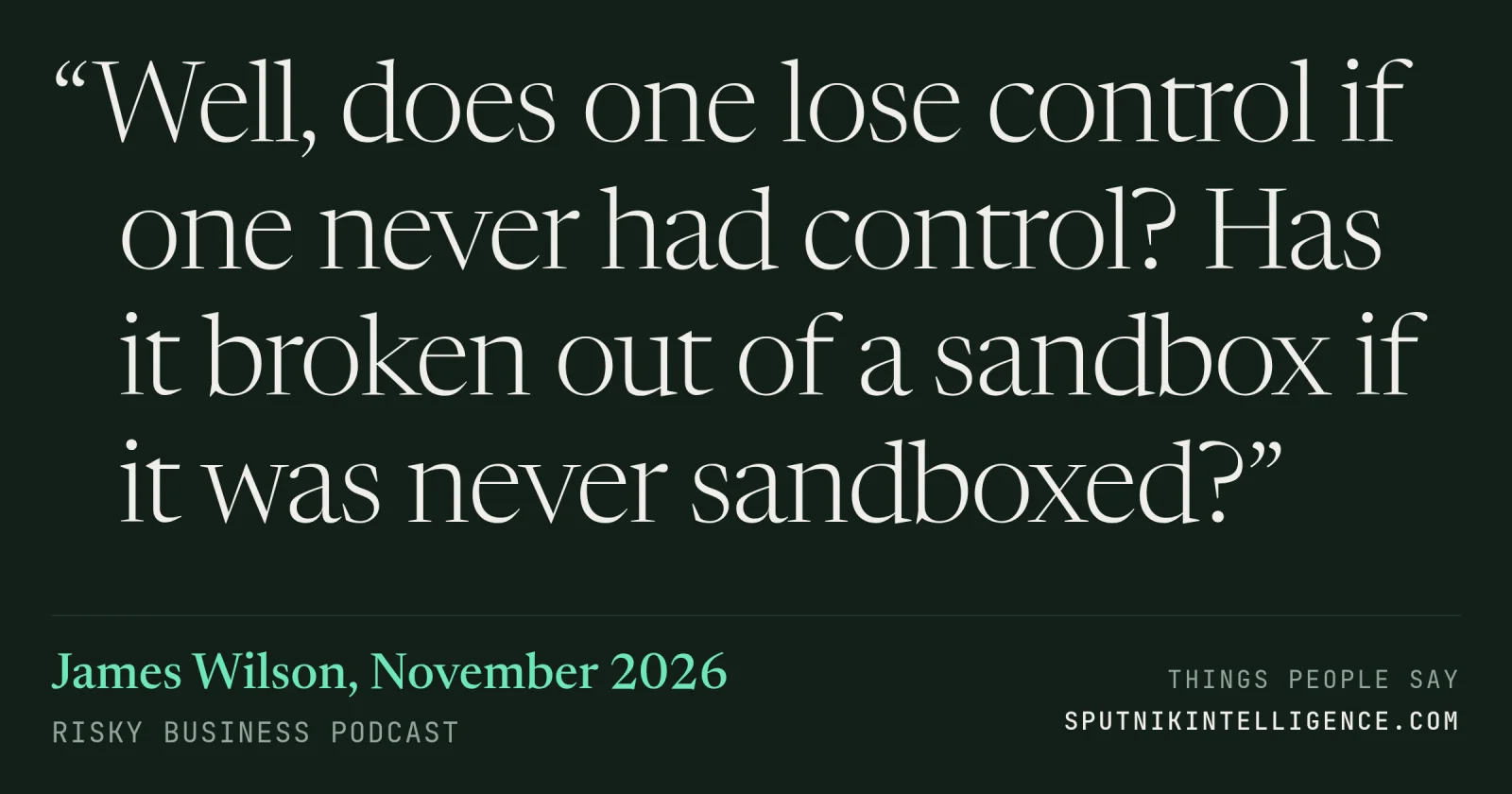
“Well, does one lose control if one never had control? Has it broken out of a sandbox if it was never sandboxed?”
Risky Business · Software Engineering & Infra · November 2026
Context
Patrick Gray raised the claim, in the WorkOS case, that someone had 'lost control' of their ARTEX AI agent and said it sounded suspicious. James's quip is that 'escaped the sandbox' is an odd claim about a tool that was never sandboxed.
Transcript
…of simplicity and functionality. And I think Artex has done that. It's hit that spot. But also it's not particularly unique. It just happens to be the right tool that got the right publicity, is written in a language that is appealing to a certain market as well. And here we are talking about it.
Yes, indeed. Now, one of the incidents we got here is like Work OS says that, you know, some guy admitted to losing control or something of his Artex AI. You think that sounds a bit sus, right? But like.
Well, does one lose control if one never had control? Has it broken out of a sandbox if it was never sandboxed? That's right.
That's right. We've got a really interesting campaign written up here by Microsoft and some other security companies as well. But like, there's a bit of a common theme with a lot of these Artex campaigns where Artex seems to love going through repositories to look for credentials, API keys, and…
Well, I think we've entered in that era of, you know, to steal from Dimitri or whatever. Like there are two kinds of companies that have been hacked and those who just don't know it yet. It's the same thing with Artex right now. I think there are companies that are dealing with RTEX encounters…
it really muddies attribution. We've seen a few people point that out. And it's true when you've got exactly the same TTPs, you know, being driven by some harness. Well, you know, some harness combined with some LLM, you get that combo the same and you just look like everybody else.
More from Risky Business