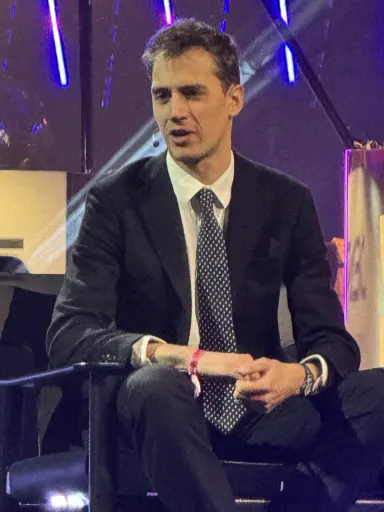
 Arthur Mensch
Co-founder and chief executive of Mistral AI, the Paris-based developer of language models for enterprises.
“Energy is around 10% of the bill in the total cost of ownership of compute. So the cost of energy, at the end of the day, is not the one thing that matters in the economy of a project. What matters is the cost of the chips, and what matters is the cost of capital. This is dominating the bill of material… There is excess of energy. It's not the bottleneck today.”
The Twenty Minute VC (20VC): Venture Capital | Startup Funding | The Pitch · Startups & Venture · November 2026
Context
Harry Stebbings pointed out that Europe builds energy capacity slowly compared with China and asked how Mistral thinks about power supply. Mistral CEO Arthur Mensch argues the real constraints are chips and financing, and that energy only becomes the bottleneck later in the decade.
Transcript
…open weight frontier is catching up with the closed frontier in many domains, actually, above. And so, that means that I don't think we'll end up in a world where if you want to do mathematics, you need to work at OpenAI. Luckily, there is enough people in the world that don't want this to occur.
…system to the US, and we have a very different energy system to China. In China, they'll move 3 million people to put some form of energy infrastructure. UK, we won't move a birdhouse. It's quite concerning, despite the joke. How do you think about ruminating on the energy supply challenge? Well,
…that AI is going to drive energy consumption forward. I would say in the next two or three years, the true fight, the true challenge is to actually make sure that, for Mistral, make sure that we build as fast as possible to use the excess of energy that is already there. And so that is what we are at work doing: raising capital, building more, building the team to build all of this capacity. There is excess of energy. It's not the bottleneck today. It will become the bottleneck in 29, 2030. But right now, the question is how can we build on existing energy? Now we need to think ahead of time. In starting in 29, 2030, as multiple gigawatts of capacity are being deployed every year on AI, we do need to ramp up the production. What we are hopeful for is that in France, for instance, there is an enormous EPR program where nuclear energy is…
It totally is, and I agree with you. I am a big believer in Adam Smith's invisible hand, but the lead time is very real. And so that is just the 29, 2030 is a challenge. Yeah,
nuclear plants take longer than that to build. Solar plants can go faster. And say I do believe in that invisible hand. The states have to play a role in facilitating the build out, but also in planning ahead of time. They have a longer term vision than enterprises in general. And so we are…
You said about the cost of chips being important. What do you know now about compute buying, forecasting demand of compute chips that you didn't know?
More from The Twenty Minute VC (20VC): Venture Capital | Startup Funding | The Pitch