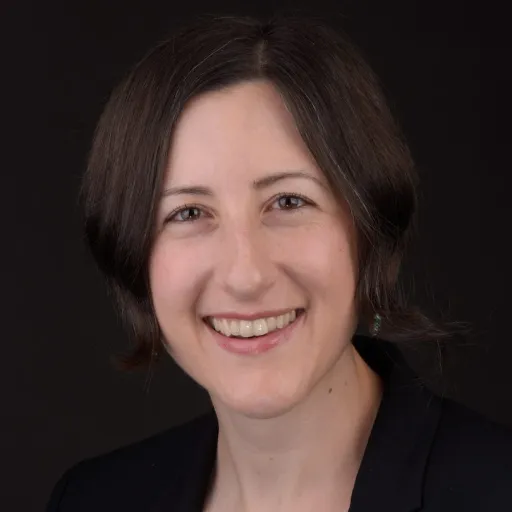
 Ashley Rubin
I'm a social scientist
“It doesn't matter, even if it turns out that like 90% of the research in sociology is good. If I can't trust that research to be neutral or to be rigorous, I can't trust any of that research.”
What Happens Next in 6 Minutes · October 2026
Rubin, a sociologist, wrote a report arguing that politicization has compromised research in parts of her field, and it drew heavy backlash from colleagues. Here she explains why partial contamination is still a problem: a policymaker reading the literature can't tell which studies to trust.
Transcript
…We can't have those conversations if we insist that you must have this view on abortion or this view on Gaza or this view on the current president to be part of this conversation. And if you disagree with me on these issues, then I'm going to chase you out of the classroom. That can't happen.
When your report came out, there was severe backlash from your sociology community. This podcast is meant to be provocative. So let's take it head on. What were the chief criticisms you received?
…that's a problem. Our research is supposed to be about answering questions and following the data wherever it goes. If we say, I'm doing my research because I want to make sure that this policy passes to help poor people, that's really problematic even for the poor people, because if I'm committed to this policy, but the evidence says that the policy is not good, I'm not helping the poor people. It doesn't matter, even if it turns out that like 90% of the research in sociology is good. If I can't trust that research to be neutral or to be rigorous, I can't trust any of that research. If I'm a policymaker and I'm just reading this research because I want to know what do the top sociologists say about this particular policy about reducing poverty, but I don't know which of these articles I can trust, that's a problem.
Let's change topics to sociology as professional organizations. To show the trend in its topics, you listed the annual presidential addresses of the American Sociological Association. This is the field's leading scholars. You found that for the last 20 years, those speeches have been very political…
The presidential addresses I collected going back to 2000. And yeah, I was surprised. There's a famous presidential address from 2004 by Michael Buravoy where he calls for public sociology, which in the activist direction of how do we promote social change. His article is actually kind of tame by…
topics about inequality, basically how parts of social structure policies screw people over, especially women, people of color, and poor people typically.
More from What Happens Next in 6 Minutes