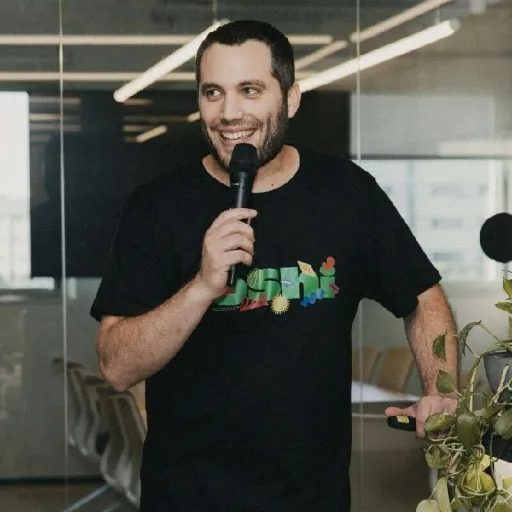
 Ofek Ron
On Protein Production Technology Podcast
“The plan is to take the cost down from around $6 to around $2 per fillet. And the way we're doing it is not a very sophisticated way. We just put more machines, and the people that are working in Brazil don't get the same salary as the people that are working in California. Most of the cost comes from the shift cost, which is the people cost.”
Protein Production Technology Podcast · Alternative Proteins · November 2026
Context
Asked how Oshi will get production costs down, he describes a partner facility being built in Brazil. Labour, not ingredients, is the main cost of a fillet because each machine needs a person.
Transcript
…and not trying to, you know, restructure the whole thing and try to make something that is completely different than what we have, but should do 10x in production. I think that doing it in smaller steps, but faster steps and trying to do the simplest thing, the simplest things is what I will take.
You've also talked about bringing the production cost of a fillet down from roughly $40, I think it was, to around $6. So what changed to make that possible? And how much further does the cost still need to come down, do you think?
Yeah, so we need to take the cost three times more than what it is today. And it's hopefully going to happen in the last quarter of this year. So we're now building a production facility in Brazil. It's not going to be ours. It's our partner's facility. But there, the plan is to take the cost down from around $6 to around $2 per fillet. And the way we're doing it is not a very sophisticated way. We just put more machines and the people that are working in Brazil don't get the same salary as the people that are working in California. And the difference comes from there. So as you understand, our biggest constraint in the supply is the speed of the machine. We have a person on each machine, and this machine does X fillets per hour. And the more machine contains more people. And in California, that's the main cost of our product. The people that are doing the product, our cost of ingredients relatively low, even though we use really good and unique ingredients. But most of the cost comes from the shift cost, which is the people cost. So that's the way we reduce it currently. And the next stage would be, of course, to complete…
Well, if it works for Apple, then I'm sure it can work for you. Now, you've been pretty open about the fact that the machinery wasn't the only area where you learned as you went. You've said some of the hardest lessons haven't been about the product, but the people. So what has building OSHI taught…
A few things. First of all, so as I said, knowledge is one thing, practical experience is another thing. Bet on the practical experience. It's a lot more important. The second thing is less is more. We've been 30 people in OSHI, now we're 15. When we've been 30, People, we've been in, I don't know…
I'm with you on conference calls. I can't stand them. We probably have three or four a week and I just probably take about three or four hours of my wake-up in just calls. Now, has there been a point where you really wondered whether Oshi was going to make it?
More from Protein Production Technology Podcast