“So far, GDP growth has been driven mainly by the AI boom, adding in our calculation about one percentage point to GDP growth at the moment. GDP is normally two, so now roughly half of GDP growth comes because of AI.”
Bloomberg Surveillance · October 2026
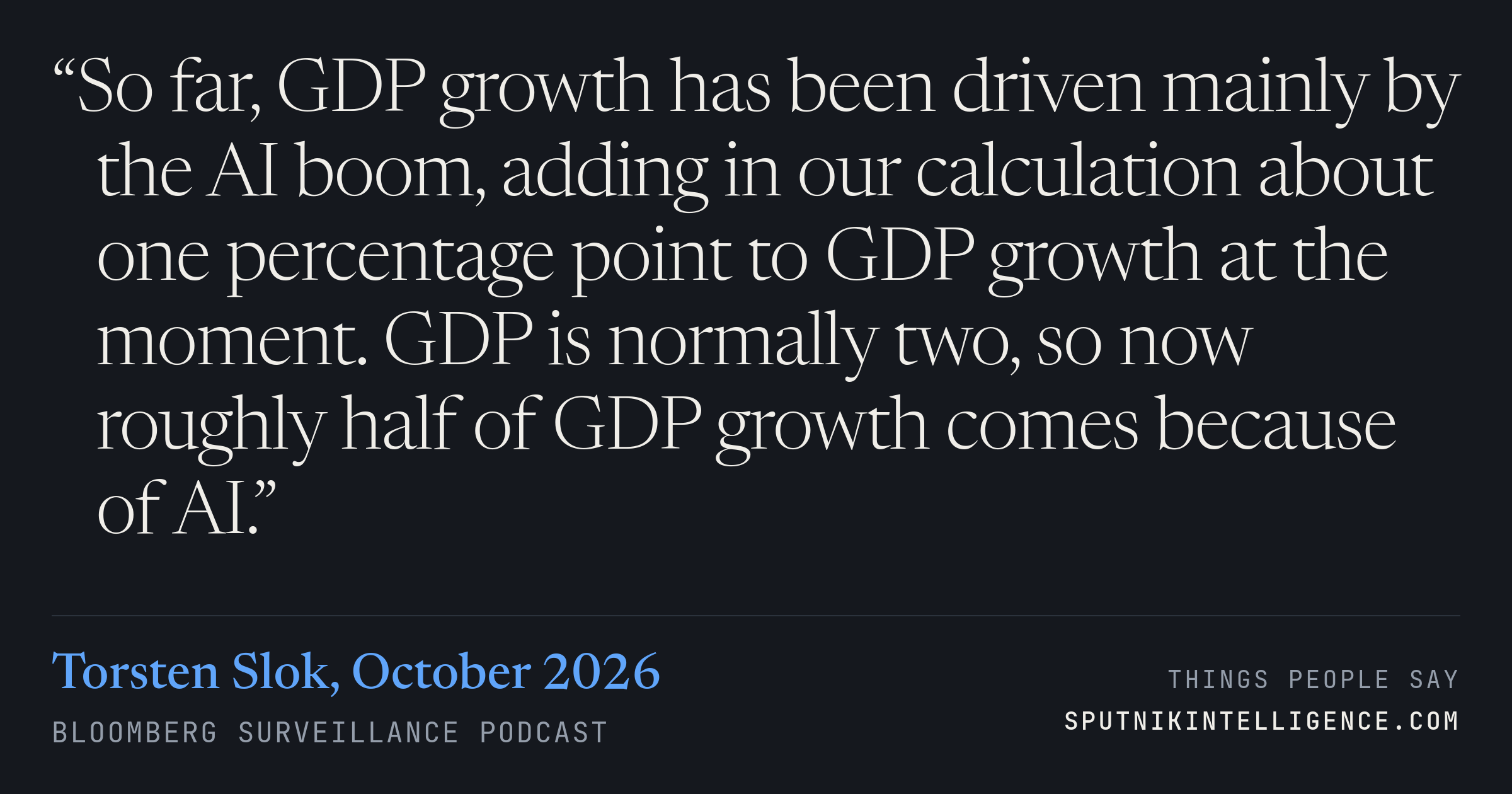
Slok is explaining why the Fed struggles to judge how much rates are biting. Housing and autos are weak while AI, education and healthcare are strong, and he warns that a slowdown in token spending could hit growth in 2027.
Transcript
…especially for the groups where unauthorized immigrants work, namely construction, agriculture, hotels, and restaurants. So those sources of inflation, when she goes and asks businesses, she's basically telling us what she's hearing on the ground, and we should take those anecdotes very seriously.
…important voice on the FOMC. We're trying to work out where the rest of the committee is. How far are they willing to take things? Is that spread between the two-year and the policy rate? Are we baking too much in, or is that a decent guess right now of where this committee might be heading?
Well, what's really interesting about FedSpeak at the moment is that they're a little bit unwilling to debate it in the framework of what's interest rate sensitive, what's not interest rate sensitive. Because this discussion is ultimately about putting up on the scale what's interest rate sensitive. And it's very clear housing is not in good shape, autos are not in good shape. But it's also very clear that AI and also education and also healthcare is actually in great shape. So that's why up on the scale, the Fed has to consider which of these things are most important So far, GDP growth has been driven mainly by the AI boom is adding in our calculation about one percentage point to GDP growth at the moment. GDP is normally two, so now roughly half of GDP growth comes because of AI. But as we continue to look ahead, if those sectors of the economy that are most interest rate sensitive, if they become more heavy, if they come a bigger track, and at the same time, the token issue begins to slow down…
As is, unless you have one of those exogenous situations where oil prices come in or inflation naturally disinflates. Do you think that the Fed officials would have to torpedo the US economy? and send it into recession to get inflation down to 2% in the next couple of years.
Yeah, so the real nightmare scenario, if we just think into 2027, is now that the interest rate sensitive sectors of the economy begin to slow down. And at the same time, AI begins to slow down because of token prices, token spending also going down. And at the same time, all the prices also go…
This is the Bloomberg Surveillance Podcast, bringing you the best in markets, economics and geopolitics. You can watch the show live on Bloomberg TV, weekday mornings from 6am to 9am Eastern. Subscribe to the podcast on Apple, Spotify or anywhere else you listen. And as always, on the Bloomberg…
More from Bloomberg Surveillance