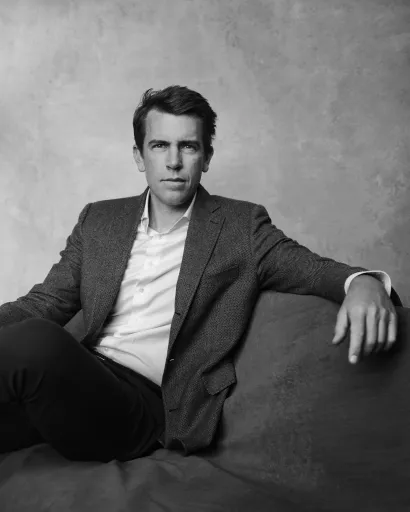
 David McCloskey
Sunday Times bestselling spy novelist and former CIA analyst who wrote for the President's Daily Brief and served on field rotations across the Middle East.
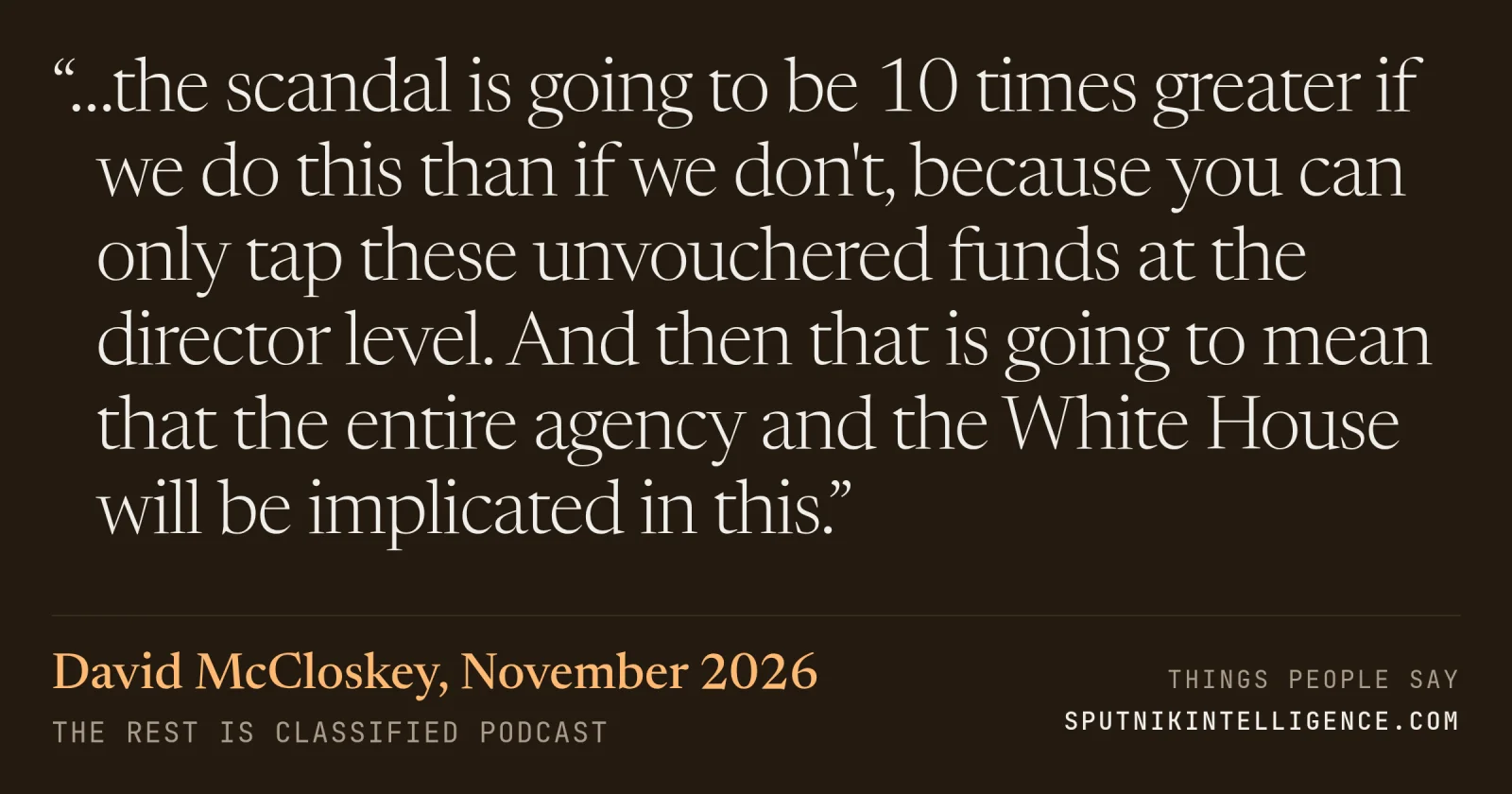
“…the scandal is going to be 10 times greater if we do this than if we don't, because you can only tap these unvouchered funds at the director level. And then that is going to mean that the entire agency and the White House will be implicated in this.”
The Rest Is Classified · Geopolitics & World Affairs · November 2026
Context
After the break-in, the White House asked the CIA whether it could pay the burglars' bail and support them in jail. David McCloskey relays the reasoning of the deputy director, a Nixon appointee, for refusing.
Transcript
all know they have. No
bars hidden around places. But fortunately, in this case, the CIA actually, the deputy, refuses, perhaps wisely at this point, I think.
You know, we should say this is a deputy who's appointed by Nixon who says, look, and rightly so, the scandal is going to be 10 times greater if we do this than if we don't, because you can only tap these unvouchered funds at the director level. And then that is going to mean that the entire agency and the White House will be implicated in this. And Helms backs him and makes the further argument that basically he doesn't, you know, he doesn't want to be involved in this. I think, A, but B, those unvouchered funds. Now, this is an era where there isn't a lot of budget oversight of the CIA, but there is a precedent for Helms having to tell senior members of Congress about how those unvouchered funds are used. And he doesn't want to be called in front of any congressional appropriations committees and have, you know, have to explain that this is bail money for the Watergate burglary team.
So the CIA are kind of wisely staying clear of paying bail and hush money effectively to the burglars.
In early July, the agency sends a memo to the FBI. Because obviously the FBI has been asking more about the agency's relationships with the Cubans, with Hunt, and with McCord. And the memo says there is no basis for the FBI to cease investigating Hunt, McCord, and the Cubans on the grounds that it…
This is the first time the CIA really is starting to push back and go, you can keep going with this to the FBI. Yeah?
More from The Rest Is Classified