
Scott Galloway asked whether words like 'anxious' and 'trauma' have replaced 'worried' and 'upsetting'. Psychologist Jonathan Shedler says therapy-speak doesn't come from any legitimate therapy tradition, and that it keeps people from describing their own experience.
Respect your time. Ask your doctor about EBGLIS and visit epglis.com or call 1-800-LILLIRX or 1-800-545-5979.
…of us that are very upsetting, but we couch this language in an atmosphere of something that requires therapy as opposed to something that requires relationships and a healthy approach to life based on the fact that we all face some version of these things at some point in our life. Your thoughts?
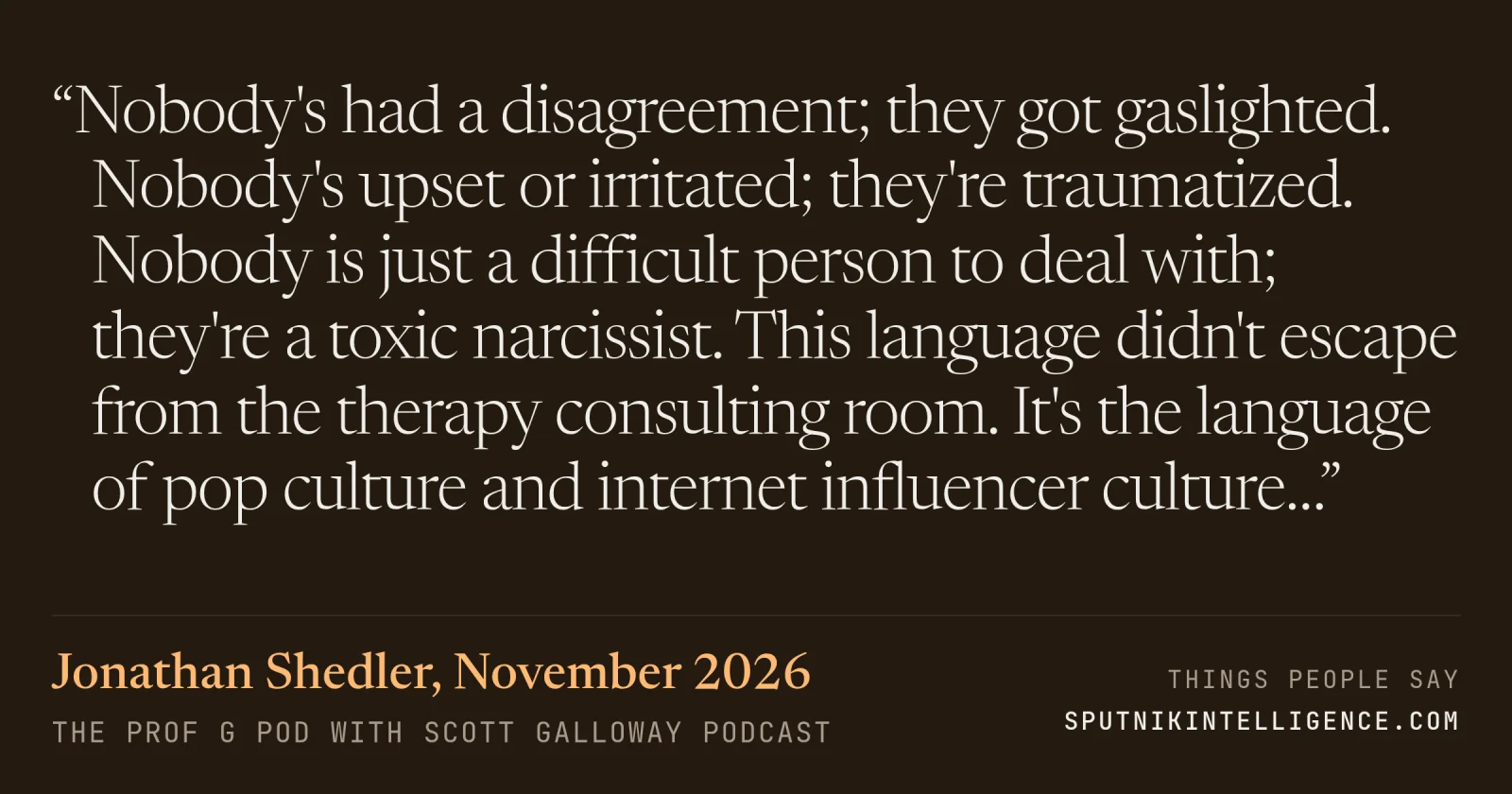
Sure. These are human problems. Some of these things are simply part of the human condition. There's something embedded in what you said that I think is important to disentangle. We live in a culture now where this kind of therapy speak is everywhere, and everything is couched. Nobody's had a disagreement. They got gaslighted. Nobody's upset or irritated. They're traumatized. Nobody in the person's life is just a difficult person to deal with. They're a narcissist or toxic narcissist or narcissist. All this therapy speak. And I want to make two points. I keep reading, and I saw it in one of your, you know, in one of your posts, that this language, this therapy language has somehow escaped from the consulting room and has become pervasive in culture. So, you know, the first point, this language didn't escape from the therapy consulting room. This is not the language of any legitimate bona fide therapy tradition. This is the language of pop culture and internet influence culture. It's not the language of psychotherapy. And everybody, you know, including thoughtful, you know, critical…
So we talk a lot about the struggles facing young people, specifically young men on the show. And women are twice as likely to receive mental health treatment in a profession where. Three quarters of the providers are women. Is there legitimacy to the notion that the sector has been feminized and…
Well, I think anytime you see that level of imbalance in any profession, it necessarily shapes the culture of the profession in ways that I don't think make for a vital discipline based on critical thinking, exchange of ideas, and so on. So I think lopsided is a difficulty, but I think that's…
I invested in a company that upskills corporations for AI, and they did a big survey of how people in the workplace were using AI. And the number one use case could loosely be called therapy. And I realize I'm overusing that word, but some sort of therapy or companionship. Well, first off, not…