
Ahmad points to a site that plots the time between a vulnerability's disclosure and its exploitation. He says the gap used to be a year or two.
…just supply chain attacks. It's also vulnerabilities that are being disclosed at a much rapid rate than ever before. I think there's a website for the audience, if they're not familiar with Time2Exploit, I think it's called. Oh, is that right? Let me see what the website is. Oh, zerodayclock.com.
Oh.
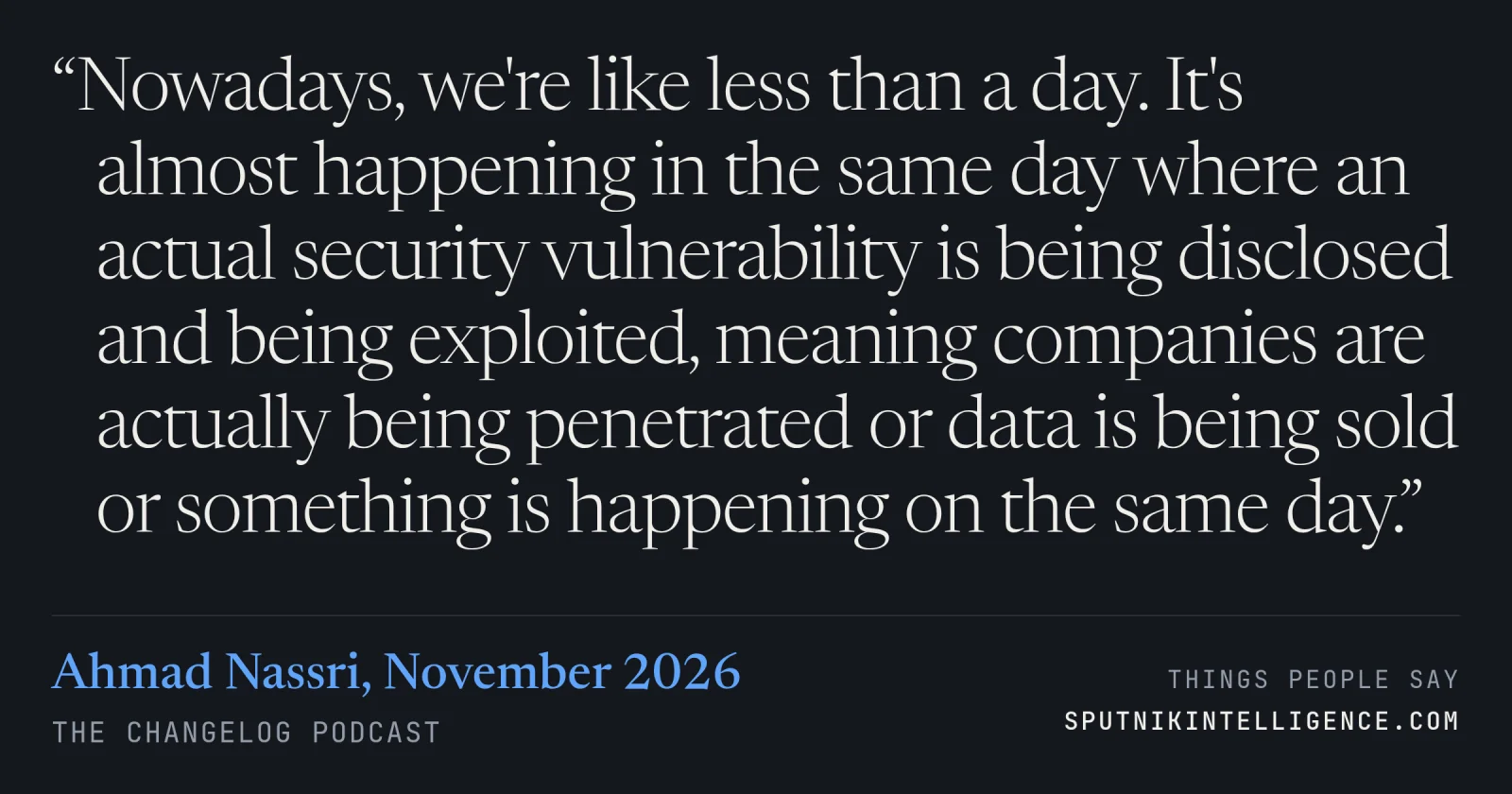
It has a plot of the from vulnerability to exploitation over the last, let's say, 10 or so years. And you can see that number coming slower and slower, where like, you know, a security researcher in the past would find some bad, you know, security vulnerability in some open source software. They would disclose it. And then before anybody's actually seen it being exploited in the world, in the real world, it might take, you know, back then it would take a year or two, but then that number keeps dropping. Nowadays, we're like less than a day. It's almost happening in the same day where an actual security vulnerability is being disclosed and being exploited, meaning companies are actually being penetrated or data is being sold or something is happening on the same day. TTELT hours now.
Gosh, man. Yeah. Yeah. This is that's interesting. The meantime for TTE totally is dropping. 2018 was 2.3 years and here we are in 2026. It's eight hours.
I think it's going to get worse.
Yeah, obviously. I mean, it'll get to basically, it won't be a zero day anymore. It'll be zero microseconds like that. Oh my gosh. So what does a developer to do? Do you just scrutinize your dependencies even more than we've already done? Build versus buy is always the case, right? And then, even…