Asked why a "low-hire, low-fire" labour market is a problem when few people are losing jobs, the economist said it's fine if you love your job. It's hard if you're entering the workforce, coming back to it, or looking to move, which is why many Americans feel stuck.
…report last week. We had first-time claims for unemployment the other day. They were really low, right? Not many people losing their jobs. And so the stories came up again, including on this program, of this being a low-hire, low-fire economy. Why is it bad that it's a low-hire, low-fire economy?
Well, it's
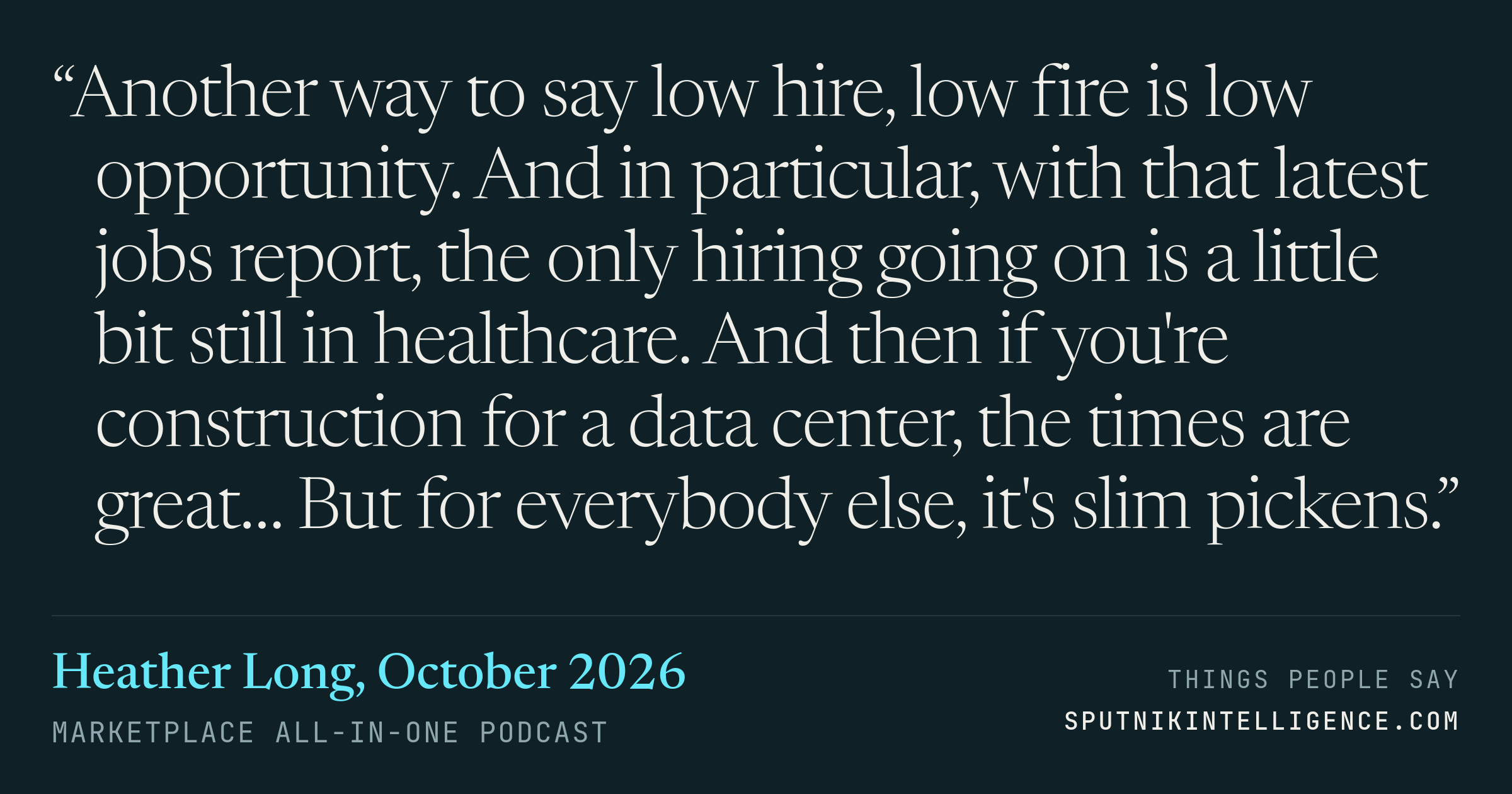
great if you love your job, but if you're looking for a new opportunity or if you're someone just entering the labor force or maybe you took some time off and trying to get back in, there's just not a lot of hiring going on. And another way to say low hire, low fire is low opportunity. And in particular, with that latest jobs report, the only hiring going on is a little bit still in healthcare. And then if you want to build a data center, if you're construction for a data center, the times are great. And that's some of the strongest wage gains in the last year. But for everybody else, it's Slim Pickens. And that's why a lot of Americans feel stuck right now. The silver lining is we're seeing people create their own opportunities. We're seeing that uptick in new business formation and people saying, I'm just going to create it myself.
David Gurra, I said something on the program, I think it was yesterday, which honestly I was not expecting out of what I would ever have to say on this program. And that is that given artificial intelligence and how much the stock market is worth these days, I said, maybe the stock market actually…
Stop me dead in my tracks. I feel like this is a trap. I mean, we used to work together and I've heard you say the stock market is not the economy so many times. But no, I think that you're on to something in some respect. I mean, you look at the gains that we've seen in stocks. So many of them…
years.