The founder of Soul of Discretion said the Plymouth fish auction regularly sold 50-odd species a day, while most people eat only the "big five". Fish with no market are often thrown back or used as crab bait. She argues that who caught a fish and how matters more than the species.
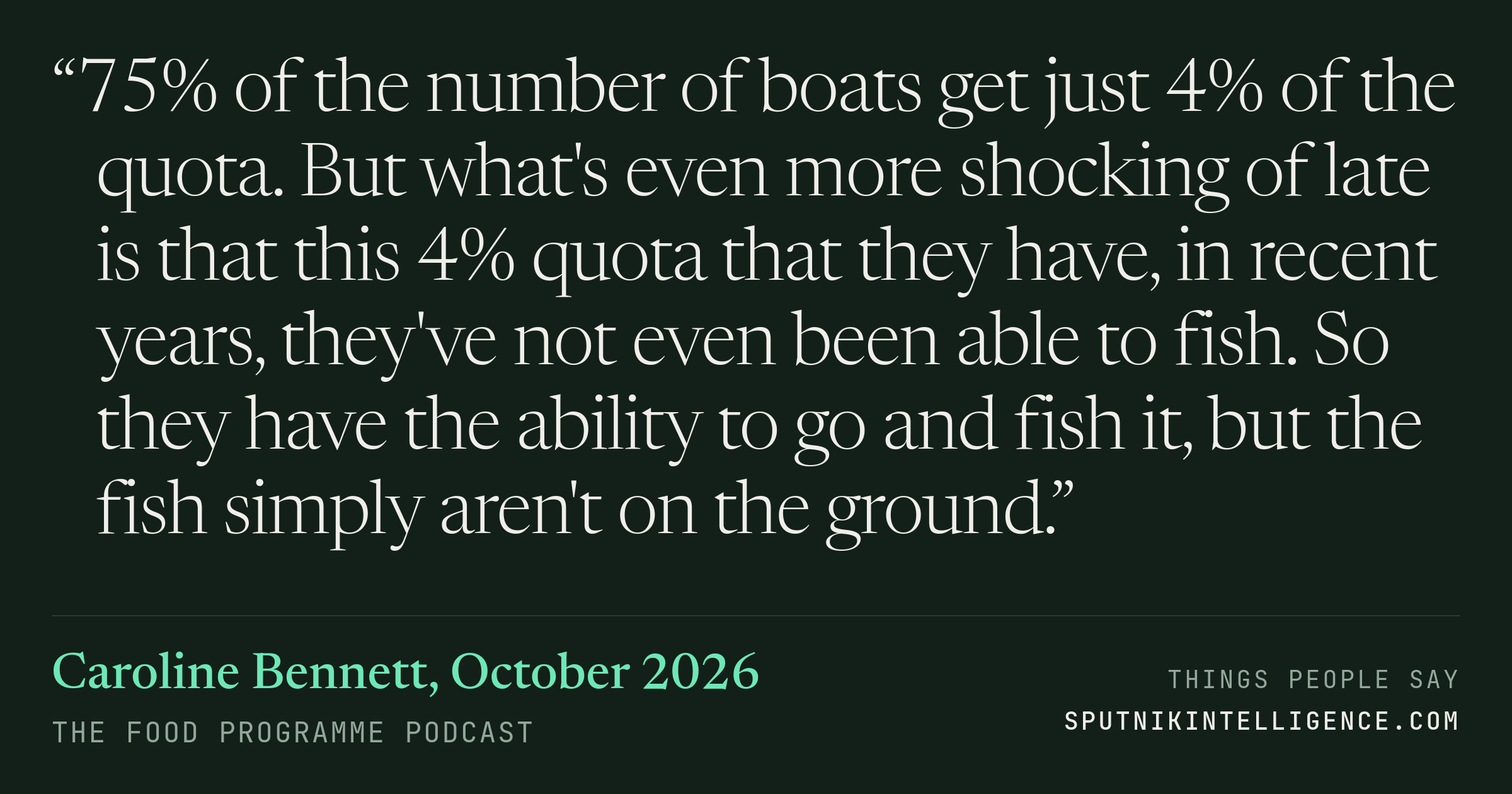
…ability to go and fish it, but the fish simply aren't on the ground. And that's a far more sobering fact than, you know, let's fight for quota, which is really what we were doing 10 years ago. Now it's just that simply the fish aren't there on the grounds, which is a much more worrying development.
And so it's important that the fish that are caught are all eaten, which is why Soul of Discretion is attempting to increase our interest in species beyond the so-called big five: salmon, tuna, prawns, cod, and haddock.
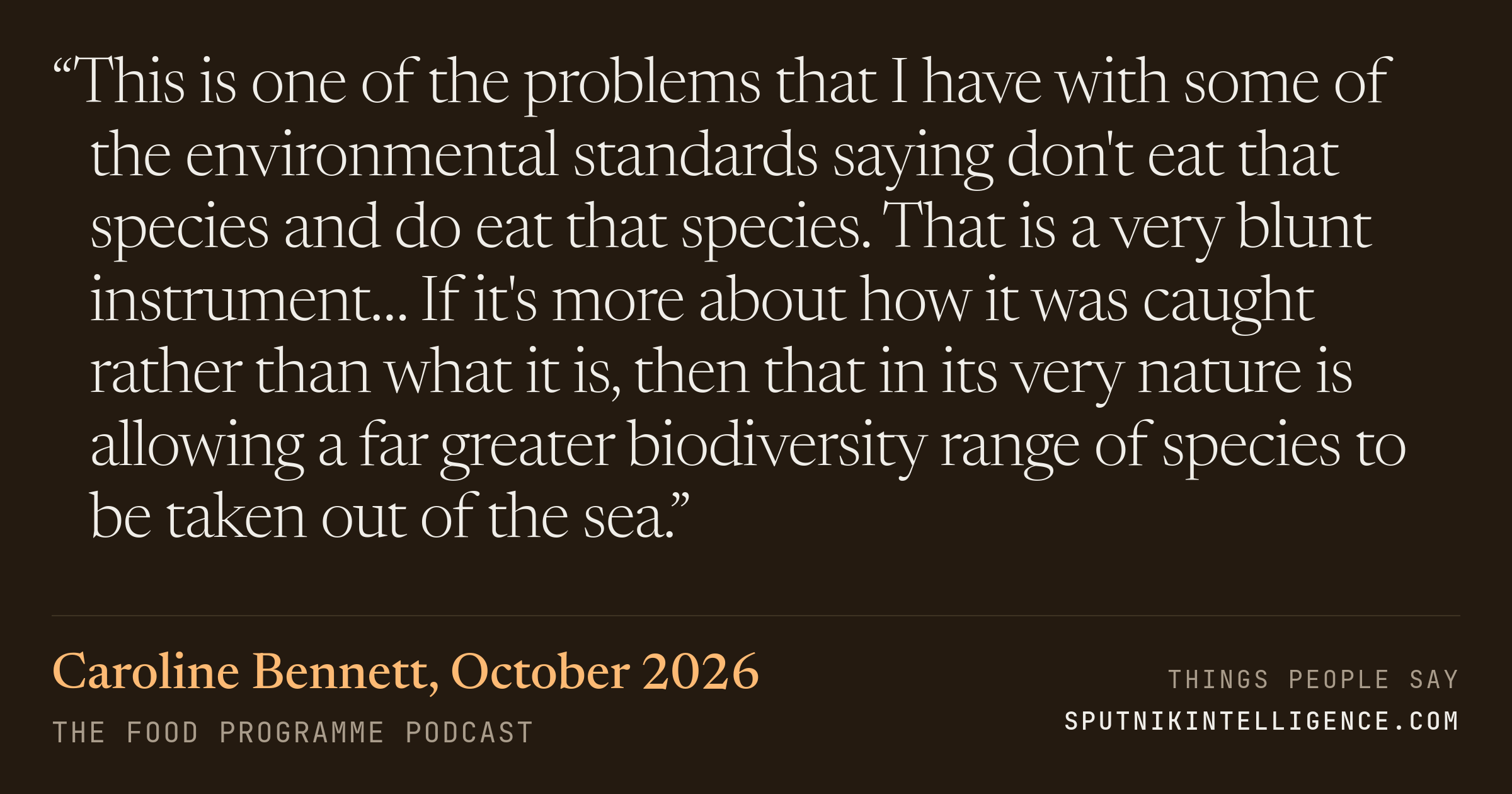
…that I have with some of the environmental standards saying don't eat that species and do eat that species. That is a very blunt instrument as well. And I think one of the complexities of saying, well, forget that, look at how it was caught and who caught it is a far more complex thing to explain on any level. And in my mind, largely the reason behind why there is no certification around it. But if it's more about how it was caught rather than what it is, then that in its very nature is allowing a far greater biodiversity range of species to be taken out of the sea.
One of the fishers based in Plymouth that Caroline has worked with since the beginning of Soul of Discretion is Graham Sowell.
Caroline also gives you a guaranteed price, which then you go like, right, if we're going to go fishing in this area, what we would have normally considered as a bycatch actually becomes a catch now because you guaranteed. I mean, we've sent certain species to Brixham before or on this market and…
After being processed by her team in Plymouth, the fish is sold through the online farmer's market, wild market, and shops such as Better Food. So