
Schultz, then 22, describes his first look inside the Theranos device, alongside his manager, a molecular biologist. What they saw was a pipette on a robotic arm that could run one test at a time and relied on other lab equipment.
I was 22.
And so what happens when you get a chance to finally see the device?
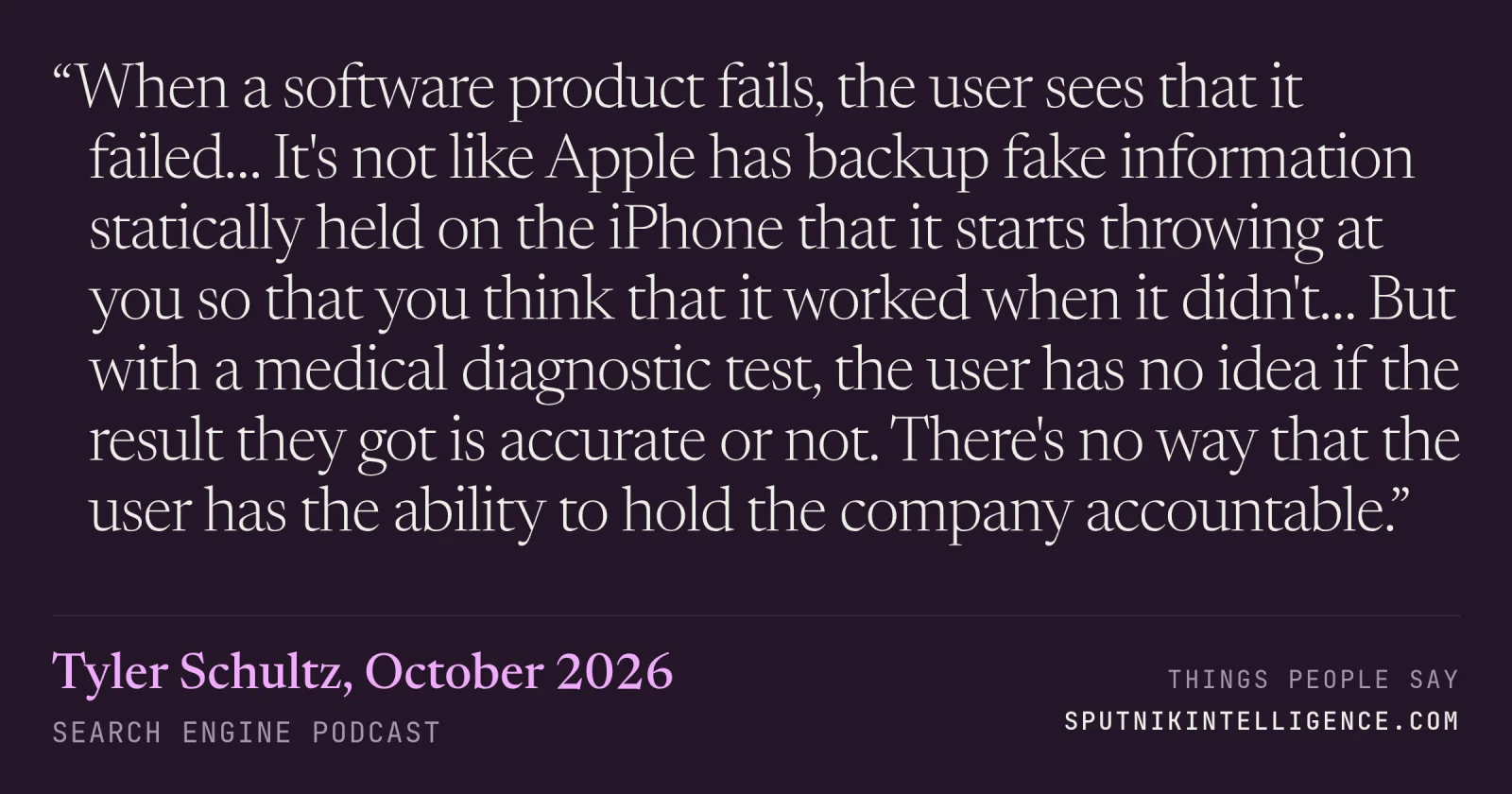
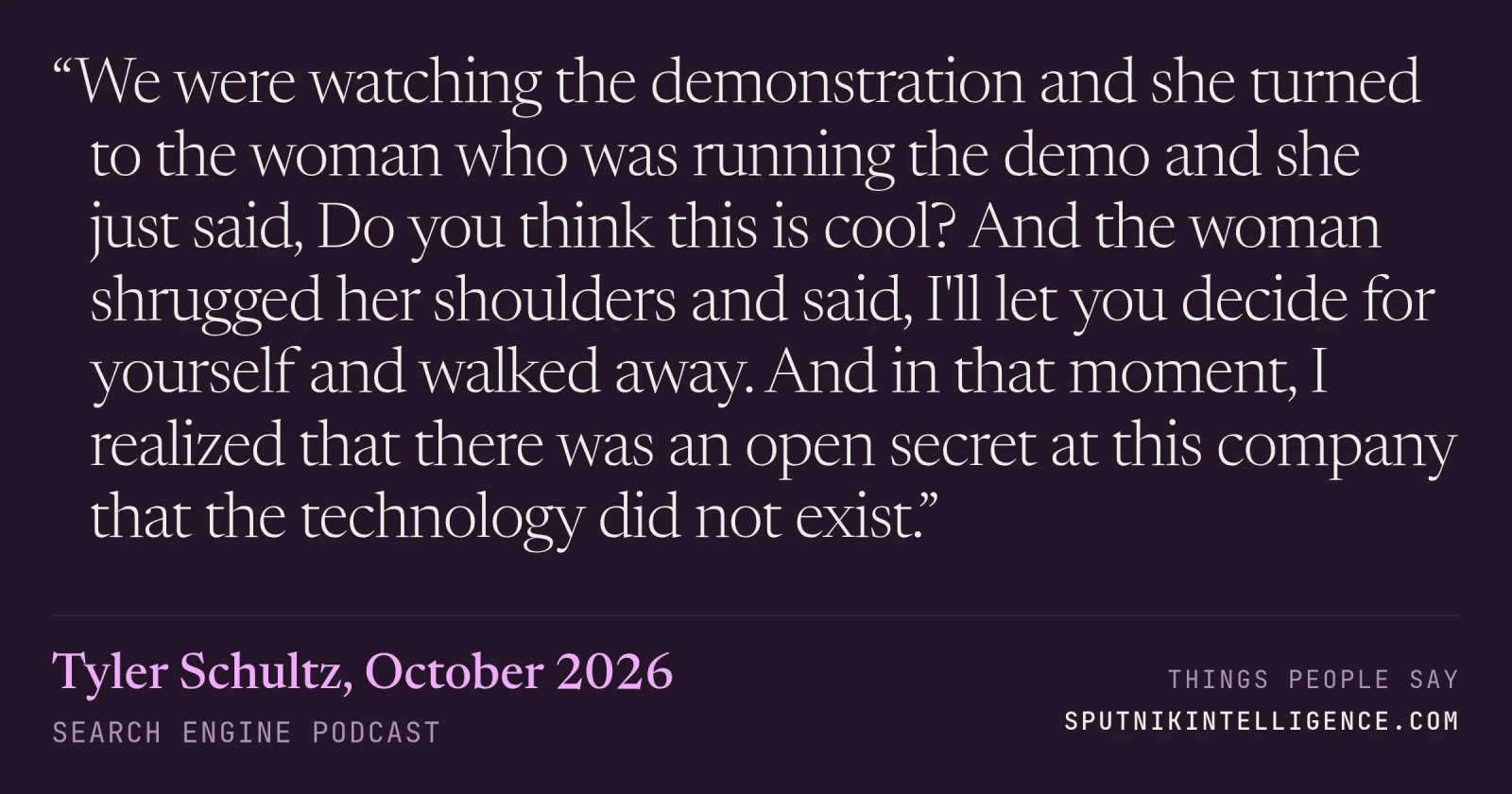
So as part of our onboarding into this validation lab, we get to see the device and we get to see what they called the open reader, which was the device that didn't have the shell on it. So you could see exactly what was inside and exactly what it was doing. And since we were moved over together, the first time that I was seeing this was the first time that my manager was seeing this. And she had worked there for several years. She has a PhD in postdoc and molecular biology. And I so vividly remember this moment. We were watching the demonstration and she turned to the woman who was running the demo and she just said, Do you think this is cool? And the woman shrugged her shoulders and said, I'll let you decide for yourself and walked away. And in that moment, I realized that there was an open secret at this company that the technology did not exist because what we saw was an eight-channel pipette on a robotic arm. It was not a standalone platform. It could only test for one thing at a time. It could only run one type of test. And it was poorly engineered. So it couldn't even run that one test very well. But it relied on…
So if you've seen the film, there's this very key scene where Elizabeth Holmes actually breaks out what she says is the Theranos device. Like she pulls it out of storage and presents it on her kitchen table. She's showing it to Nathan Fielder, who then asks Elizabeth to defend public statements…
But from what I know, you couldn't do every test on a single device. That's the whole problem. That's why you're going to prison, right? No, that was our invention. And in the case I talked about, the fact that we had invented a device that could do any test are technologies.
Elizabeth Holmes on to explain to a visibly confused Nathan that the device on the table can run all these tests someday in the future, in theory. Once the chemistry to perform all these tests exists.