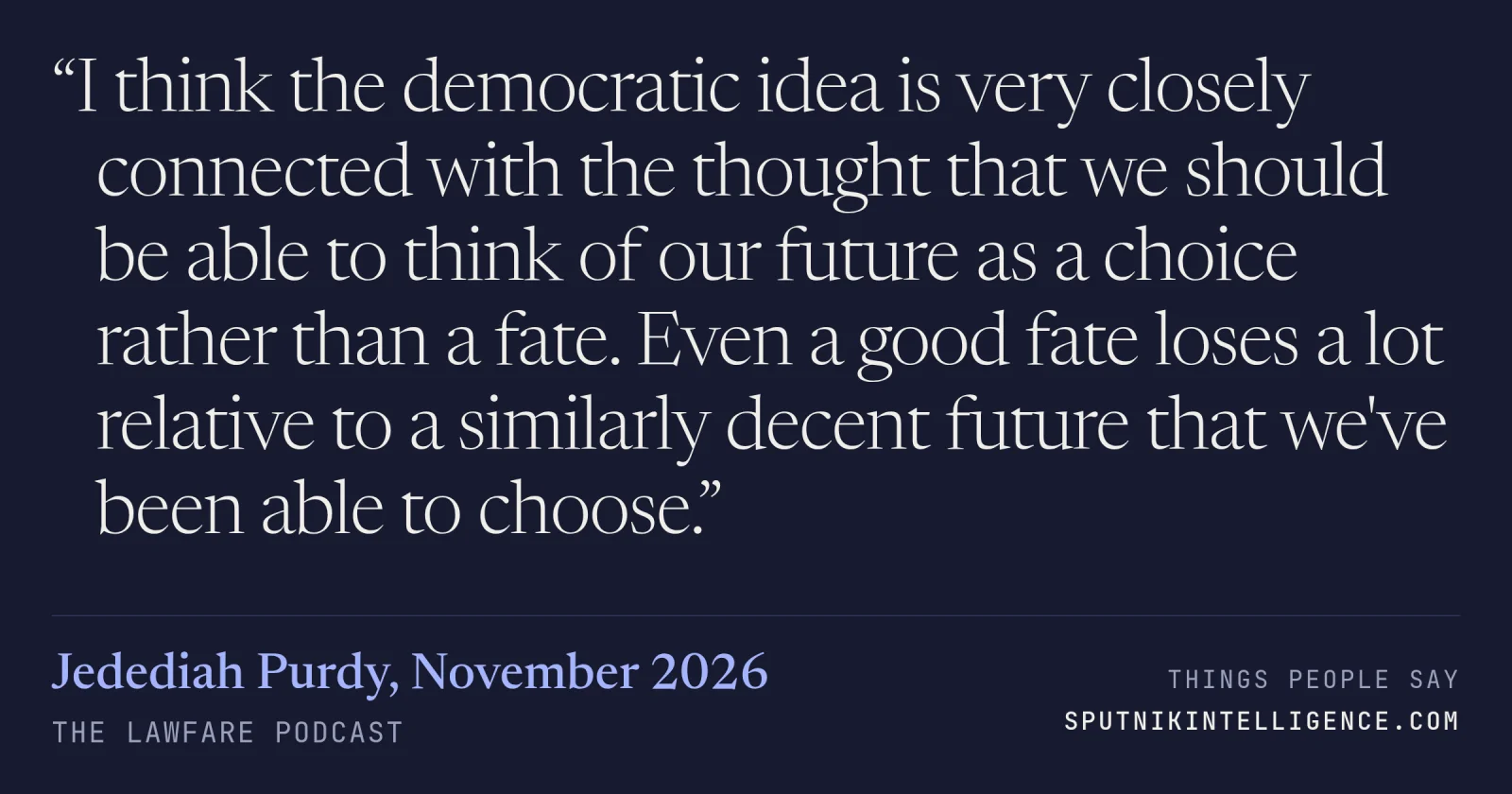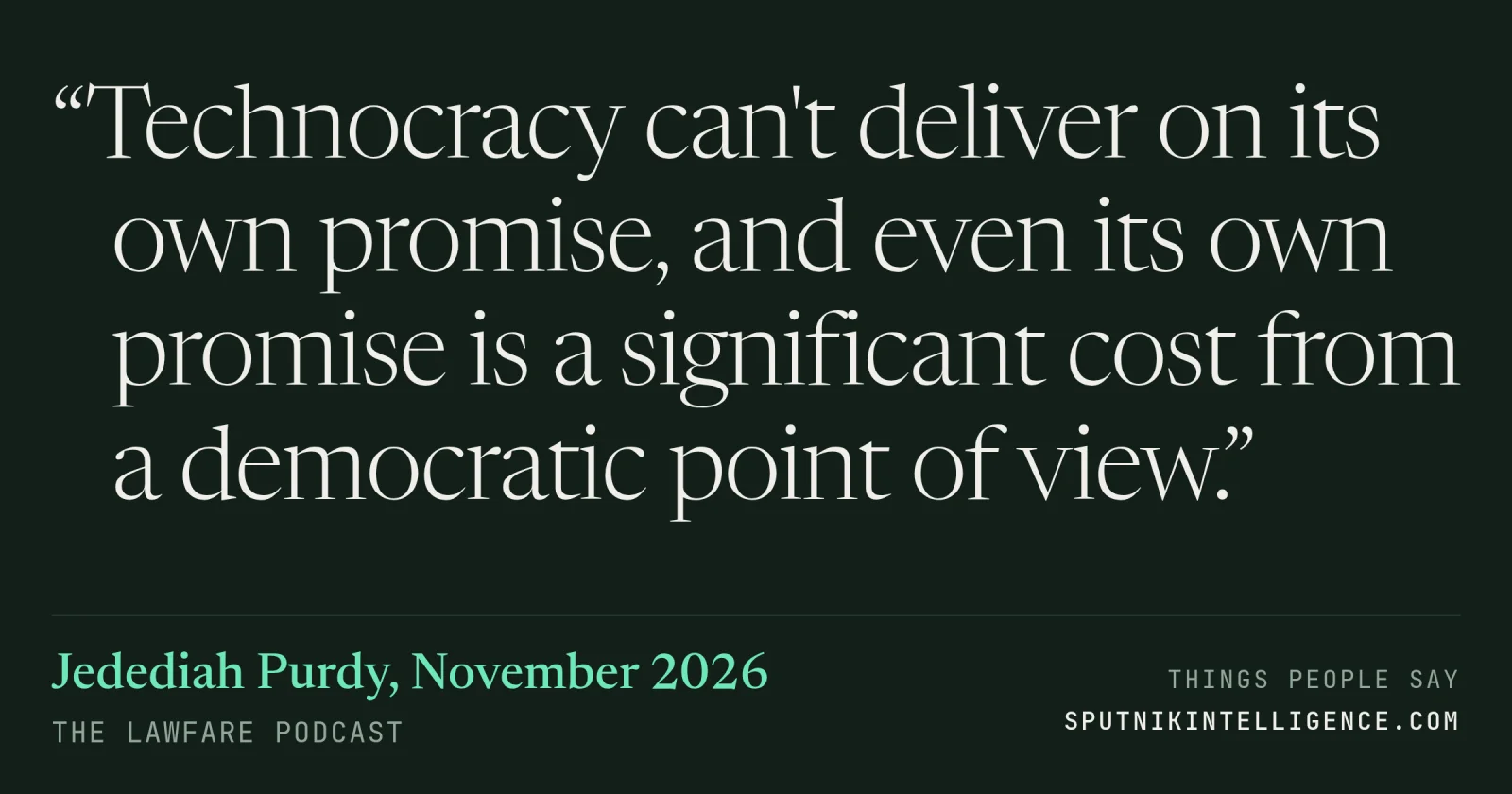
Purdy finishes his answer on experts and democracy. He argues that if democratic tools are weakened, expert institutions themselves get caught up in partisan pressure, and says that while expertise matters a great deal, technocracy can't stand in for democratic choice.
that is and how significant the consequences are. And so in a society where the sort of democratic tools are weakened or neglected, there's
no reason to think that expert institutions will remain expert even in the ideal sense. The kinds of value decisions that get shunted to them will then get caught
in a more opaque form of partisan function. So, I think technocracy, expertise is incredibly important, but technocracy can't deliver on its own promise, and even its own promise is a significant cost from a democratic point of view.
So, then, would it be fair to characterize your defense of democracy on more instrumental than intrinsic grounds? And here I'm reminded of this, I think, kind of now infamous tweet that Utah Senator Mike Lee sent in, I think it was October 2020, where he criticized the idea of, quote, rank…
So I think what's distinctive about
the book, if anything, is a pretty strong attachment to the intrinsic idea of democracy and a commitment really to recognizing that the institutions we're often invoking and even defending when we talk about the health of democracy, like the U.S. Constitution, actually present profound problems…