
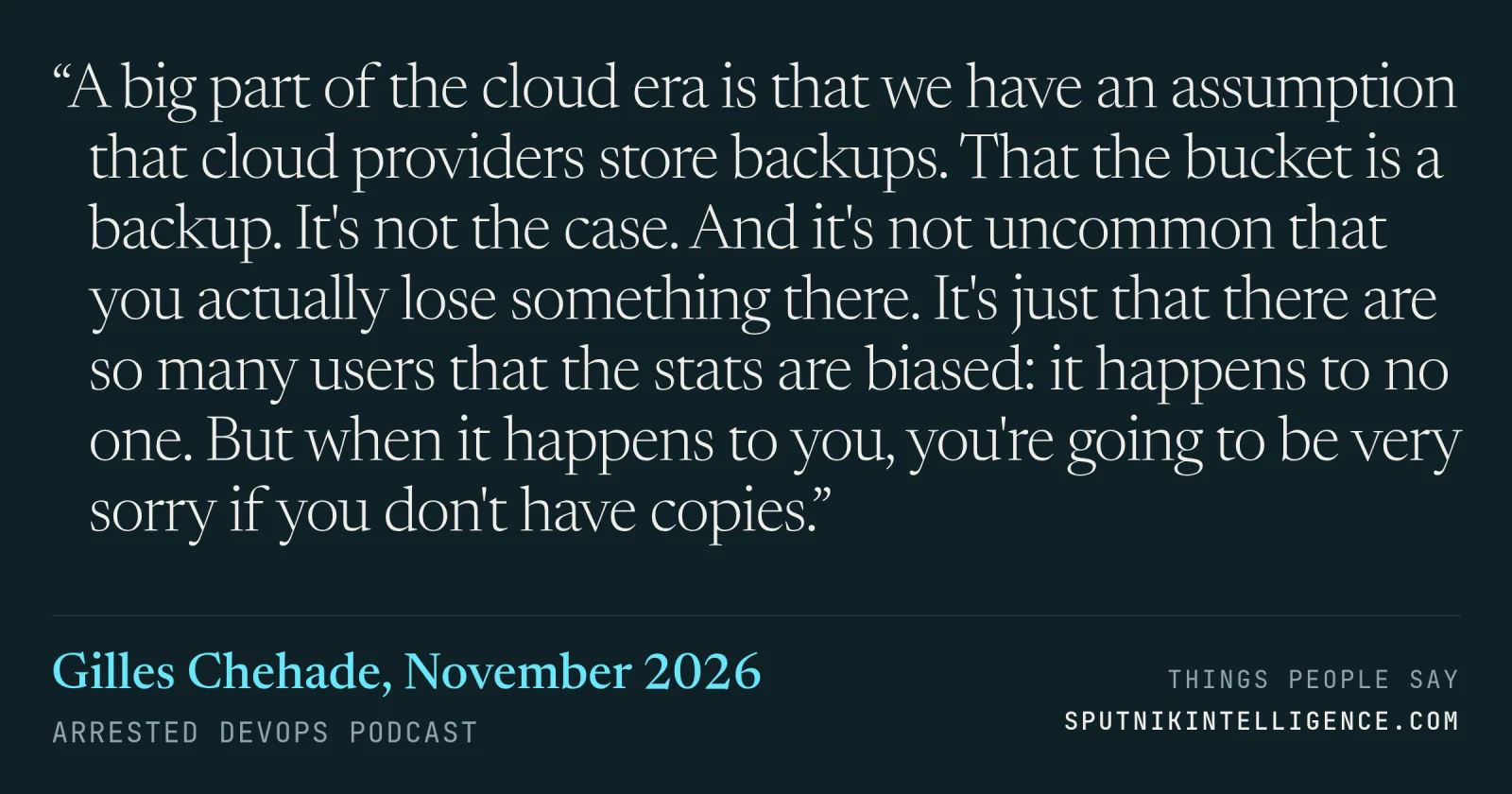
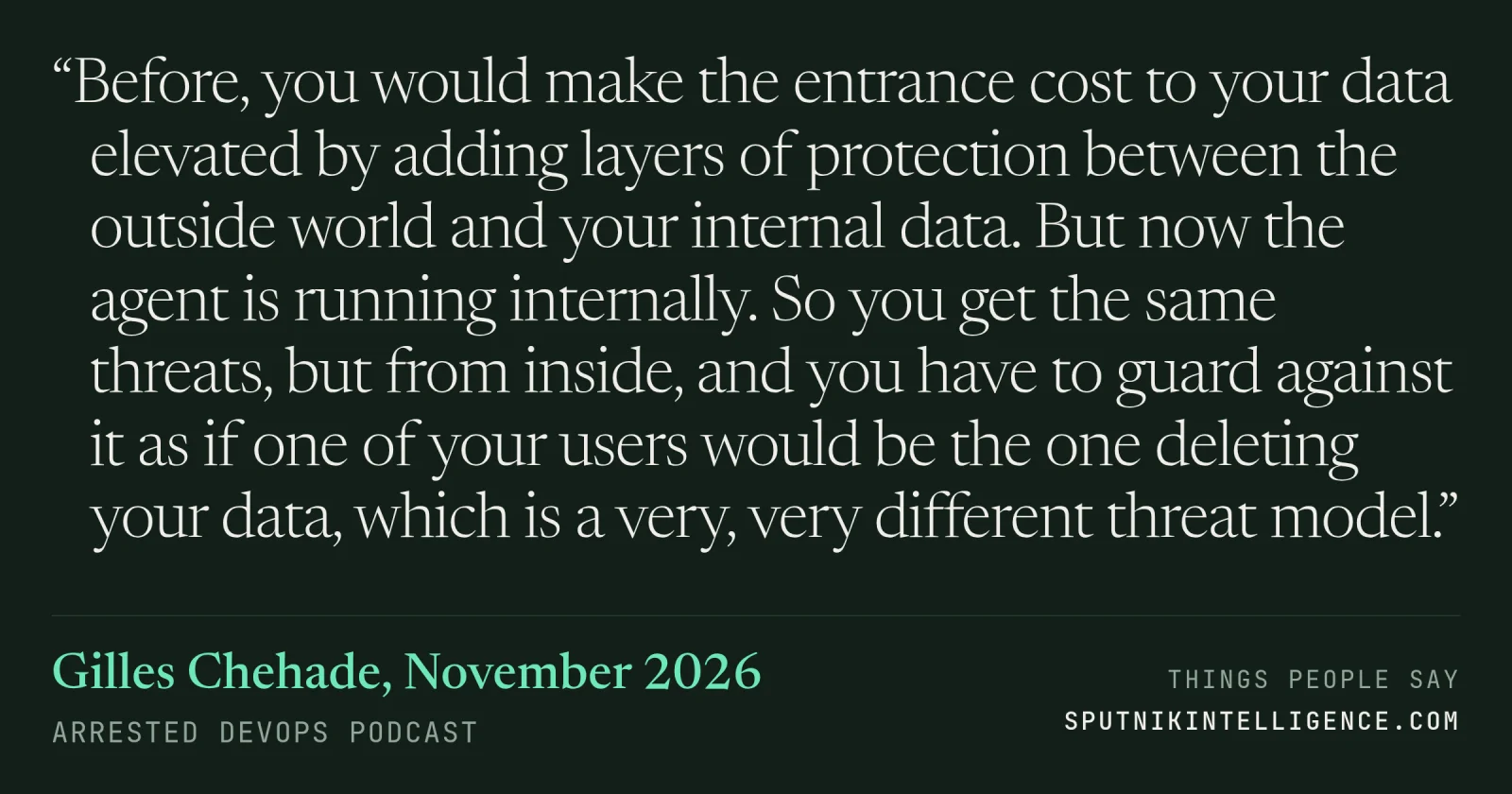
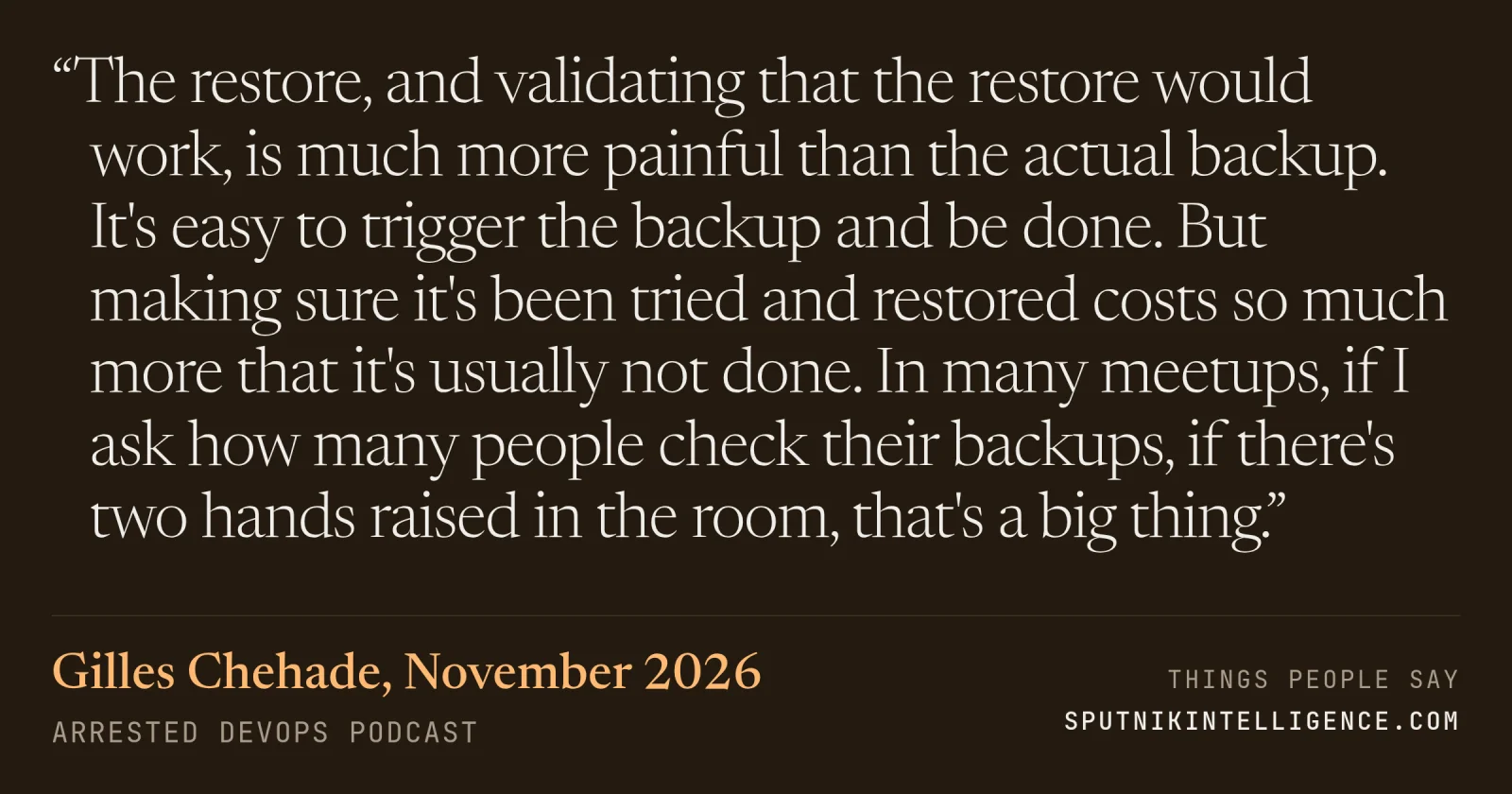
Asked how people should approach data protection, Gilles Chehade contrasts infrastructure, which has inventories and reconciliation loops, with backups, which usually run on a cron job and a report someone has to read. Restore testing is the neglected part.
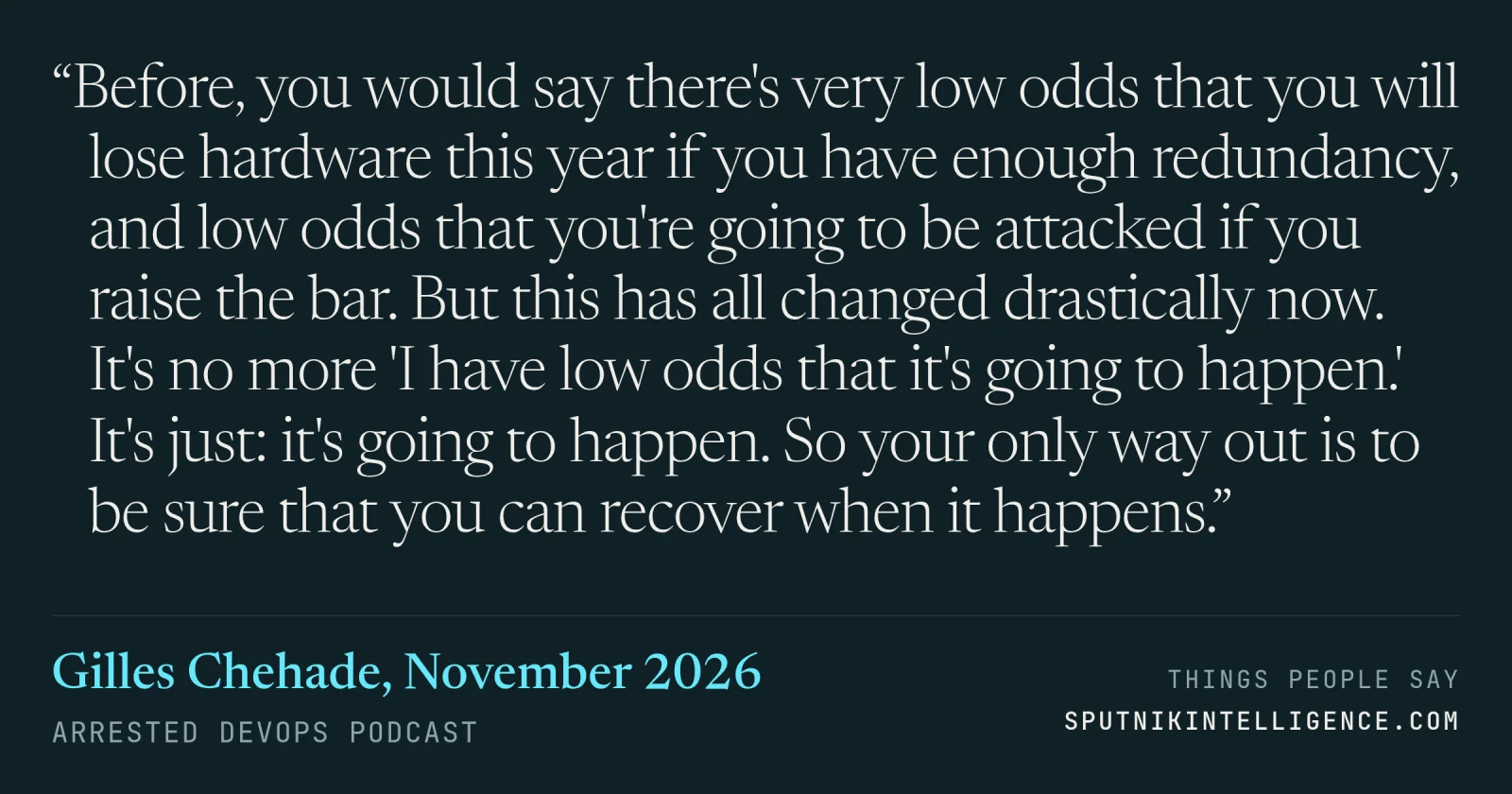
…like before running an AI and having a plan in case it is deleted something. Like you move the threat to an actual expectation. Like it's going to happen. And so your only way out is I need to be sure that I can recover when it happens and no longer in case it would happen in the next two years.
…okay, I'm going to install some appliance in my, you know, in my data center. You know, I have lots of different ways to think about lots of different requirements. So, like, what are the ways people can be reasoning about what solutions do we have out there? How should we be thinking about this?
So, I think there's two ways to reason about backups. More than backups, it's data resilience in a sense. The first one is that people usually do not categorize their data sets. So, it's more of a, yeah, I have machines, I will back them up, and they're all backed up with the same kind of level. So, this, this, like, in many cases, I work. This caused a lot of issues because the amount of data is huge. If they are not categorized, you spend as much to backup everything. And so, the cost rises, and you actually can't back up as often as you should the most sensitive stuff because you're also capturing the stuff that's less sensitive. So, the first thing is categorization. It's actually sitting down with an inventory of all your data sets and putting a weight in front of each of them with regard to how critical they are and how much effort you should pour into making sure that you can restore them in a certain timeframe. So, some data, if you lose one hour, it's not the same issue as others, where you actually can't use 10 million COVID. So, that's the first thing. The second thing is like an observation that when it comes to infrastructure and…
That's what I was just going to say. It seems like, you know, and I'm a big believer in infra-code policy code. I mean, hell, the app that I use for tracking my workshops is work, or not workshops. My workouts for my lifting is a thing called Liftasor. And it's like workouts is code, right? You…
So if you don't work out, you break a CI?
Well, no. See? Yeah, there's a feature request. No, it's just I create like you write in code kind of the like your progressions and everything like that. But anyway, the point is, so yeah, but but but backups, right, not really being thought about that way and trustable and having those…