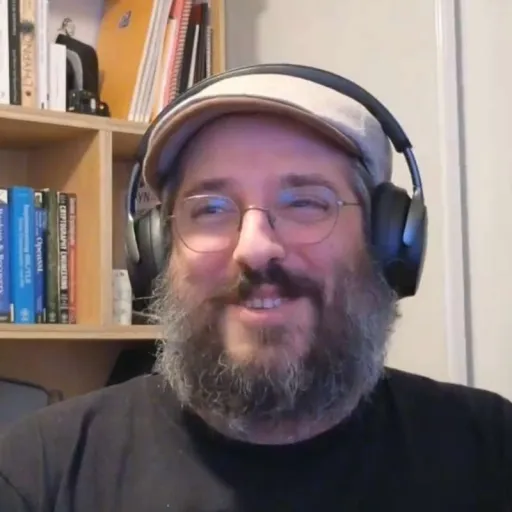
 Gilles Chehade
On Arrested DevOps
“Before, you would make the entrance cost to your data elevated by adding layers of protection between the outside world and your internal data. But now the agent is running internally. So you get the same threats, but from inside, and you have to guard against it as if one of your users would be the one deleting your data, which is a very, very different threat model.”
Arrested DevOps · Software Engineering & Infra · November 2026
Context
Gilles Chehade lists what changed since his early sysadmin days: ransomware becoming routine, and AI agents getting broad access to infrastructure and data. He had just mentioned a public post by an AI security lead saying an agent wiped her mailbox while she was at lunch.
Transcript
…because backups is not absolutely not a sexy area. No one wants to deal with that. Usually, when you deal with that, it's because you've been tasked to deal with that in a hurry, let's say, and you try to get rid of your task as fast as possible and hope that you never have to look at it again.
…of a, for lack of a better word, user-level problem, right? You know, like we're like, oh man, you know, we did this wrong. We have to, we have to put things back to the way that they were. There's sort of like restoring a system because it went south, and then there's rewind time, you know,
right? There's a well, that's a fun anecdote. I'm not going to blame a company because anyway, it was a long time ago. But when I was when I was a student and doing the freelance gigs, I used to work for many small companies where the basically sysadmin is the only techie guy that's in the company. You're the whole tech department. Yeah. Yeah. And the guy is supposedly not supposed to touch this. So he's going to give access to whoever requests it. And if there's a director of something who's absolutely not tech, he's going to have full access to the things. And in many cases, I would go and restore stuff that were accidentally deleted because someone just typed, someone was not supposed to touch that data, actually typed a command that he should not have typed and wiped the entire set of data. And yeah, it's a mix of hardware failure of human disaster skills, let's say. But what's been turned into an interesting situation for me is how the world evolved in the last few years with mainly AI and ransomware. I'll do it in other ways talking about ransomware first, because when I was younger, there was a trend about the crypto crypto vari, which was a…
So yeah, it's that threat landscape has changed substantially, right? You know, we think about different things and it seems like almost every day, you know, there's some story about, oh, I accidentally, you know, my AI agent actually dropped this table in production and things like that. And…
I would agree that you do not solve that with backup, but you have to reason about your backups in a different way. Before you would say it's unlikely that I lose data, because it takes like there's very there's statistics about that, yeah, but there's very low statistics, very low odds that you…
So I think we've done a pretty good job of talking about why everything is terrible and everyone should be scared as hell and everything. We're not always here just to tell you that you should just go retire off to a kettle and raise chickens in Montana or something like that. So let's think about…
More from Arrested DevOps