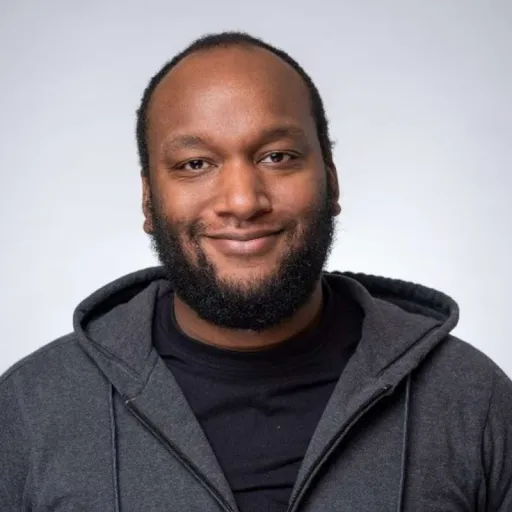
 Kris Brandow
Works on Go tooling and hosts Fallthrough, a podcast for Go developers that picked up after Go Time ended.
Kris Brandow
Works on Go tooling and hosts Fallthrough, a podcast for Go developers that picked up after Go Time ended.
“Anybody that investigates airline crashes for a living is going to have a distorted view of reality, where they think airplane crashes are much more frequent than they actually are… I think this is also what's happening to people working at these frontier labs.”
Fallthrough · Hands-On Engineering Podcasts · September 2026
Brandow and Dylan Bourque had been pulling apart claims like 'this percentage of our code was written by Claude' — statements they say put words on paper without saying anything. He extends the point to AI extinction predictions: people inside the labs marinate in this material daily, which warps how likely any of it feels. Earlier in the episode he argued that the people operating deployed models, not the researchers, are the ones worth listening to.
Transcript
Yeah. It's, it's a classic form of laundering one's argument where it's like
that they all have a little, every statement has a little asterisk at the end with the small print down at the bottom that no one looks at.
Yeah, which is like, I think, you know, anybody that works at one of these labs has a kind of their mind warped a bit, has a distortion, a distorted view of reality because they are working in the middle of this thing. It's like, it's also coming up from like kind of one of the conversations I was having with ChatGPT, where it's like, if you're someone that investigates airline crashes, like airplane incidents crashes, like, and that's your job, you're going to have a distorted view of reality where you think that airline, like airplane crashes are much more frequent than they are, say, compared to, say, car crashes, which are by like, I think, two orders of magnitude like more likely to happen. Yeah. And so it's like, even if you know it's still like less likely, you still think it's more likely than it actually is because your localized experience is, you see this all the time. You see this every day because that's the environment you live in. And I think this is also what's happening to people that are working at these frontier labs. They are just sitting in a stew of all of this stuff and hearing all of these things and hearing the propaganda and doctrinization and all of that. And so their view of the world becomes severely warped around what is happening within those companies, even if it, even if like what's happening within those companies is not going to go the way the companies believe. And this happens at most jobs. Like most places people go into, they get sucked into like the kind of cult-like system that is most companies, where it's like you become like really on board with it, or you're like, you know, you learn to hate your competitors and you're like, our product's better, or even when it's objectively not. Like, we've seen this play out over and over and over again. And just because this is like a novel thing, people think that those same rules don't apply. And it's like, but they do apply. It's the same thing. Like they're going to think that their product is the best thing out there, even when it's not. They're going to oversell their product, even when it underperforms. And they're going to find a way to spin it to make it seem like it didn't actually underperform when it did because they're businesses, they're companies, and they're collectives of people that have egos.
Yeah. The never-ending challenge of not attaching your personal wealth, your personal worth to the thing that you built.
Yeah. And I think that that's like there's people are really, there's a lot of fear out there now, especially with these stupid, again, really silly takes by people jumping into the consciousness of the rest of society without that right context, right? Even, and I will say, like, some of this is on like the journalists because even that tweet that was about. The 10% or greater chance of AI extinct us was marked as an opinion. He's like, I think that there is this greater than 10% chance, which is like, that's an opinion people should have looked at, said, you provided no qualification. That's stupid. We're not reporting on this unless you can actually give some qualification. They used his position within Anthropic to be like, he must know what he's talking about. And it's like, no, though, stop doing that. Like, require evidence, require at least a sane, stable argument. But that's not what's happening. People are like, oh, yes, I just left this place in utter fear because of how scary everything is. Let me tell you about it. I'm like, we, you know, you don't, people that are in fear are not rational. People that are in fear do not make good decisions. They don't make good arguments about things. Fear drives you to do things that are, that you wouldn't do if you weren't in a state of fear. So the fact that we also took an engineer or a researcher who was like, I quit because I'm so worried about all this. I'm so fearful of all the stuff that's going to happen. Like automatically just like, not going to should not believe you until you bring more evidence. Yeah. Right.
On the on the journalist side, there's the dopamine loop. If I put it out there with a sensational headline and I get views and clicks and people react to it and now I'm popular and they're, it's, it's difficult for humans to force themselves out of that dopamine loop and be rational and say, hey, I should not post this or reshare it because it's coming from someone who's probably not in a good headspace and they're throwing out their own opinions that are informed by their own fears and concerns that are probably partially factual, but not entirely factual.
More from Fallthrough