 Ed Zitron
Writes Where's Your Ed At, a newsletter on the AI industry's finances, and hosts the Better Offline podcast covering the same territory in audio.
“If you tried to get a mortgage and your parents co-signed the loan and they said, we will be the ones that make the payments because we are going to live in the second bedroom. The bank would start asking real questions about your parents. … But because it's a data center, they're like, oh, brilliant.”
The Tech Report · October 2026
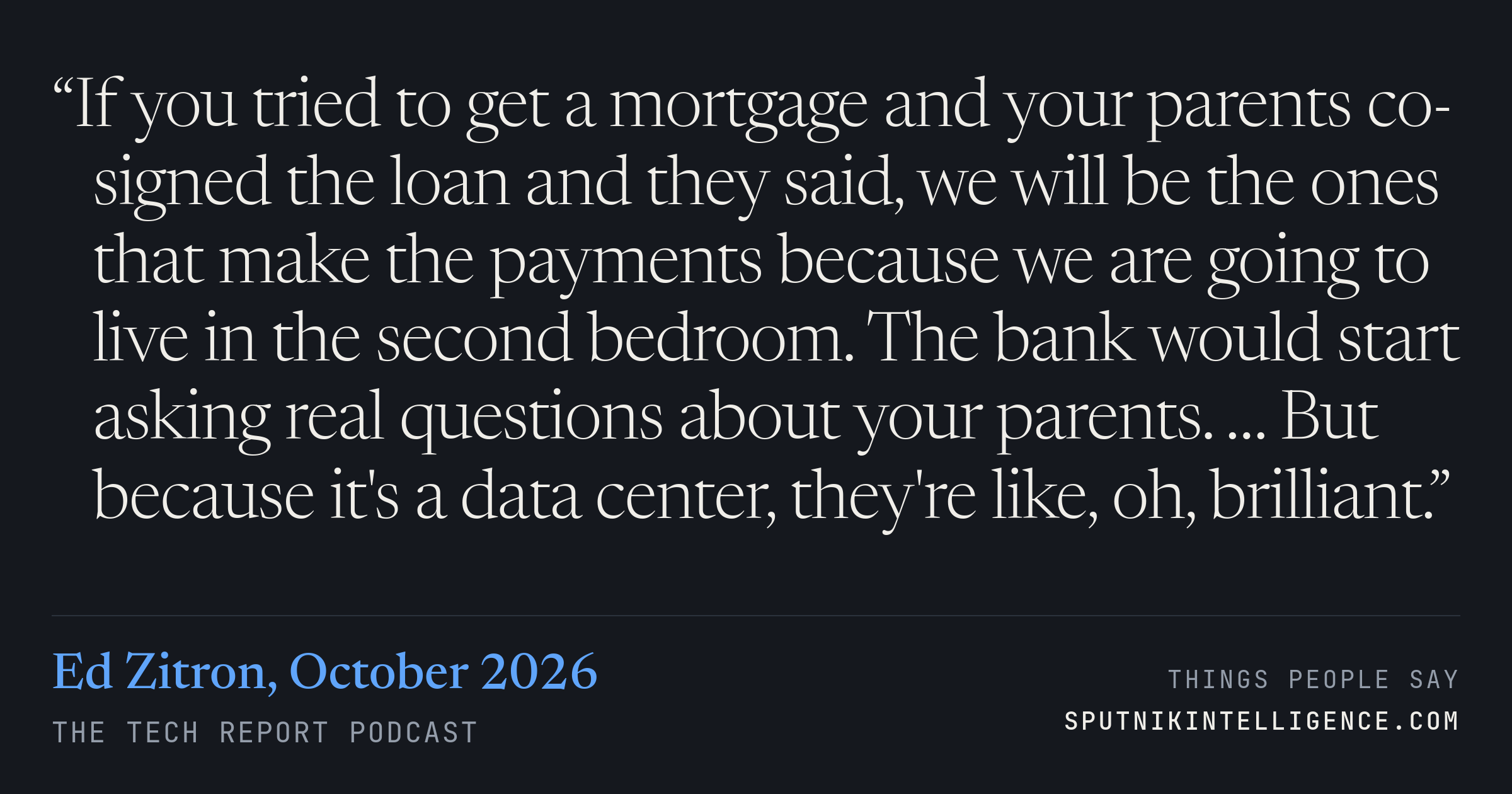
Zitron was asked how a data-center company paying 11.5% to 13.5% on its own debt gets investment-grade pricing when a big tech company is the customer. His complaint is with the credit agencies: they rate the debt on the tenant who will eventually pay rent, and skip over whether the building, which doesn't exist yet, will get built.
Transcript
…bubble. It's nothing like it. Also, that was telecommunications companies rather than hyperscalers. The actual software companies and hardware companies really weren't the ones other than a few here and there. So, and also the debt wasn't as bad. It's just so strange. It's just a very strange era.
Core weave is paying 11.5% to 13.5% on its own debt, but it got investment-grade pricing when Meta was the customer. And we touched on this a while back. Is borrowing on a hyperscaler's name like an escape hatch, or is it just moving the risk onto those companies?
…at the end. It is, I guess, they also couldn't find any comparison to it. But it's why there are all of these projects with these, like Coreweave has a few now. I think maybe I forget one of the other NeoClouds has an investment-grade vehicle because of a connection to a hyperscaler. And it's obscene because it's not, if you tried to underwrite a consumer loan, let's say, in fact, great example. If you tried to get a mortgage and your parents co-signed the loan and they said, we will be the ones that make the payments because we are going to live in the second bedroom. The bank would start asking real questions about your parents. They would say, I don't know. This doesn't seem like a mortgage with you. It seems like a mortgage with your parents, except the credit risk is with you. I don't like that. And then they'd start turning their nose up at it. But because it's a data center, they're like, oh, brilliant. Yeah. In fact, it's actually sillier than that. It's you are doing a house that you're building that your parents…
So, Amadai said that public markets are well suited to capital-intensive
AI. And your answer has basically been, really, are they? Yeah. Why isn't going public the funding fix that people seem to assume is going to be? So, it gets back to that junk debt thing I was talking about. So, let's start with SpaceX and Core Weave. People will say, Well, how did SpaceX get…
Who stops them there going public?
More from The Tech Report