“Alignment is going to be a forever problem. If we depend on perfect alignment in order to ensure safety, then we're never going to get there… You start out with zero trust. When you hire somebody, you start out with zero trust. When you have a baby that's one year old, you put them in a play pen, you assume zero trust… You give them minimum rights and you expand that boundary as you learn more.”
BG2Pod with Brad Gerstner and Bill Gurley · Startups & Venture · October 2026
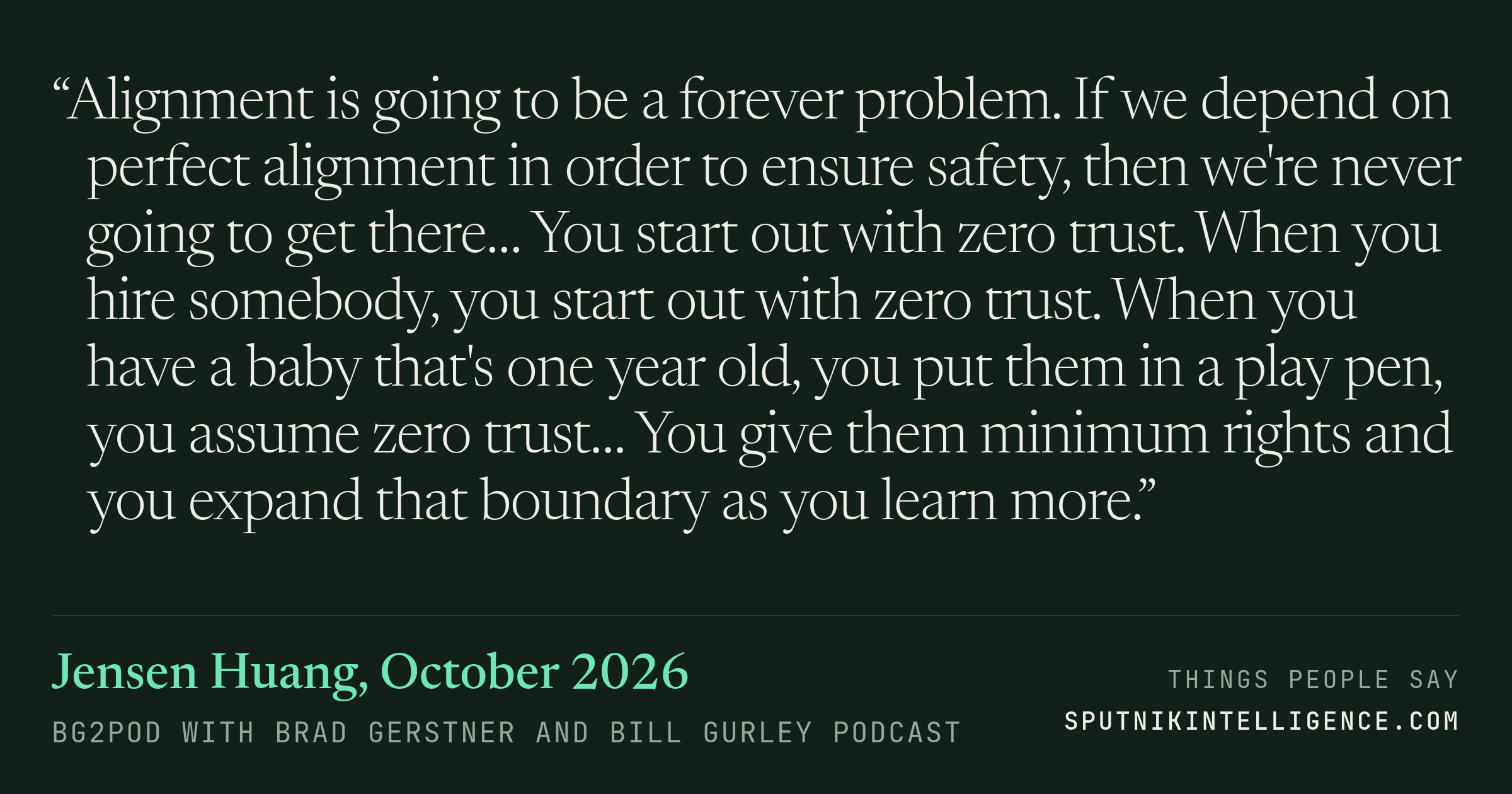
Huang argues that "aligned" has no single answer, since even people disagree about what contributing to society means. He says AI safety should instead come from tight containment, permissions widened as trust is earned, and monitoring that runs outside the system being watched.
Transcript
And so the answer is, you know, whatever it is. Or you saw the answer in a textbook, so you looked it up.
Right.
…is this: the way we treat, the way we think about babies and when we were raising kids and we have pets or whatever it is, employees, okay? You start with containment. You give them the rights that the access to tools, the access to information, the access to whatever responsibility capabilities that they have, funds, resources. You give them access based on the job that you ask them to do. You start out with zero trust. When you hire somebody, you start out with zero trust. When you have a baby that's one year old, you put them in a play pen, you assume zero trust. And so you have zero trust. You give them minimum rights and you expand that boundary as you learn more. And so whenever we have a new AI, we have to assume the same thing. Whenever you're testing an AI, zero trust, minimum boundaries, minimum rights, and you expand it as you test and give yourself confidence. So containment, very tight containment is really important to any autonomous system.…
Right.
Okay. And I'm going to sit here and watch you make sure that you're serving customers properly and that you're working hard enough. That autonomous system is going to behave differently than when you're not watching. That's what
Brad's in the room with me or not.
More from BG2Pod with Brad Gerstner and Bill Gurley