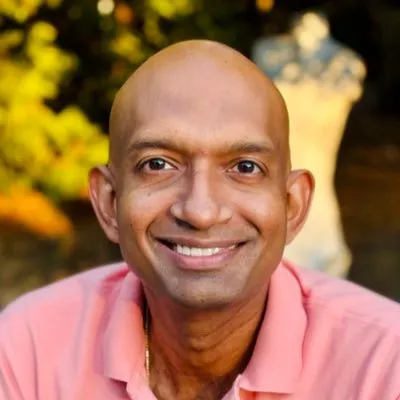
 Prakash Narayanan
Commentator on AI news with almost 20 years in investment banking and private equity, who took an optimist's view of the technology and co-hosts AI in the AM wi...
“We're trying to control things by controlling what we build, when we should be controlling things by defending against what we fear. … Treaties you sign with other people only constrain you domestically. If we're living in a fragile world where a single adversary can erase us, that is a problem whether or not we are the ones creating that adversary.”
The Cognitive Revolution" | AI Builders, Researchers, and Live Player Analysis · AI Research & Frontier Labs · November 2026
Context
Nathan had said the current level of AI risk is unacceptable even though zero risk isn't achievable. Prakash argues that since no one country controls what gets built, the answer is to harden the world against attacks rather than limit what gets built.
Transcript
…be met. So I feel like, yeah, the risks are there. But at the same time, like you need to have these falsifiable hurdles that, you know, if those are the concerns, how can they be met? Right. Like, what are the falsifiable hurdles so that you have a stake in the sand that people can work towards?
…us to say, okay, yeah, we can get comfortable with not having full proof that the AIs will never break bad because we think we can actually deal with it. But right now, we're in kind of no position to say anything like that. And also the drives are bad, you know, the drives are real bad. Let's
…start off from this position of hoping everything is good, right? You have to start off from the position that you expect everything to be the worst possible thing happening, which means that you should expect advanced attacks all the time. And you should be preparing for that. You should be heightening your cyber defenses, which is what we're doing right now. So I think my viewpoint is actually we're trying to control things by controlling what we build, when we should be controlling things by defending against what we fear. And the best way to defend against some of the things that we fear are actually to build the things that can defend them. And right now, what we seem to be trying to do is like, we seem to be like, we're the only ones that can build stuff. So we're going to be the ones constraining the building of that stuff. Right. And so we're going to like constrain it so that we don't get these superpowered…
Frakash on what hardening the world would actually require.
So one of the obstacles to getting there, I think, and this has been my long-term concern, is that we're going to need to do things that we don't want to do. Like, for example, vaccinate everyone with a universal vaccine. And those are political decisions. And like, you need to persuade the…
I would just say, look, if we have them, if we have, if we're postulating for ourselves a prudent government, then, and we also. Want to maintain our sense of like civil liberties, then I think the thing to do is like create the vaccines, have the vaccines, have them on standby. When people are…
More from The Cognitive Revolution" | AI Builders, Researchers, and Live Player Analysis