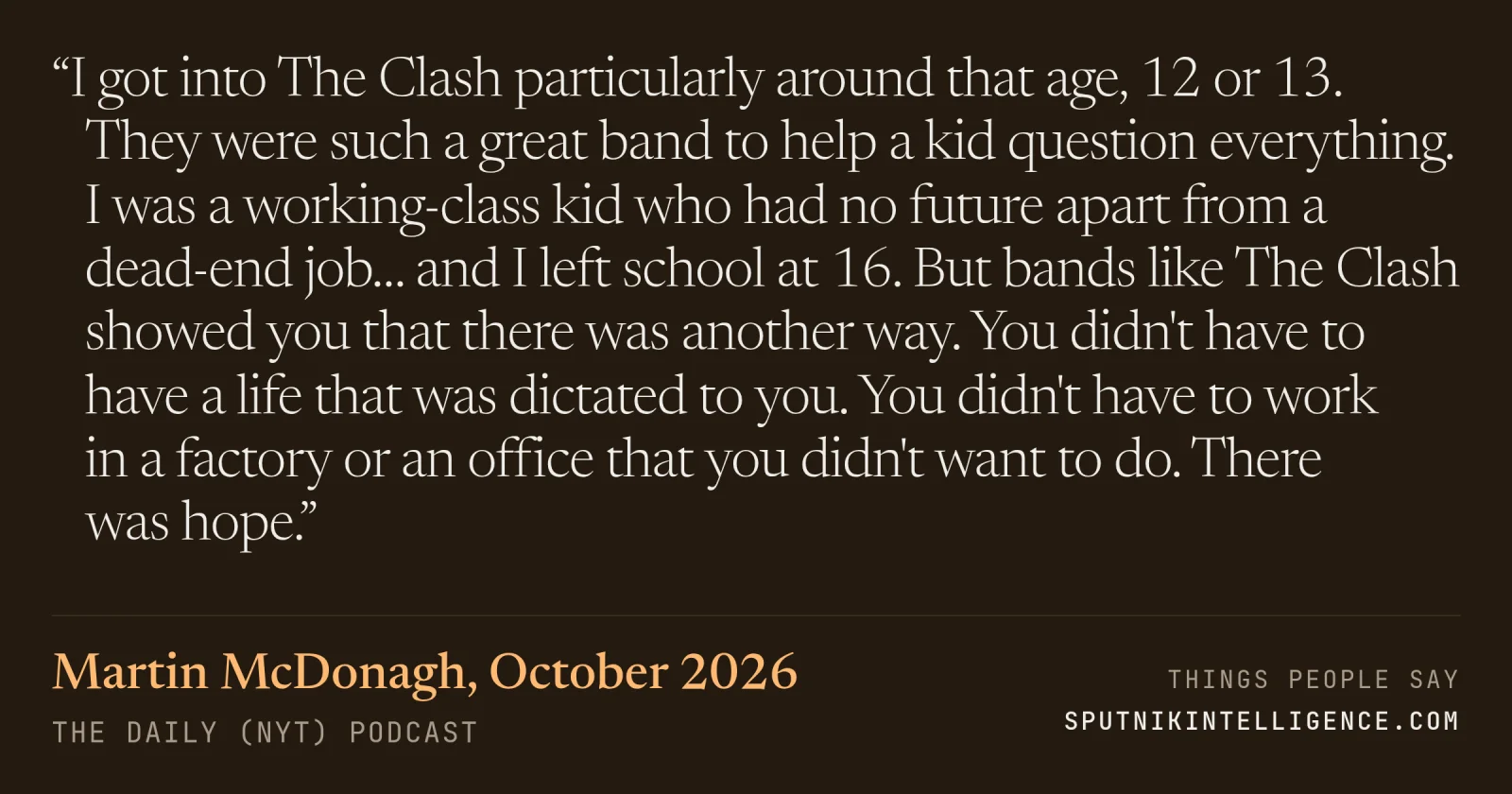
“I got into The Clash particularly around that age, 12 or 13. They were such a great band to help a kid question everything. I was a working-class kid who had no future apart from a dead-end job… and I left school at 16. But bands like The Clash showed you that there was another way. You didn't have to have a life that was dictated to you. You didn't have to work in a factory or an office that you didn't want to do. There was hope.”
The Daily (NYT) · October 2026
Context
The interviewer read from a biographical timeline noting that at 12 McDonagh lost his Catholic faith and started listening to punk. McDonagh explains what the music meant to him at that age.
Transcript
Oh, that's probably pretty accurate. What was
going on when you were 12? And were those things related to each other?
I think they were very good questions. I think they totally were. I think I got into the clash particularly around that age, 12 or 13. And they were such a great band to help a kid question everything, I think. Like I was a working class kid who had no, as Johnny Rotten would say, had no future apart from a dead end job or a boss or, you know, and I left school very young. I left school at 16. But I think fans like The Clash showed you that there was another way. You didn't have to have a life that was, you know, dictated to you. You didn't have to work in a factory or an office that you didn't want to do. There was hope, you know. So, yeah, I grabbed onto that with both hands at the age of 12. And the Catholic thing, I think if you're starting to question governments and people who force you to do things against your will, which is sort of the punk rock ethic, naturally the Catholic Church are going to be right in the firing line.
Have you ever regained your faith?
No, I mean, there are parts of it that never fully go. You know, I'm sure my sort of moral sense is sort of informed by the good stuff I took from the stories of Jesus or whatever. But no, I think I'm getting more and more sort of entrenched in some kind of anti-religious feeling in general. I…
You know, when I did go back and read sort of early profiles of you, you were very, you know, sort of positioned as like a, you know, anti-establishment punk rock. Theater person, like someone's coming to rip it up and start again.
More from The Daily (NYT)