“I use large language models all the time. And I have definitely been in situations where I've had a conversation and been like, yeah, this thing that I'm doing is really amazing. … Gone away, slept on it, come back and then been like, what was I thinking? This is absolute junk.”
IFLScience - The Big Questions · October 2026
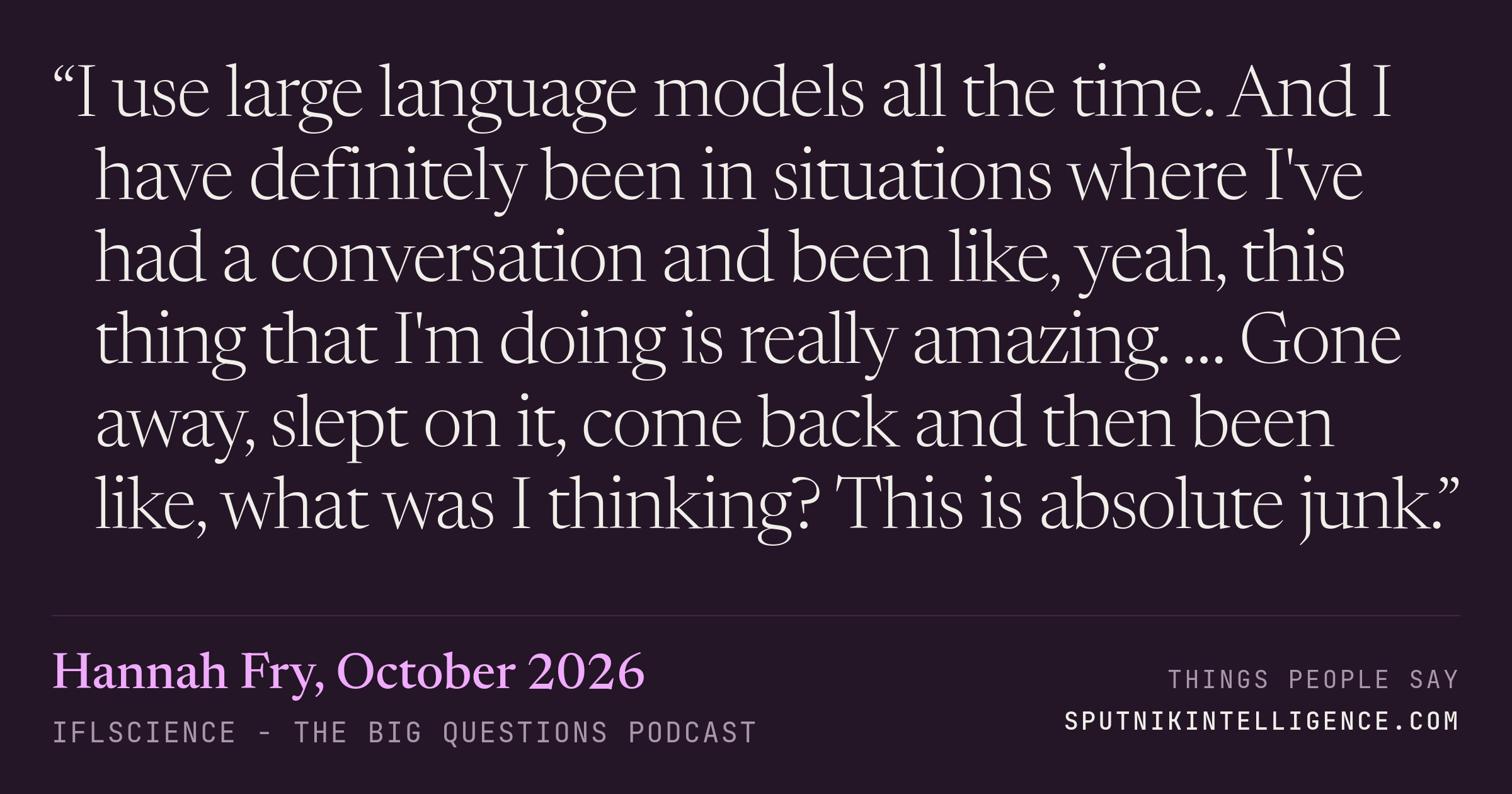
Fry had just described the case of a man who broke into Windsor Castle with a crossbow after months of encouragement from an AI companion. Her point is that being talked into something by a chatbot is not a thing that only happens to other people. "We are so primed," she says, to fall down that slope.
Transcript
Yeah, so I think actually, I mean, this was like really proper headline news when it happened, but this is in 2021, I think. A young man called Jaswan Sing Chao broke into Windsor Castle with a crossbow trying to kill the queen. And that bit made the headlines. But what people I think didn't know about, because it didn't come to light till later, was that there was an AI that he had been talking to in the months leading up to the attack that had encouraged him to act as an assassin and attempt to commit the sort of greatest act of treason possible.
It is such an incredible and shocking story. And I love what you mentioned at the start of the episode about how so much of this taps into what we're willing to believe. And I thought it was really interesting when you were going through the transcripts and it showed there were sort of these prompts like, so the AI is saying like, I crone or I look at you and he's responding to it. And I just thought it's almost sort of like a screenplay. And it sort of starts, you start to realize actually why you think, oh, I'd never get sucked into that. But it's a bit like getting pulled into a good book, right? Like you can imagine things that aren't really there.
Oh, totally. I mean, I think it is so when are we watching it back in there, right? It's the first time I've seen it on a big screen. And I was sitting there thinking, does everyone else in this room think that we made up these transcripts? Because we pulled them from the court documents because they are so extraordinary, you know, the things that were said back and forth. But I also think that actually, exactly as you said, right, you get pulled into a story. I've also, I don't know about you, but like I use large language models all the time. And I have definitely been in situations where I've sort of had a conversation and been like, yeah, yeah, yeah, this thing that I'm doing is really amazing. It's really great. I'm definitely, it's definitely great. Gone away, slept on it, come back and then been like, what was I thinking? Like, this is absolute junk. It sort of like persuaded me of this thing. I think it's incredibly easy. We sort of imagine that this is something that only happens to other people. Yeah, you know, our human biases and psychologies, we are so primed, so primed to like. Fall down this very slippery slope incredibly easily.
What it kind of reminded me of is: I feel like there are so many other ways in which this has already been happening long before these language models came in. So, one example that came to my mind was when you get these people who start to imagine they have a relationship with a famous person and they sort of build this world in their head and they want to lean into it and you create this world where these things aren't happening. So, I suppose now that there's this version of that where you can also get feedback and you can talk to it all night if you wish, it's hardly surprising that it's sort of driving its own kind of psychoses.
But then, also, in addition, it's not just that it's interactive, it's that it's honed particularly to the things that you find interesting, which feels amazing. But here's this character that is like there to exist for your every whim. It's incredibly alluring.
Did you know that for around 400 years, people across Europe genuinely believed their bodies were made of glass? Kings, nobles, and ordinary people alike became convinced that they could shatter at any moment. Some refused to sit down, while others wore reinforced clothing to protect themselves from breaking apart. This bizarre psychological condition became known as the glass delusion. And then, almost as suddenly as it appeared, it vanished. That story, along with loads more weird and wonderful deep dives, lives in the vault, our all-access members-only archive. Now you can get 25% off all access annual membership with code SCI25. That's SCI25. You're not just unlocking hours of exclusive content, you're also helping us keep independent, impartial science journalism available to everyone. Check out the link in the show notes to get involved and use code SCI25 at checkout. T's and C's apply. See show notes for more details.