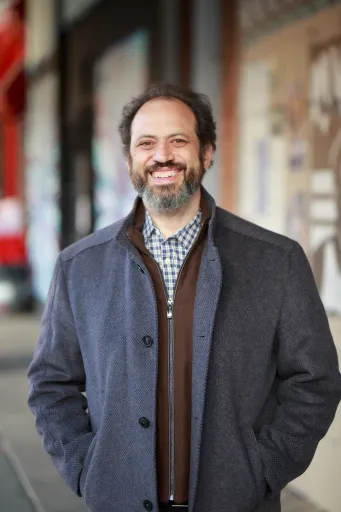
 Ethan Mollick
I am a professor at the Wharton School of the University of Pennsylvania.
“Indie gaming has an audience that truly hates AI, right? And every indie gamer is under tremendous pressure to not say they're using AI. Except, of course, you'd be very foolish to not use AI to help you code… There's this public-private perception gap. … If you survey students, about 60% of them say they use AI, but they say 90% of the people around them use AI.”
Freakonomics Radio · Ideas & Essays · October 2026
Asked about people in creative industries who criticize AI in public but use it in private. Mollick says the same pattern shows up with music producers and showrunners he has talked to.
Transcript
…most people who use these systems use them to produce really boring stuff. And it's not necessarily clear that it's because the AI is boring. It's just clear that there's a lot more demand for people to create Star Wars fan fiction or alternate Harry Potter jokes than there is for creative media.
You told our producer that you know Hollywood screenwriters who publicly or at least professionally have reason to fear AI or to maybe critique it, but privately love using it. Tell me about that.
This is common in all the creative industries. A space I know really well because I was in it for a while is gaming. So indie gaming has an audience that truly hates AI, right? And every indie gamer is under tremendous pressure to not say they're using AI. Except, of course, you'd be very foolish to not use AI to help you code and do other kinds of work at this stage, even if you don't use it for artwork or other visible things. So AI use is endemic. I've heard the same thing talking to music producers, including people who are Grammy Award winners that they experiment with this stuff all the time. I've talked to some pretty well-known producers and showrunners and people like that who are using AI. I mean, there's this public-private perception gap. And there's a series of good papers about this, including one that finds that if you survey students, about 60% of them say they use AI, but they say 90% of the people around them use AI.
Coming up after the break, how does the union president for Hollywood Performers think about AI? Also, if you want to hear more about the original O-Ring tragedy, check out the series we made called The Curious, Brilliant, Vanishing Mr. Feynman, episodes 575, 576, and 577. And there's another…
Sean Aston. I'm a professional actor. And at the moment, I am the national president of SAG AFTRA, the largest entertainment performers union in the world.
SAG AFTRA, the Screen Actors Guild and the American Federation of Television and Radio Artists, represents 160,000 media professionals, from actors and stunt performers to singers and puppeteers. Sean Aston became president in 2025. He's best known for acting in films like The Goonies, Rudy, and…
More from Freakonomics Radio