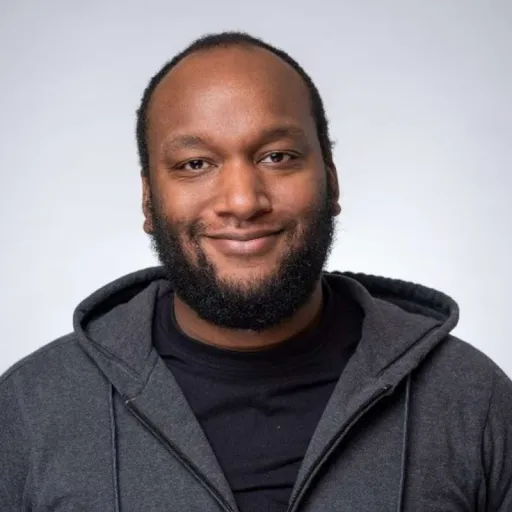
 Kris Brandow
Works on Go tooling and hosts Fallthrough, a podcast for Go developers that picked up after Go Time ended.
Kris Brandow
Works on Go tooling and hosts Fallthrough, a podcast for Go developers that picked up after Go Time ended.
“It's like when people say, oh, we have a dictionary that defines words, thinking that the word, the definition in the dictionary is the correct one. It's like, no, the definition in the dictionary is the emergent one. We all define words simply by using them. That's how language works.”
Fallthrough · Hands-On Engineering Podcasts · August 2026
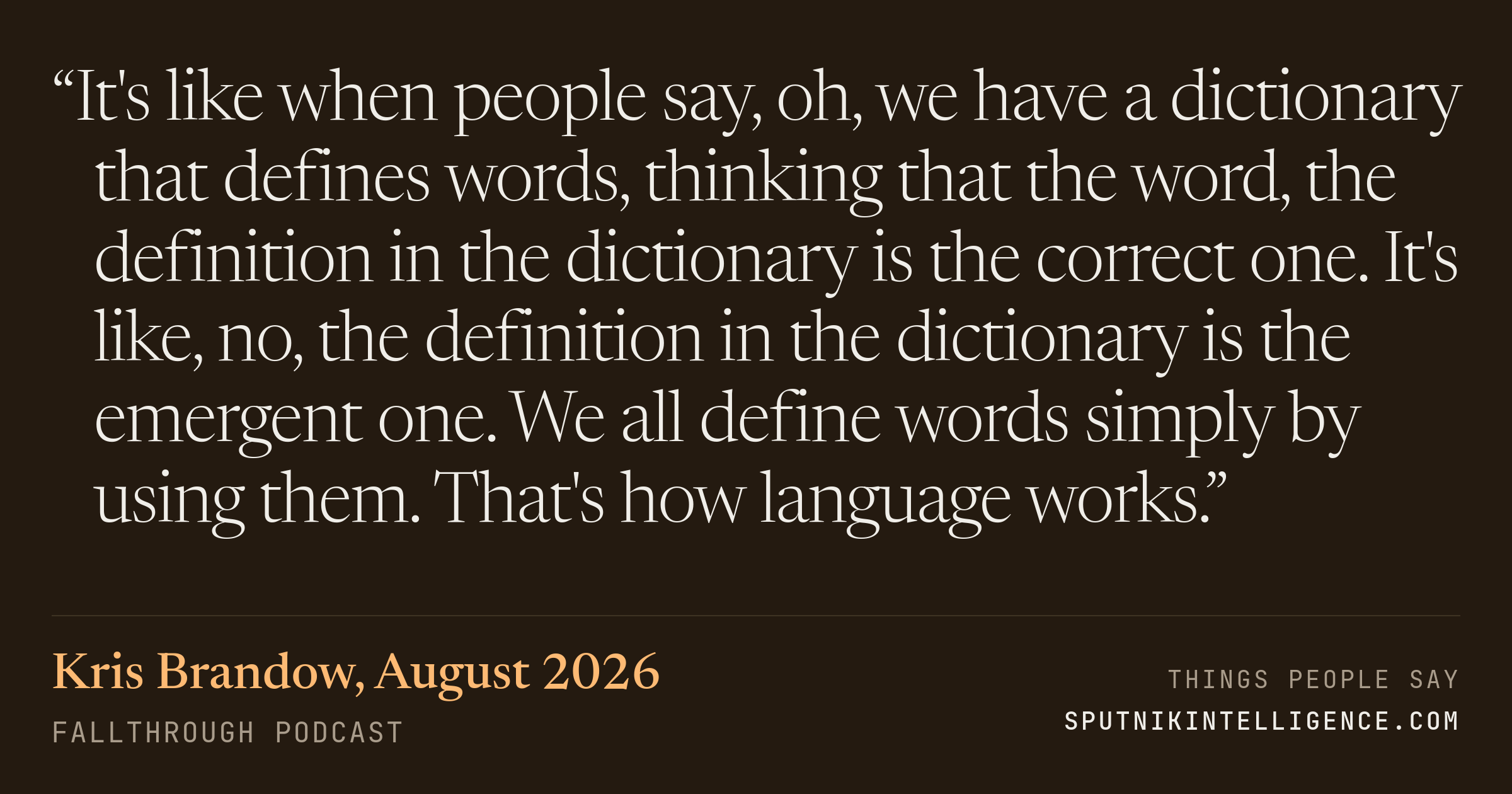
The hosts were arguing about whether Go's proposal process needs a formal gate between discussion and commitment, with Sanabria wanting a clear line and Brandow insisting there is not one to draw. The dictionary analogy is how he explains it: the line is an emergent property of the conversation rather than something anyone can declare. He closes on the position that a decentralised community cannot be made authoritarian without breaking what makes it work.
Transcript
ending them. It's not putting an arbiter. It's actually making sure they're moving. And what I'm saying
is there needs to be a way to differentiate things that are just in discussion versus things that we're committing to actually doing and working on.
…going to go back and something's going to go forward. Sometimes this one proposal that we're like, we're definitely going to accept it gets affected by a proposal that already got accepted and implemented. Now we got to go rethink this one, right? This is a very dynamic and fluid process. I think any attempt to like shut it down in a way or to draw a line somewhere, it's just not going to work. It's like when people say, oh, we have a dictionary that defines words, thinking that the word, the definition in the dictionary is the correct one. It's like, no, the definition in the dictionary is the emergent one. We all define words simply by using them. That's how language works. And similarly with these discussions and things we want to implement, we won't know the point at which something is ready to be implemented until we've had the conversation and figured out that we have talked about enough, this enough to implement it. And there's someone that's going to go implement it. Like, that's the gate. That's the thing at the end of the day. If the Go team wants to have a…
I don't want to do that. But I also don't see how just like letting people discuss in perpetuity like solves the ever-growing sort of backlog problem that we're, that the community is in today. You know what I mean? Like that, that's part of the problem. That's why they're proposing a proposal…
But is that the question, right? Is that because we as a community do not possess the ability to have discourse in such a way that allows us to come to consensus on things? Or is it we've as a community been put in a position where the discourse just can't happen or it just continually happens and…
mean it's both. There are people that don't know how to have discussions. Very, very evidenced in the proposal in the proposal process.
More from Fallthrough