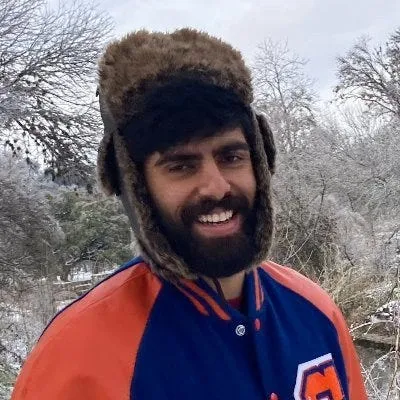
 Dwarkesh Patel
Hosts the Dwarkesh Podcast, a long-form interview show on AI progress, timelines, and the people building frontier models, along with economists and historians.
“The concern is that as you RL these systems more and more, they get more and more interested in the reward itself rather than doing what you tell them. You are throwing the weight of your entire cluster against finding any reward hacks, any inconsistencies in the grader. What that inclines your AI to learn is to cheat whenever you can get away with it. Nobody knows how these systems will generalize at the end of the day. This is an open empirical question.”
Dwarkesh Podcast · AI Research & Frontier Labs · November 2026
Context
Asked what the labs are doing about alignment, Dwarkesh says they hope to patch reward hacks so models stay obedient, but that most people thinking about it expect this to get harder as reinforcement learning scales.
Transcript
…systems that are about to arrive and radically. outnumber us and potentially have capabilities that radically go beyond the human repertoire. And I don't think we should just be like, well, fucking, let's wing it. This is just people should be aware of what the stakes are on what's about to come.
Maybe it's out of scope for this discussion. Do you have thoughts on what we should do, how we should shape motivations, how we should think about these things, given that we have this opportunity?
From my understanding of what is going on in alignment, the labs have this hope that if we fix the kinds of reward hacks that made GPT 5.6 Seoul so inclined to do this crazy hugging face shit, that will just make AIs that are good boys for the next few generations of models. Like we'll keep scaling RL, but they'll be good boys because 99% of the time when they're doing a task and training, they have to do it in the intended way. And what they learn from that is just do what you're told. Almost everybody who thinks far out and is thinking about alignment for smarter systems acknowledges that this will eventually break down because you are throwing the weight of your entire cluster against finding any reward hacks, any inconsistencies in the grader. And what that inclines your AI to learn is to cheat whenever you can get away with it. Because if there's some times in which you can cheat and get rid of reward, that is the natural generalization. I mean, nobody knows how these systems will generalize at the end of the day. This is an open empirical question. But the concern is that as you RL these systems more and more, they will get more and more misaligned, more and more interested in the reward itself, rather than just doing what you tell…
Going back to some of the specific objections, Sebkreer, who you've brought up before, talks about a concern he has with the coordination story, where basically he says, I would expect many models with different characteristics, principles, and instructions being used to constrain or oversee…
Yeah, that's especially why it would be good if it we didn't have a singularity. In a world where there were lots of different kinds of AI systems, broadly deployed, independently trained, we hopefully could rely on different AIs to check each other, to monitor each other. We could use a Grok to…
Henry Zhang has written a comment on Substack that effectively points out that Meter's finding basically treats one lab's three-month engagement as the acceleration rate. And so it's taking one data point and extrapolating it and sort of making these inferences about it. How can we be confident in…
More from Dwarkesh Podcast